8tracks icon Behance icon Blogger icon CodePen icon Delicious icon DeviantArt icon Dribbble icon Etsy icon Facebook icon Flickr icon Foursquare icon GitHub icon Google+ icon Instagram icon Last.fm icon LinkedIn icon Myspace icon PayPal icon Pinterest icon SoundCloud icon Stack Overflow icon StumbleUpon icon Tumblr icon Twitter icon Vimeo icon YouTube icon Yelp icon
DE STIT THERAPEUT

The Tailbone Podcast: Expert Talks

5. Sabine – Patient

Sabine has a long history of tailbone pain and visited a lot of therapists and doctors. In this episode she shares how tailbone pain impacted her life, her path to finding an effective therapy and her experiences along the way.

Jump to transcript


It took me years to find it,
but specialists and effective treatment for tailbone pain exists!

– Sabine
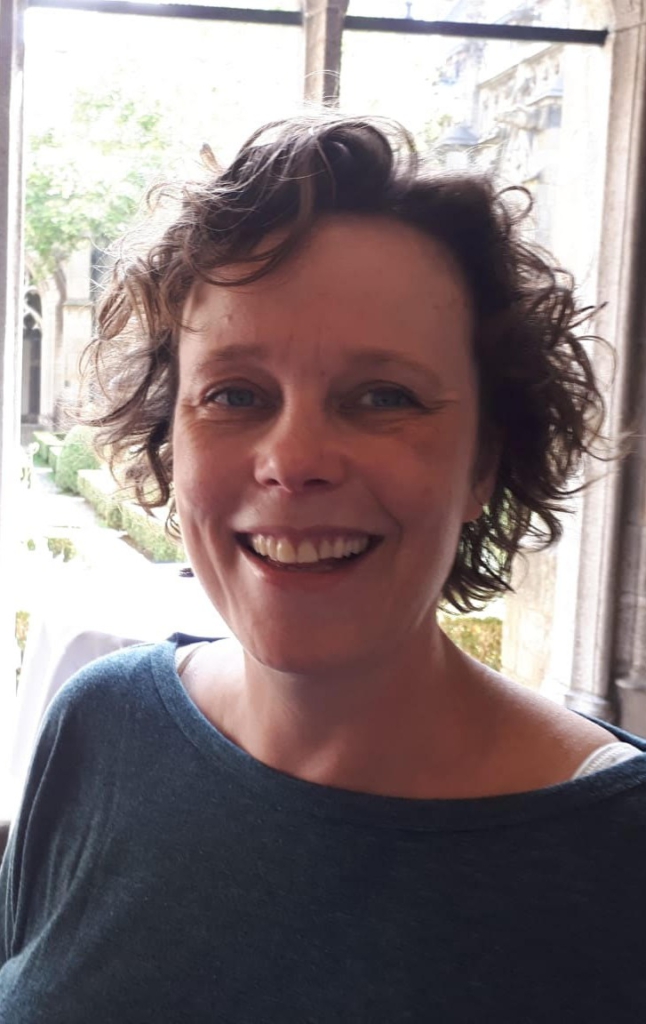
Our guest today is Sabine. She was a 33 year old midwive when her tailbone pain started with a car accident. It led to a lot of pain, not being able to work anymore and a very restricted daily and social life. Now, 17 years later, she shares her story about how tailbone pain affected her life, but also her path in the medical and therapeutic world in finding the right help and specialised healthcare professionals.

She saw a variety of doctors and therapists, underwent treatments and injections and mainly shares a message of hope and recovery. In this episode she will tell her story, which I will guide by explanations about the things that occurred. It became a pleasant, informative and touching conversation which I love to share with you.

In this episode you will learn about the patient perspective of tailbone pain. This expert from experience gives a valuable insight where not only other patients, but also doctors and therapists can learn from. We go into what help and information is given and how she eventually found a solution that helped her.

You can find my podcast in the menu under Podcast as well as the links to the platforms where it is posted.


Bonus

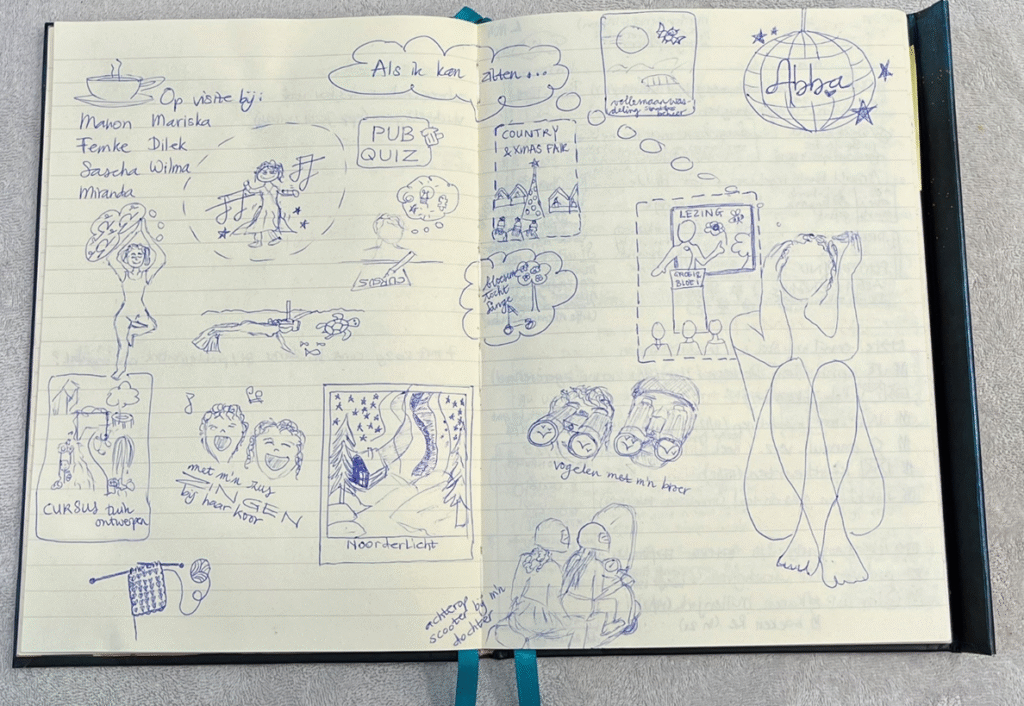
In the episode Sabine shares how she found specialised treatments gave her hope again in healing and how that led her to create a vision board drawing about her desires and goals in the process towards recovery. She gave consent to share it with the listeners and you can see it here. it gives a good insight how things that people without tailbone pain do on a regular basis and take for granted, often are dreams for people that suffer from it…

Get in touch

In you have any questions about anything in and outside of this episode, comments or requests, let me know! You can email me through the contact field below or directly at roel@roelwilbers.nl.

Transcript

Roel Wilbers

0:04 Welcome to The Tailbone Podcast.

0:06 My name is Roel, and as your host, I bring you only experts on this, for most doctors and therapists unknown problem.

0:12 Let's dive in with today's episode.

0:16 Welcome to this new episode of The Expert Talks on Tailbone Pain.

0:20 And today, a special guest that isn't a doctor, therapist or researcher, but a specialist from another perspective, namely a person I treat for her tailbone problems.

0:29 An expert from experience, that can very well give us a perspective from the side that we therapists often cannot see and experience.

0:36 Half of my working days as a physiotherapist, I see people with tailbone pain and because tailbone specialists are rare, they come to see me from all over the country.

0:43 Also Sabine, that is our guest today, travels for more than an hour to get to her therapy sessions with me.

0:48 And I asked Sabine to be my guest because she's unfortunately very experienced on the matter.

0:54 It wouldn't have been hard to pick a success story out of my database, because 80% of the people I saw ended up fully problem free.

1:00 And that's on an average of four and a half sessions.

1:02 And it's very nice to have a story that people come once and they're problem free, but that doesn't really fill an episode.

1:07 So I want to have a more elaborate story.

1:10 And unfortunately, Sabine has that story and she's going to share her experience that goes through the longer trajectory she's been through.

1:18 She's seen several doctors or therapists or specialists and has also more to say about what a tailbone patient encounters on a journey to being helped.

1:27 We will dive into her story and things that she encountered.

1:30 And every individual story and trajectory is unique, but there seems to be some overlap in the stories that the patients that I see tell me.

1:38 A patient recently that visited me for the first time and had tailbone problems for many years also consulted multiple doctors and therapists for it.

1:45 And she wrote in her initial email this to me.

1:49 All the doctors I encountered don't seem to be knowledgeable about the topic.

1:53 Where can I go with my tailbone pain?

1:55 It seems there's no one specialized in this specific problem and I feel not understood or taken seriously with my pain and I don't know what to do anymore.

2:04 After answering by email a few basic questions and making the first appointment, she wrote to me.

2:09 I want to already share with you how special all of this is that you already did for me so far.

2:14 You didn't do any treatment yet and I don't even know if you can help me, but just your attention for my story and understanding is already very special to me.

2:21 And thank you for that.

2:23 While I didn't do anything special, I just listened to what she had to say and explained some basic things to her about the tailbone problem.

2:30 Just the recognition for her story already made some difference for her.

2:34 She finally felt understood for her pain and was not sent away by a I don't know.

2:38 And this is what a lot of patients experience, unfortunately.

2:41 And like I shared in the intro episode, you can't even blame all the well-intending doctors and therapists for not being able to help patients because the tailbone is a subject they hardly ever learn about in their educations.

2:52 After the second session, this patient wrote me, I just want to write you about how very nice it was for me that I could ask you all these questions last session.

3:00 I always ask them with every person that I saw for my tailbone pain, but nowhere I received such a clear answer.

3:06 It all starts to make sense for me now and I never had that before.

3:10 And that although she visited several therapists and doctors.

3:13 Everywhere else, it seemed that I had a lot of separate problems that were present at the same time.

3:18 Now, there seems to be a logical connection between them.

3:21 Many thanks for this.

3:23 And I can imagine it's a relief to finally find someone that understands this problem and has experience on a specific subject.

3:29 Especially when you deal with this for many years and it doesn't seem to be understood and you're not properly helped.

3:35 And I don't want to come across here as someone that knows it all, because also for me, pelvis and tailbone is still a territory which I'm discovering more and more of.

3:42 And as it mostly goes, every answer brings at least one more new question.

3:46 I had a conversation this week with a Nostriopath about tailbone pain and a whole new world opened for me also.

3:52 And as someone I hope to be a guest on my future episode.

3:55 So I'm humbly acknowledging that I'm still discovering a lot myself.

3:58 And this is the way where the therapy is growing.

4:01 And it's the same for all the other specialists that had to find their own way with the specific problems they were presented with.

4:06 And there my patients are often the biggest teachers by sharing their experiences.

4:11 But that this patient I just mentioned experienced this in this way, in the way she just described it, says something about how things go in the tailbone world.

4:20 With her things are going better.

4:22 Her problems have halfened already after two sessions.

4:24 And she's very happy and I hope we can solve the problem fully.

4:27 And I hope this story and also the story of Sabine will help to broaden the perspective of doctors and therapists, because again the knowledge and skills about how to approach tailbone pain are very rare.

4:38 And maybe we can bring out a message that there is an effective therapy for it and that patients get referred to an expert.

4:44 Again, health care professionals can be blamed because there's a lack of info out there.

4:48 And I hope to contribute to close the gap with this podcast, writing articles about it and giving trainings about it.

4:53 Because doctors and therapists mostly haven't got the answers or knowledge about these conditions, most patients find me through their own research and that mostly is online.

5:01 And so did Sabine, who I will be talking to today.

5:04 And I'm very happy she was so enthusiastic to help me and you listeners by sharing her story.

5:08 So after this long intro, welcome Sabine to this podcast.

5:13 Sabine came to see me one year ago for our tailbone problems.

5:17 I looked it up and she has quite an elaborate story with over 15 years of problem and a lot of pain and restrictions.

5:22 And although I know her pretty well by now and of course it's an intake the first time, I'm pretty sure I'll find out new things about her journey today.

5:30 And she has the stage and the freedom to evaluate me and also my work if she wants.

5:34 And the good thing is that of course I added the stuff.

5:37 So I can get everything out there.

5:40 No, I'm just kidding.

5:41 But I'm fingers crossed she's satisfied with my help so far.

5:44 So let's start with you Sabine.

Sabine

5:46 Yes.

Roel Wilbers

5:46 To give the listeners an idea about the person that we're listening to.

5:49 You are a female.

5:51 You identify as female.

5:52 This is not always a logical thing anymore nowadays.

5:55 If I look at the database of patients I have, four to five times as much females are there than males.

6:00 So it seems to be a more female problem, which makes sense.

6:03 And we'll go into a different podcast.

6:04 And this is also what comes from the literature.

6:06 How old are you, Sabine, if I can ask?

Sabine

6:08 I'm 50.

Roel Wilbers

6:09 50.

6:09 That's like a very impolite question to start with.

6:11 But just to get to know you a little bit.

6:14 Are you professionally active?

Sabine

6:16 No, I'm not.

6:16 I was a midwife until 2008, when I got in a car crash.

6:22 And from that day on, I got a whiplash and tailbone pain.

Roel Wilbers

6:27 And that's the reason why you cannot do your profession anymore.

Sabine

6:30 Yeah.

Roel Wilbers

6:30 And is that the whiplash still, or is that more the tailbone pain which restricts you now?

Sabine

6:36 The tailbone pain restricted me because I couldn't get to work anymore, because I had to drive for like almost an hour, and I couldn't sit in the car for an hour.

6:46 And my work, I stand, I walk, I sit a little bit, but I couldn't concentrate anymore because of the whiplash.

6:53 I had severe headaches.

Roel Wilbers

6:56 And nowadays, is the whiplash still there, or would the whiplash still be a restriction for your work, or is it now the tailbone pain?

Sabine

7:03 I think a little bit, because you have to be on your tippy toes when people are giving birth.

7:08 So I can't get there anymore.

7:10 I know that now.

Roel Wilbers

7:12 Okay.

7:12 But also because of your whiplash, not just your tailbone.

Sabine

7:14 Yeah.

Roel Wilbers

7:15 But both are interfering with your job.

Sabine

7:17 Now the tailbone pain is the main problem.

7:20 First, my whiplash had to get that solved first, because it was the biggest problem from that day on.

7:27 I had first to get rid of the dizziness, the nausea, the headaches.

7:31 I couldn't concentrate, I couldn't live like a normal person anymore.

7:35 And then later on, the tailbone pain was in view.

7:39 Yeah.

7:39 Okay.

Roel Wilbers

7:40 So maybe let's go back there, because it started in 2008.

Sabine

7:44 Yes.

Roel Wilbers

7:44 And you had a car crash, and you said there were two things.

7:47 Actually, the tailbone pain was there already, and you have your neck whiplash problems.

7:51 And although the neck and whiplash problems are also still, at least the whiplash problem is not really understood, it is more understood than the tailbone pain, unfortunately,

8:00 or for tailbone patients, at least.

8:02 So could you bring us back to there, and talk us through what happened with your neck and your tailbone?

Sabine

8:08 At first, I went to do the GP, the High Search, we say in Holland, and he told me a little bit of rest, and it would get better,

8:18 but it didn't get better, so I got...

Roel Wilbers

8:20 About the tailbone, sorry, or about the whiplash?

Sabine

8:22 About both.

8:24 And then he sent me to a physiotherapist and a SESA therapist.

Roel Wilbers

8:29 Therapist who does mainly exercise and look at postures.

Sabine

8:32 Yes, she did.

8:33 And they had their focus on my whiplash, because that was the main handicap at that moment, but also the physiotherapist, he didn't know what to do with my tailbone pain.

8:44 And at that time, when they treated my neck pain, my tailbone pain got worse, because later on, and that is like 6 years later, I learned from a human movement scientist,

8:57 that is a physiotherapist who has been to college and university to do a special study.

9:02 He said to me, it's like a column, your spine, and at the both ends there are problems, your tailbone and your neck head region.

9:12 So when they treat your neck region, your tailbone pain gets worse, and so it was like ping pong, it got over and over, because I had to get rid first of my neck pain.

9:22 So the tailbone pain was sparked, they couldn't treat it, that's what they told me later on.

Roel Wilbers

9:27 So if I understand correctly, it was not possible to treat both, because you first had to solve one, and then the other, because otherwise, okay.

Sabine

9:34 Yeah, I couldn't handle more headaches and more, because at the time we were just moving in a new house, and we had two small children of one and two years old.

9:47 So very unfortunate that it all came at that point, but that's how it was.

9:55 And I've seen a lot of therapists.

9:57 At some time, they send me to a psychologist and something they call in Holland, they call it SOLAC.

10:04 I looked it up, how you say that in English.

Roel Wilbers

10:08 That's physical and explainable problems.

Sabine

10:10 Yeah.

10:11 And at that time, I thought I was going mad.

10:14 I had a mental issue.

10:16 At that time, they were focusing on it like it should have been over now.

10:20 It's between your ears.

10:23 Chronic pain is also between your ears, but they said you have to get over yourself.

10:28 You have to see it another way.

10:30 We're going to teach you that.

10:32 And the therapy lasted three months and I had to get there three times a week.

10:37 So when I got there, I had to sit in the car for an half an hour.

10:41 I was completely broken.

10:42 I had to lay on a bed.

10:44 That they put there for me.

10:45 And then I was standing and lying when they had their sessions with a group.

Roel Wilbers

10:51 And this was for the mental aspect of it, like the psychological aspect.

Sabine

10:56 Yeah, but the point was, that's always helping to learn how to cope with that kind of thing.

11:03 But their approach was, when you address it mentally, you will be much better.

11:08 But the physical problem was still there.

11:10 And I didn't get any acknowledgement for the tailbone pain I got from my car crash.

11:17 I think nine of ten therapists, they told me, ah, that can be.

11:20 No, you were sitting in a chair, you were buckled up, so that can't happen.

11:25 But a human scientist movement therapist, he said, oh yeah, that can happen.

11:29 And at that time, I was getting more understanding for my problem with my tailbone.

Roel Wilbers

11:37 That was the first time you actually got acknowledged for it.

Sabine

11:39 Yeah, and that was, I think, five or six years after the car crash.

11:44 So yeah, yeah.

Roel Wilbers

11:46 Unfortunately, what you say, I recognize a lot from patients, especially also the GP telling you like, okay, let's give it some time.

Sabine

11:52 Yeah.

Roel Wilbers

11:53 Right.

11:53 Time helps for a lot of things.

11:54 And it's also kind of sometimes like fingers crossed that this works because I don't know what to do else.

11:59 And then also the lack of acknowledgement that, and this is also a tendency what often is in Western healthcare, is that if we cannot explain it physically,

12:08 that it must be mental.

Sabine

12:09 Yeah.

Roel Wilbers

12:10 And it could also be that there's a physical thing which you cannot explain and maybe look into that or find a specialist, but often it stops there.

12:18 And they just look at the knowledge which is out there, or the knowledge that is present in a person or a doctor, and then say, if this isn't it,

12:27 then we should go for the mental approach.

12:28 And of course, chronic pain, like you acknowledged, always has a psychological component.

12:33 But is that the problem?

12:35 So, and instead of just going for the coping and seeing like, okay, maybe we can help you to live with this, there's still a physical thing which we might and we can actually address pretty effectively with the therapy out there,

12:48 but it's just not known yet.

12:50 But this tendency is there.

12:52 So there's a psychological component, especially with chronic pain, but it's not the cause.

Sabine

12:56 Yeah.

Roel Wilbers

12:57 And there's a physical thing on the line.

12:59 So it took you years before it got actually a problem got acknowledged.

Sabine

13:03 Yeah.

Roel Wilbers

13:04 And after that, did you get to see therapists or doctors which were specialized?

Sabine

13:08 Yeah.

13:08 I guess two years ago, I got to a chiropractor in Holland who has an approach to look at the spine.

13:17 But first, he makes x-rays because I didn't want people to push and pull at my spine anymore before I knew my spine could handle it.

13:28 And he made x-rays.

13:29 He saw there was torsion at multiple levels, so in my cervical spine and lower with my tailbone.

13:39 And he treated that and it got better, but a little bit.

13:44 It didn't persist, so I got the treatment, then it got a little better, and then next time it was worse again, so it was temporary.

13:53 Yeah, it didn't last.

Roel Wilbers

13:55 So the chiropractor was the first one that actually treated you there.

13:59 And did the chiropractor treat the tailbone itself, or did he more treat the rest of the spine?

Sabine

14:04 The whole spine.

Roel Wilbers

14:05 The whole spine, but also including the tailbone?

14:07 Or did he touch the tailbone?

Sabine

14:09 No, he didn't.

14:10 He touched the pelvis.

14:12 The pelvis was turned in a certain way that he thought it should get the opposite way.

14:17 And then he always corrected, I don't know.

Roel Wilbers

14:21 The sacral joints.

Sabine

14:22 Yeah, like near the SE joints, or down here on the back.

Roel Wilbers

14:30 This is what I hear more often.

14:32 People are treated from the surrounding areas, because this is what we know.

14:36 So the tailbone itself, we don't know.

14:38 And this is what I would have done before I got into the tailbone therapy as well.

14:42 I would have treated the pelvis and the surrounding areas.

14:45 And what you very well said is that it gave a relief, but then it fell back.

14:50 And often this indicates that we're not targeting the problem itself, but the results, the symptoms around it.

14:57 And that's nice.

14:58 And that's kind of the same thing if I have neck and shoulder tension and pains because I have stress.

15:04 And I just massage out the neck and shoulder tension, and that's nice for one or two days.

15:08 But as long as there's stress, it will come back.

15:10 And it's the same often with the tailbone pain.

15:13 You can treat the surroundings in the pelvis, where there was a pelvic twist, what I understand.

15:18 Yeah, a torsion actually that the chiropractor found, but it didn't get to the core of things.

Sabine

15:23 Yeah, that's right.

Roel Wilbers

15:24 And he was the first one to see you or to treat you for the...

Sabine

15:28 No, the second one.

15:29 Six years after the car crash, I went to the Human Movement Scientist.

15:34 He saw that, he acknowledged that the tailbone pain was directly related to the car crash.

15:41 He was the first to say that.

15:43 The others always said, it's only the whiplash that we can relate to the car crash.

15:48 And he wanted to treat my tailbone pain.

15:51 He like, massaged around it, but when he did that, I got much more pain in my neck and much more headaches.

15:59 So at that time, we had to decide that I couldn't be helped with my tailbone pain because there was much influence on my neck pain.

Roel Wilbers

16:08 I understand that.

Sabine

16:09 Yeah.

16:09 And that's why he mainly treated my neck and a little bit surrounding, not touching my sacrum or coccyx or tailbone, just around it.

16:21 But he was the first to acknowledge the problem, the relation.

16:24 And you are the first one who treats really the tailbone, not just the structures around it, not the muscles, not the joints, but really the tailbone.

16:35 And that is what helps.

Roel Wilbers

16:38 Yeah.

16:38 And this is what also I hear a lot, right?

16:40 The surroundings again.

16:41 And a lot of patients, after years, they come in and say, you're the first one actually to touch my tailbone.

Sabine

16:46 Yeah.

16:47 Yeah.

Roel Wilbers

16:47 And the thing is, most physiotherapists haven't ever touched a tailbone.

Sabine

16:52 Yeah.

Roel Wilbers

16:52 Even with years of experience.

16:54 I had 15 years of experience.

16:56 The first time I actually touched the tailbone was in a workshop on tailbone pain.

17:00 I felt like I never even palpated that area.

Sabine

17:02 Yeah.

17:02 Yeah.

17:03 Yeah.

Roel Wilbers

17:03 So that makes sense.

Sabine

17:04 Yeah.

Roel Wilbers

17:05 So we have the chiropractor and the other specialist who work more on your...

Sabine

17:09 Yeah.

17:09 Yeah.

Roel Wilbers

17:09 Who work more on your whiplash.

Sabine

17:11 Yeah.

17:11 Yeah.

Roel Wilbers

17:11 Were there any other doctors?

Sabine

17:13 It's good we talk about it because I remember one, that's an osteopath.

17:17 I don't know how to say it in English.

Roel Wilbers

17:19 Osteopath.

Sabine

17:19 Oh, that's an osteopath.

17:21 He also said there was a direct link between car crash and tailbone pain.

17:27 But only after the human scientist, sir.

17:30 And he said all the time, I'm going to treat your whole spine, it's connecting and other things like that.

17:37 And maybe I have to make the tailbone go in the right position, but I have to do that internally.

17:44 And I was like, oh, no, no, no, no, no, don't, don't go there.

17:49 Don't go there.

Roel Wilbers

17:50 It's an exit.

Sabine

17:51 It's, it's only, yeah, not only the, yeah, I, I'm a midwife, so I know there are exits in that area.

17:58 And that's not my problem.

18:00 But it was very, very painful in that area to go, to do a number two on the toilet was also very painful.

18:08 I didn't want a finger there.

18:10 I thought at that moment I couldn't handle the pain.

18:15 Yeah, he was sketching it would, yeah, yeah.

18:18 And at that time, also I had a lot of whiplash problems and I've been there only two or three times and I thought it wasn't giving me any progress.

18:28 So I stopped and my GP, he advised to cope with it mentally.

Roel Wilbers

18:34 And were there any doctors involved in like the hospital?

Sabine

18:38 That took some time.

18:39 First, I saw the therapist and then at some time, my GP said, maybe you can go to the doctor in the hospital that's specialized in pain treatment.

18:48 You have a lot of pain and maybe doctors in the hospital can help you there.

18:52 Anesthesists who can treat pain with medication, but also by injecting.

Roel Wilbers

18:57 Just to make sure, is this before or after the mental trajectory?

Sabine

19:01 After the mental trajectory.

Roel Wilbers

19:03 To try that and then he sent you to the pain doctors in the hospital, the pain poly is that?

Sabine

19:07 Yes, the pain poly and that was the first time.

19:11 The focus was on tailbone pain and not on my neck pain.

19:15 So, I think I have to say first before I can get into that because some years after the accident, I had a big surgery because I had a severe prolapse.

19:27 That was my second surgery.

19:29 But they said at the time, the only thing that could help you now to get rid of your prolapse is a new thing and we don't know how it works out in the long run,

19:39 but it's the only thing we have for you now is, we call it a back and bottom matche, that's a pelvic floor mat and it's synthetic and they put it in your pelvic floor,

19:49 it goes together like it becomes one structure and then it becomes more firm so you don't get a prolapse.

19:57 So, I got that surgery in 2011 and right after the surgery, just hours after the surgery, I was in very much pain and later on, in hindsight,

20:09 we get what happened there.

20:11 When they placed the math in my pelvic floor by surgery, they hit a nerve, they hit two nerves in my pelvic floor, on the left side and the right side,

20:21 mainly on the left side.

20:23 So I woke up after surgery and I had so much pain, they had to give me, they left the top of my medication to the maximum I could get.

20:31 And that's why at a certain time, it wasn't the news, I think about three or four years after my surgery, that pelvic floor math gave a lot of problems with mainly women,

20:43 because they got that and that problem, but also a lot of nerve pain.

20:47 And then my bells went over my head and I got to my GP, and my GP said at that time, okay, then we have to address your nerve pain,

20:56 you had already tailbone pain from the car crash, then we have to get you to a doctor in the hospital who can treat the pain with injectories.

21:05 So I got there.

21:07 They have a protocol, they first try, it's called PRF, Pulse Radial Frequency something, and they try on the left side or on the right side, they try to hit the nerve and make it go numb,

21:19 like you mute it a bit.

21:20 First, the pain skyrockets, because they have put the needle in the nerve, that's a problem, and then it goes a little bit less, but it was still not gone.

21:32 The problem was also that they inject left or right, and I had a problem, left and right nerve, and in the middle, my tailbone.

21:41 So that didn't work.

21:42 That took a few years before we got there, because they tried a long time.

21:46 Then they got with injection near the coccyx, so that it's in the middle, with corticosteroids.

Roel Wilbers

21:54 That was the first coccyx-aimed injection?

Sabine

21:56 Yes, yes, yes.

21:58 And the focus was, we injected in the middle of the area, then we focused the tailbone pain, and we focused the nerve on the right and the nerve on the left.

22:08 And that muted a bit.

22:10 First it got worse, then it muted a bit, and we tried to find a rhythm that would work for me.

Roel Wilbers

22:17 So I'm just going to recap.

22:18 So you had an injection for both the pudendal nerves, it's probably right, which were affected by the operation in your pelvic floor.

22:27 Yes.

22:27 And also there was an injection for your tailbone itself.

22:30 And they used corticosteroids.

22:31 Yeah.

22:32 And how did you react on that one?

Sabine

22:35 It got muted a little bit, but only for a short amount of time, like a few weeks.

22:41 And then it went up again.

22:43 So, and the treatment was two times a year.

22:46 So it was two times three weeks per year.

22:50 There was a bit of lowering of the pain level.

22:54 That wasn't enough.

22:55 We tried it so for like three years, and then for another three years, we tried to do it three times a year.

23:03 But in the last year, I got a bit resentment against putting corticosteroids in my body, because it also means you have a much bigger risk at osteoporosis.

23:15 So your bones get brittle, and I thought I'm getting a new big problem.

23:21 So I went to look around what to do.

23:24 Then I got to the chiropractor who could help me, and then I ended up with you.

Roel Wilbers

23:31 That is also something I hear a lot, like the injections, which is also not aimed at the cause, it's aimed at the symptom.

Sabine

23:37 Yeah.

Roel Wilbers

23:38 So the therapies up till then, what you got from at least the medical field was aimed on the symptoms, like the mental part and also the injections.

Sabine

23:47 Yeah.

Roel Wilbers

23:48 So and what we often see is with these injections that they help, but temporary.

23:52 So like research in 2020 said that like after 3 years, only 15% of people, 1, 5, 15, still has a positive effect of the injections.

24:02 And it's just like a painkiller, right?

24:03 If you take a painkiller, it numbs the pain, but when it wears off, the problems come back.

24:08 So this is what we hear a lot.

24:09 I recently had a patient who had the last 7 years, he had 4 injections a year, and he went from injection to injection to injection.

24:16 Actually, the injections didn't work anymore.

24:18 This is also what we see that the effect wears off after...

Sabine

24:21 Yeah, that was for me also the case, yeah, yeah, yeah, yeah.

Roel Wilbers

24:26 It wears off after several injections, and then it didn't work for him anymore, so he came to see me if I could help.

24:32 So then you ended up with me.

24:34 How did you find me?

Sabine

24:37 That was a special situation, because I was in a plane, and we had a rough landing, and then my tailbone, it went in a different way, and then my pain went away for several hours.

24:53 I was flabbergasted.

24:55 Then it came back again.

24:57 So I thought at that moment, this is a sign, I have to get a tailbone specialist.

25:03 Then I went online, and I found you, and I made an appointment, that was a year ago.

Roel Wilbers

25:08 And this is already an interesting thing, because I actually wrote that down as well from the intake.

25:13 Actually this indicates that there is a mechanical component here.

25:16 Because there was a mechanical input, which really changed your problem.

25:21 And if you recognize this as a listener, and you have tailbone problems, this is an indication at least, that there is a mechanical input changing the problem,

25:28 so it might be a solution as well.

25:31 So that was the first step before you found me.

25:34 I saw you a year ago, and your problems are pretty severe.

25:38 You're driving for more than an hour to see me, and you are actually lying flat on the back seat to see me, because the hour drive was...

25:46 And you're still doing this right now, right?

Sabine

25:47 Yeah, I'm doing this now.

Roel Wilbers

25:48 Because the hour drive is already very stressful for a tailbone, right?

Sabine

25:51 Yeah.

Roel Wilbers

25:52 So there was a lot of problems.

25:53 Could you tell me or take us into how much pain you had and how much it restricted your life?

Sabine

26:03 I was in a lot of pain.

26:04 So it made that my day was very structured, because that's when I can be at my best.

26:12 So it was always chopped in little pieces like I only sit when I eat, so at breakfast, lunch and dinner, otherwise not.

26:22 The other times I'm walking, I'm standing or I'm lying on my back on a soft surface, because I can't lay flat on a hard surface.

26:32 Yeah, it has to be really soft.

Roel Wilbers

26:34 And that's also giving you a tailbone pain if you just lie on your back.

Sabine

26:37 Yeah, yeah, yeah.

Roel Wilbers

26:38 The pressure is enough to inflict the pain.

Sabine

26:39 Yeah, to inflict the pain.

26:41 Yeah, yeah, yeah.

26:41 And so that's my day like.

26:43 And in the afternoon, I'm resting in my bed from 3 to 5, then I stand up to the cooking, etc.

26:50 I live in a small bubble.

26:52 It's my world.

26:54 I didn't go outside much, because when I go to a birthday party, when I go to a cinema, when I go out to eat, that gives me so much pain that I had extra pain for days.

27:08 And that made me so out of balance at that time, I skipped that kind of things.

27:16 And sitting in the car is really, really stressful for my tailbone.

27:20 It's a thing I do as less as possible.

27:23 So when I go somewhere with my husband or my daughter, we can drive also, I lie on the bench behind him, and I buckle up around my hips,

27:34 and then I see through the roof.

27:36 We have a glass roof, I'm glad.

27:39 So I see at the trees or at the windmills that I'm coming home or where I am in the area.

27:47 Yeah, that's my perspective.

Roel Wilbers

27:49 So you had a lot of pain.

27:51 Could you give us a perspective on the scale?

27:53 I mean, you get birth twice, right?

27:54 So women have a perspective on what's imbarable pain.

Sabine

27:57 Yeah, yeah, yeah.

Roel Wilbers

27:59 A 10 is imbarable pain.

28:01 A zero, there's no pain at all.

28:02 What was the pain level when you first saw me?

28:04 Right?

28:04 How would you rate that?

Sabine

28:06 Yeah.

28:08 When 10 is giving birth, I would say that I had a 7 at least, in average, like sometimes 6.

28:15 When I sit too much, it gets to an 8, but average a 7, I think.

Roel Wilbers

28:20 That's high.

Sabine

28:21 That's high, yeah.

Roel Wilbers

28:22 And what you're already telling us is you're restricted in your activities.

28:25 Like simply going somewhere with a car was already restricted.

28:29 Sitting was restricted.

28:30 And also, what you kind of also really clearly expressed already, and what people often forget is the social consequences of having tailbone pain.

28:38 Not being able to sit means also not being able to go to a restaurant, to go to birthday parties, to work, right?

28:46 So there's a lot of restrictions professionally, but also socially.

28:50 And you have to really plan your activities, right?

28:55 What you could do and you couldn't do.

28:57 And you really have to say, okay, I have to make a choice now.

29:00 If I sit here, then the next few hours or maybe even days, days even, I cannot sit, which has a big implication for your daily life.

Sabine

29:08 Yeah, that's right.

29:09 That's right.

29:10 So my week schedule was, at the time I came to you, at the most two things that were strainful for my tailbone.

29:18 So one thing in the weekend, one thing during the week.

29:22 And yeah, sometimes I call people so I can't do it.

29:27 It's too painful, so I had to let it go.

29:30 That's what was my life like.

Roel Wilbers

29:33 And also with two daughters who have to go have activities and like, that's a lot of links to work with.

Sabine

29:40 Yeah, I had the tailbone pain when my children were at the age of one and two.

Roel Wilbers

29:45 And all the years after.

Sabine

29:47 And all the years after.

29:48 So to go to the swimming pool, to go to a birthday party, to go to school when they do something on the podium with their class, and they want to show it to the parents.

30:00 Oh, it was too much.

30:02 I had more pain at that time when they were little.

Roel Wilbers

30:07 Now you can imagine it's not just bearing with pain all day.

30:10 It's also having to be very restricted in daily life, in your activities, and in a life where as a young mom, and especially as a mom with young kids,

30:19 it's hard.

30:20 And that's often forgotten.

30:21 And I think if I look at all the clients I saw, and that's over 300 people now, you're definitely in the top five of people that had the most severe problems because of their tailbone.

30:30 So there's also one of the reasons why I invited you, that your stories can be shared, and also maybe for listeners that have a lot of pain,

30:37 you're not alone there, right?

30:38 There's people that are having a lot of restrictions, and just not being able to sit, just the consequences of that are huge, which people don't consider.

30:47 And this is something you can do with a broken leg, but you cannot do with a tailbone.

Sabine

30:51 Yeah, and the hobbies you had to let go, because I loved to dance, but dancing means moving your hips.

30:58 I couldn't do that anymore.

31:00 I went to yoga one or two times a week.

31:03 I couldn't do that anymore, because I couldn't sit on the mat in the math.

31:07 I couldn't stand for a long time.

31:10 In the evening, my level of energy was gone, so it affects multiple ways.

Roel Wilbers

31:19 And then you came to me, and that's a year ago now.

31:23 What was different in my approach for your tailbone than what you were used to?

Sabine

31:29 Two things.

31:30 You acknowledged that it was a tailbone pain, that it was the tailbone problem.

31:35 It was mental.

31:37 That's the difference with a lot of therapists I saw before.

31:40 And you directly touched the tailbone, and you treated it in a certain way that I felt it was better already before I left your room.

Roel Wilbers

31:51 The first time?

Sabine

31:52 Yeah.

31:53 The first time it was, what was most difficult for me was to sit on your table because I couldn't sit on it with my tailbone.

32:04 And then you said, if this is too painful, then I treat you when you have to lie on your tummy.

32:11 And that was a good treatment.

32:13 I felt already better when I left.

32:15 Yeah.

Roel Wilbers

32:17 The treatment technique I use is mainly a sitting one.

32:20 And people sit on my hand and I move the trunk and I kind of fix the tailbone.

32:26 So that's the external mobilization or correction, how it's called.

32:29 But there's only a few patients since I'm doing this, and I think maybe three or four, that I was not able to do that the first treatment.

32:36 And normally it's not that painful.

32:37 Mostly it's not painful, but there's only a few that actually I couldn't do that.

32:41 And you are one of the few where that was not even possible.

32:44 And this is the amount of pain you had.

32:46 But we still were able to treat the tailbone, because the techniques I use, or we use as therapists that are educated this way, are very mild.

32:54 But it is direct on there.

32:55 So we're directly treating the tailbone, but in a mild way.

32:59 We don't want to trigger the pain, we want to have a big burst of make a fire, right?

Sabine

33:03 It's not like a crack or something.

33:05 You see sometimes on YouTube that chiropractors are doing a click or a crack, and then it's okay.

33:12 It's mildly, you're treating the tailbone itself, the structures around it, and other therapists, they were treating only the structures around it and didn't touch the tailbone, or they injected something around my tailbone.

33:26 So that makes your treatment different from the others.

Roel Wilbers

33:30 And all the treatments were done from externally, so not instantly?

Sabine

33:33 Yeah, yeah.

Roel Wilbers

33:36 That's also what I know.

Sabine

33:38 For both of us, I think, yeah.

Roel Wilbers

33:39 Yes, also as a therapist, I don't regret that the therapies are not done internally.

Sabine

33:44 Yeah, yeah.

Roel Wilbers

33:45 So, but, and if it's necessary, it's necessary, of course.

33:48 But mostly we can do without the internal treatments, and it can be done from externally.

33:53 And of course, the most important thing is, what did it bring you?

33:56 Because now we're a year in, you're still not out of treatments, so you're not good for my average, not for your statistics.

Sabine

34:03 That's fine.

Roel Wilbers

34:04 But you came in, it was very severe already, right?

34:06 So what did the therapy bring you?

Sabine

34:10 It brought me, and that's a bit emotional for me.

34:17 It gave me my life a bit back.

34:21 Until I met you, I was only surviving on my own.

34:29 I was standing against the wall and looking at others that were living, but I couldn't do what I want.

34:37 I was only getting from day to day to day.

34:40 But when you gave me my life back, I'm still not there.

34:46 I still have pain.

34:48 But it's better.

34:49 I got more energy.

34:53 My family sees that the old Sabine is coming a bit back.

35:00 I'm making vision boards for myself.

35:03 They are making me smile and get happy about it, because the vision boards give me a perspective.

35:10 That's where I want to get to.

35:12 And I made a vision board when I was here in treatment for, I think, five or six times.

35:19 Then I made my first vision board.

35:20 I showed it to you.

35:24 You laughed also at my vision board.

Roel Wilbers

35:26 In a good way.

Sabine

35:27 In a good way.

35:28 I was super thrilled and enthusiastic about it.

35:32 And now I'm already making my second vision board.

35:37 The first thing I draw on my second vision board was like a birdcage, but with the door open.

35:45 And I'm still connected with the door.

35:47 I drew myself like a bird and I'm still connected to the door, but the door is open.

35:52 I'm not in the cage.

35:54 I'm not behind bars, but I'm at the edge that I can see the free world.

35:59 And that is wonderful.

36:01 Also.

36:03 Yeah.

Roel Wilbers

36:05 Thank you for sharing it.

36:06 I think, I mean, you touched me emotionally.

36:09 It was really cool to hear what you just share.

36:12 And thank you for sharing that.

36:14 Now, the progress is not alone on the paint part, right?

36:17 It's definitely on your social part as well.

Sabine

36:20 Social part as well.

Roel Wilbers

36:21 And this is one of the things I love about you, like, with the vision board.

36:23 It was so cool.

36:24 I actually put it into my course.

36:26 And Sabine even agreed that I can share it with this episode.

36:29 So I'll put it on the web page.

36:31 And it is so cool.

36:32 And it's in Dutch.

36:33 But she says things that she wants to go visit people.

36:36 She wants to dance.

36:37 She wants to sing.

36:39 She wants to see the Northern Lights.

36:41 She wants to travel again.

36:45 There's a cool thing.

36:46 There's an ABBA disco ball there.

36:48 Which was your wish to...

Sabine

36:51 There's a show of ABBA in London with holograms.

36:54 And I didn't know how to get there.

36:57 But it worked.

36:59 I was there last summer.

37:00 My husband gave it to me as a gift because I was 50 this year.

37:04 And we had a lovely time there.

Roel Wilbers

37:07 So that was one thing of your vision board actually that you were able to do again.

Sabine

37:12 Yeah, yeah, yeah.

Roel Wilbers

37:13 And this is, I mean, I love you for this because your enthusiastic mindset.

37:16 This is so important.

37:17 Right.

37:18 And you had every reason to doubt that it could become better or like in pain or in functioning.

37:24 Right.

37:24 Because you saw so many people, you were there like with 15 years of problem before you saw.

Sabine

37:28 Yeah.

Roel Wilbers

37:30 And then there was every reason to believe that this wouldn't change, but you kept on being enthusiastic about it.

37:36 And this is so important for Rico.

37:38 So you cannot think yourself, and maybe there's some people like therapists that actually also are convinced about that, that you actually mentally can heal yourself, which is like the work of Joe Dispensa.

37:49 But I think if you don't think you're going to heal, you're probably right.

37:54 So it is so important.

37:55 I have a few patients, actually one that comes to mind.

37:59 Every time again, there was something negative like, okay, it's not going to heal because of my age, the length of the time was there, my weight, my general fitness,

38:06 and so on.

38:07 So it's every treatment just trying to debunk his own reasons why it shouldn't get better, right?

38:12 So you are the complete opposite.

38:15 And this help definitely helps the healing.

38:17 So big, big thumbs up to you there because that's what you contribute to this.

38:21 So really happy that it actually got better a lot with the treatments.

38:25 And it's not that I'm such a wizard and I think I know my thing, but the therapy just works.

38:32 So there's an effect of therapy and I'm not the only therapist that sees these results, even after this amount of time, and all the specialists.

38:40 And it's so unfortunate that this message is not out.

38:42 And this is what I'm trying to also do with this podcast, right?

38:45 To actually have people telling about the effects and not only the therapist.

Sabine

38:50 I think I'm the example, it works, because I think two years ago I didn't make that fishing board because I knew I couldn't get to things I wanted to go to.

39:01 And because I didn't want to hurt myself all the time with things I couldn't do or I had to let go.

39:09 But when you gave me the treatment the first few times, I felt for the first time in more than 15 years, 15 years I felt progression, I felt I got more energy,

39:22 I was more fun, I slept better, I could walk more, I could dance a little bit.

39:28 And that makes you bubble and that gives me the energy to make the vision board.

39:33 And that was a mental impulse.

39:34 That's the direction I have to follow.

Roel Wilbers

39:37 You need just this little little push, so this little spark of hope.

Sabine

39:41 Yeah.

39:41 Yeah.

Roel Wilbers

39:42 Perfect.

39:42 So it's just one therapy and I'm very grateful to Meijne Veldman, who discovered this or developed this technique, which I go into it.

39:50 And my first guess is Sylvain Roest.

39:52 And I'm always saying I'm standing on the shoulders of my teachers.

39:55 So, but I'm very, very happy that this helped.

39:58 And we're not there yet, but we're definitely further.

40:00 And I looked it up, of course, in the file.

40:03 After one month, you experience less pain and mostly was for a week, and you felt fitter and you needed less sleep to recharge.

40:13 And that also was a sign of less pain as well, because pain really takes energy, right?

40:17 It's like the survival mechanism, this alarm system, which you cannot ignore.

40:22 So the attention goes there all the time.

40:24 So that's what you reported then.

40:26 And you felt that the problem had halfened in your restricted lifestyle, and you increased the activities of daily life, and you went up to 85% of what you did.

40:37 Because it felt so much better, that made it fall back a little bit, but it was less sharp.

40:43 After two and a half months, you reported that the problem was around 60% and going up to 80 when you triggered it more, but you also did a lot more in life already.

40:52 And also, the funny thing is your partner is always there as well, because he's your taxi chauffeur.

40:58 He drives you.

Sabine

40:58 He's my taxi chauffeur.

40:59 Yeah, yeah, yeah.

41:00 He's my sidekick.

Roel Wilbers

41:02 And he also notices that you have more energy.

41:05 So he notices that there were changes as well, that you went to bed later and you did things that you didn't do before, like going for lunch into a restaurant.

41:13 Like, it's just a simple thing, right?

41:14 But which can be life changing if you're not able to do that for a long time, right?

41:19 And this went on and on and on.

41:20 And physically and mentally, you needed less recovery time.

41:23 You said you plan more in shorter times.

Sabine

41:26 Yeah.

Roel Wilbers

41:27 The time span in between of activities that you had to have is shorter.

41:31 Yeah.

41:32 And definitely also more energy and more quality of life.

Sabine

41:35 Yeah.

Roel Wilbers

41:36 This is next to the pain, I think, maybe even the biggest gain.

Sabine

41:39 Yeah, it's the biggest gain, I think.

41:41 Yeah.

Roel Wilbers

41:41 Yeah.

41:43 So, about the pain, at this moment, if you compare it to the starting level, and I always say the starting level is 100%, that's where we started at.

41:52 Zero percent, everything's gone.

41:54 Where are you pain-wise right now?

Sabine

41:56 Yeah, that's a difficult question, because you're getting a little bit used to, that's better, but when I think about the first time I got here, I think my pain level is now at 30%,

42:09 35%, 40%, a lot lower than it was when I got here.

42:16 And there's a big progression, because I can do so much more in my week, and I have a better life than then.

42:24 So I hope the progression is still setting in.

42:27 So I notice not from day to day, but from month to month, like that, I feel progression.

Roel Wilbers

42:35 Great.

42:35 So your problems are around two thirds gone, and one third left-ish.

42:41 But also with a lifestyle which is much more active, and much more asking for the tailbone.

42:47 And we're definitely not there yet.

42:48 So it takes time, but there's a long history.

42:51 Let's see where we end up.

42:53 I'm very curious, what's on your second mind map?

42:57 What's the good one?

42:57 I haven't seen it yet.

42:59 It's under construction.

Sabine

43:00 It's under construction.

43:01 So it's new for me as well.

Roel Wilbers

43:02 Are there goals which you like to achieve?

43:05 What are you aiming for?

Sabine

43:07 The first one was on there, is learning to play the piano.

43:11 We had a keyboard.

43:12 It was in our living room for about, I think, five years or so.

43:17 And my husband, he plays on it, but he said, now we're going to sell it because I don't do that anymore.

43:22 And I always wanted to learn to play piano, but I can't sit.

43:27 So, how do I do that?

43:28 But I tried and I can sit about like a quarter of an hour, so I can learn a few notes or I can learn a small song and now I can play Happy Birthday.

43:42 That's my...

Roel Wilbers

43:44 Super cool.

Sabine

43:45 Yeah, super cool.

43:46 Yeah, yeah.

Roel Wilbers

43:46 Nice.

Sabine

43:47 Okay.

43:47 So we're going to keep the piano.

43:49 We're not going to sell it.

Roel Wilbers

43:50 Awesome, awesome.

43:51 Okay, I'm looking forward to your next mind map, definitely.

Sabine

43:54 Yeah.

Roel Wilbers

43:54 Just to round things up a little bit, and I'm really grateful that you wanted to share your story now already.

44:01 What did you learn about tailbone that you wished you have known from the start, that you had this?

44:06 You're 15 years in.

Sabine

44:07 It's 17 years, really, from 2008.

44:12 The first thing I wanted to hear at that time was, yes, you have a problem.

44:18 Yes, it's a tailbone problem.

44:20 It's not between your ears.

44:22 You have to get it treated by someone who is specialized in tailbones.

44:27 At that time, I didn't know someone like that existed, and that is what I want to say to you listeners.

44:34 I acknowledge your pain, I know you're suffering, but you have to know there is a solution to get better, and that the pain will, or it will lessen,

44:44 or it will go away.

44:46 When I hear from Roel, by most of the patients, it's gone.

44:50 They are treated within 3 or 4 times, and they are left with 0 pains.

44:55 So...

Roel Wilbers

44:56 Yeah, that's definitely...

44:57 I mean, in 2008, I wasn't even aware of a tailbone either.

45:02 And many discovered this technique.

45:03 But now, if you have tailbone pain now, there is therapy out there.

45:07 And also, I don't have a 100% score, and no therapist or doctor has, but 80% of the people I see leave the practice after treatment fully problem free.

45:17 So that's a lot.

45:19 8% I cannot help, and there's also other therapists, and you will learn about them in this podcast, who can treat it and also can do stuff that I cannot do.

45:27 But there is at least hope.

45:30 There's never a 100%, but there's definitely more out there than what you normally get to hear from your therapist or your doctor.

45:38 So I think that's a very important message, and also the core message why I started this podcast.

45:44 What would you like to tell or advise to the healthcare professionals working with tailbone pain?

45:49 What do you think there is lacking in the field of tailbone pain for patients, and what would you desire to have changed there?

Sabine

45:55 The first steps when you have a problem, you go to see a GP, and it would be very nice if the GP has a new protocol that says when you have a tailbone pain,

46:06 you have to see a specialist who can help you.

46:09 And the GP wasn't aware of anything that could help me.

46:13 He said, try this, try that, try that.

46:16 But there is a solution.

Roel Wilbers

46:18 It is important that the message gets out there, and also you're not blaming it.

46:21 The GPs just don't know, and doctors just don't know, therapists don't even know.

46:25 I think that 95% of all the physiotherapists don't know there's treatment for tailbone pain within their own profession.

Sabine

46:30 Yeah.

Roel Wilbers

46:31 I was one of them.

46:32 This is what triggered me so much, right?

46:34 So I talked about this in the first episode.

46:37 A friend of mine had this problem, and she was helped in one session by Mayne Veldman.

46:42 I thought like there's a solution in this.

46:43 She was five years in.

46:45 She asked me when it just happened, can you help me?

46:47 I said, sorry, there's nothing.

Sabine

46:48 Yeah.

Roel Wilbers

46:49 In Holland, we have this guidelines for GPs, doctors, four different problems, and there's also now one coming out for tailbone pain.

Sabine

46:58 Okay.

Roel Wilbers

46:59 I saw the concept version and it was horrifying, terrible.

47:04 Physiotherapy wasn't even mentioned, but we gave our feedback.

47:08 I hope it gets in there.

47:09 And now I wrote an article for the magazine of GPs in Holland, and I'm waiting if it's going to be placed or not, because it's still a niche market.

47:18 But GPs have to know, they're the first one to see these problems, and also definitely the problems that are kind of unknown.

47:24 So I hope the message gets to them.

47:26 And of course, it's just a small percentage of people that have these problems, but it has so much pain and restrictions, which I see on a daily basis.

Sabine

47:34 It has a big impact.

47:36 Yeah.

Roel Wilbers

47:37 All right.

47:38 Is there anything in the end of this podcast, Sabine, that you want to share that we didn't talk about, which you think is important?

47:44 We covered a lot.

Sabine

47:45 Maybe I can say another time, thank you very much for helping me so far.

Roel Wilbers

47:52 It's just so touching to me.

47:53 Thank you very much.

47:54 And of course, you're more than welcome, and I give this thank party to my teachers as well.

47:58 Thank you for tuning in for this podcast episode again, and I hope this was useful for you.

48:03 And if there's any questions from this episode or outside of this, any comments or feedback or requests, let me know.

48:11 You can send me an email or through my website, leave me a message.

48:15 In the show notes, there will be a link to a web page dedicated to this episode.

48:20 There will be the vision board that Sabine made, so you can have a look yourself.

48:25 Maybe we can even get an update.

Sabine

48:27 Yeah, yeah, yeah.

48:28 Any time soon.

Roel Wilbers

48:29 Let me know if you want to add or comment something, and otherwise, hopefully until next time for the next episode of my podcast.

48:37 Thanks for tuning in.

48:38 If you're looking for more high quality info, tips or exercises, you can find me at tailbone therapist.com.