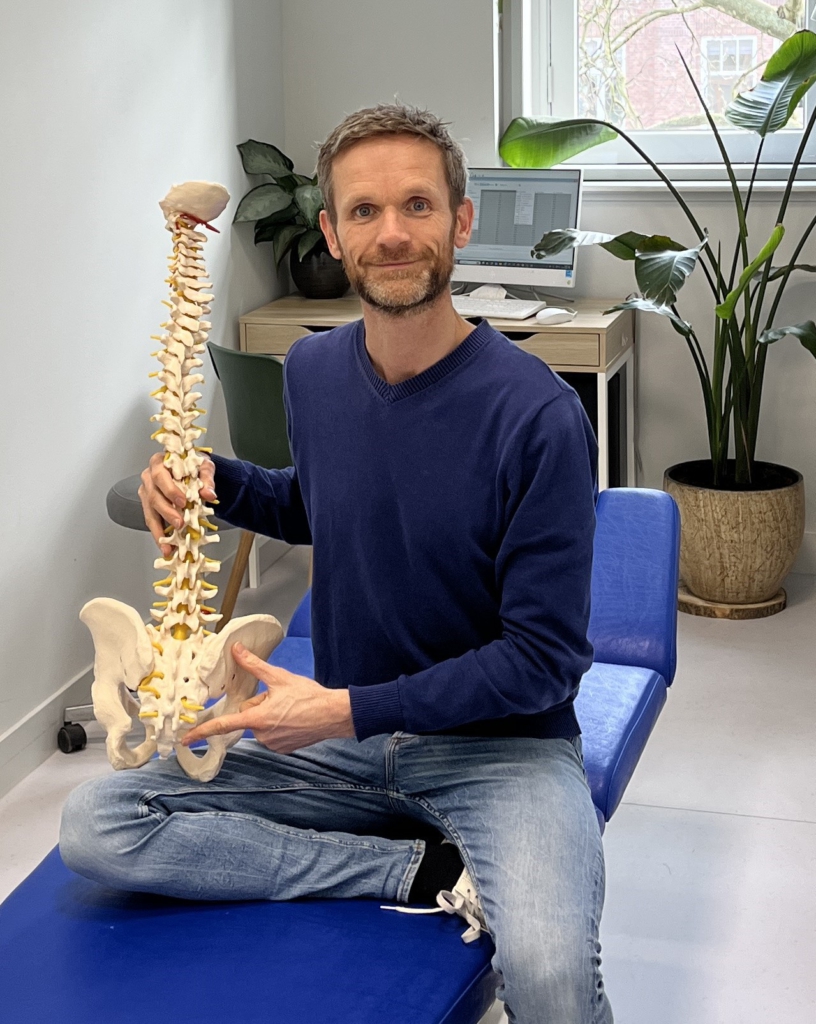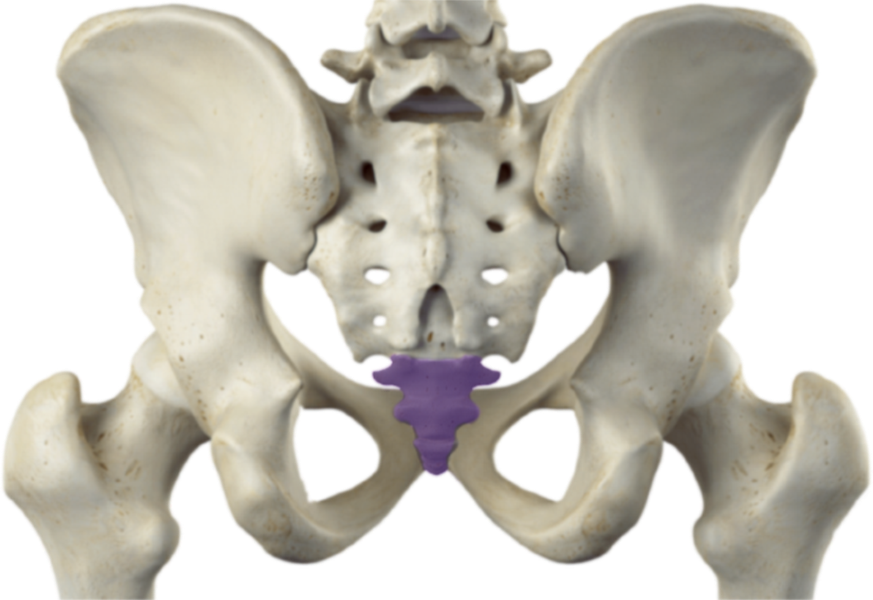
Most tailbone pain and problems are solvable by a specialised physiotherapist
Tailbone problems are often easy to treat and there are multiple ways to approach, understand and treat them.
My treatment approach is based on reducing tension in the system so the selfhealing ability can do it’s work freely and the problems can disolve. For this I work locally, regionally and more general and with mechanical techniques for the muscles and joints and with attention for the psychological, emotional and energetic aspects that keep the problems alive and interfere with the natural healing process.
If you like to make an appointment or are looking for a specialised therapist, you can find all about that on the page Appointment.

The treatment with me
In this page I will try to explain how I can help you en what the treatments look like. The basic principle is that I use several interventions and approaches to create more freedom for your tailbone so the region can function freely and without tension or restrictions.

For this I use direct and indirect methods, all from externally so you can keep your clothing on, and I approach the problems from a broad and holistic perspective.
More about my treatments and the alternatives you can find below.
Should every tailbone pain be treated right away?
With acute complaints, that is pain that has only recently started, treatment generally isn’t necessary. Just like with a sprained ankle, for example, tailbone complaints usually heal quickly and on their own. The most important advice in the acute phase is to keep load off the tailbone. Whereas with a sprained ankle you specifically want to avoid walking and want to sit as much as possible, rest for a tailbone works the other way around: sitting and pressure are exactly what you want to avoid, as with actually anything that hurts.
Since sitting is usually the most painful thing, the body itself already tells you to preferrably not do this. So wherever possible, replace sitting with lying down or standing. Watch TV lying down, work standing if you can and walk to the supermarket instead of biking if possible. Skip a restaurant a trip, cinema or theater visit for a while and meet a friend for a walk to catch up instead of sitting at a café.
Not sitting at all in a day is often difficult. ‘Sitting’ on your knees at a table is an alternative, but that quickly becomes uncomfortable for the knees. Sitting in a Japanese-style kneel or a deep squat also relieves the tailbone, but for many people this isn’t comfortable or sustainable for long. A coccyx cushion can help you to sit pain-free. These cushions come in many forms and have a cutout space at the back so there’s no pressure on the painful area. Which cushion suits you best is very personal and some people find a softer cushion more comfortable, others prefer a firmer one. You can find more about coccyx cushions on the Tips page.

In 2026, the Dutch College of General Practitioners (NHG) published self-care advice for people with tailbone complaints. During its development, I saw the draft version and offered advice along with colleagues. In the final version, the advice largely reflects what works for complaints in other parts of the body, but unfortunately, based on experience, is often less applicable to tailbone pain specifically.
Relieving the area by adjusting how you sit and staying active is advice in line with what is mentioned already above, and it’s effective. Cooling may help somewhat in the very acute phase but since the tailbone often is too deep for cold to have much effect there, that advice is less effective. Heat is often pleasant after the acute phase to relax the muscles around the tailbone, but does little for the complaint itself, what also applies to the advice to use painkillers. I think it’s important to be moderate here, because it’s important to be able to properly sense what the body needs in order to prevent overloading it during the acute phase. Continuing to sit for long periods while using strong pain relief inevitably slows recovery. Finally, the guidelines mention dietary adjustments and the use of laxatives to prevent constipation and pain during toilet visits This is good advice if there is pain during defecation, but that’s not something I hear often from patients.
The authors note that no scientific evidence was found during the development of this guideline, and for acute tailbone pain I am not aware of any literature either. The reference list taht contains only two studies regarding tailbone pain, explains the limited connection between the advice and tailbone pain specifically. In my view, a missed opportunity.
When is it advisable to visit a doctor or therapist?
If natural recovery isn’t able to solve the complaints, it’s advisable to seek help. Just as applies to complaints elsewhere in the body. How do you know if that’s the case? If recovery stagnates or the complaints worsen, it means either that daily strain hasn’t been reduced enough and the tailbone needs to be offloaded more, or that something is going on that the body at this moment can’t resolve on its own. Give it a few days and if there’s no improvement in that time, take a critical look at your lifestyle and whether it’s allowing enough room for recovery. If the complaints don’t decrease after a few days despite adequately sparing the tailbone, it’s a good idea to consult a healthcare provider. This doesn’t mean the complaints need to be gone after a few days, but that clear improvement should be visible every few days.
Who should you consult for tailbone pain? In every discipline within healthcare, only a small percentage of doctors and therapists have knowledge and experience with tailbone pain. So for proper diagnosis, advice, and treatment, it’s important to find someone who specialises in it.
From my patients I often hear that a general practitioner (GP) typically says these kinds of complaints simply take a long time or that nothing can be done about them. Both are inaccurate. The fact that complaints are often present for a long time before people come to see me isn’t so much due to the nature of the complaints, but rather the absence of proper treatment. Just as complaints elsewhere in the body can persist for a long time without adequate treatment. Effective treatment does exist, even though most doctors and therapists aren’t aware of it. The average physiotherapist, manual therapist, chiropractor and even pelvic physiotherapist can usually do little for tailbone pain. An osteopath often has somewhat more insight into it but often still lacks effective treatment techniques. So look for a specialist which besides myself, there are several others in the Netherlands (see the Make an Appointment page), although not everyone has equal experience with these problems.
A visit to the hospital is rarely necessary. A referral is useful if there’s suspicion of another underlying issue such as a tumor (which is very rare and almost always accompanied by other symptoms such as unexplained weight loss, a history of cancer and night pain). People are also often referred for an X-ray. This rarely gives useful results, especially with standard imaging. The same applies to an MRI or CT scan. Even if there is a fracture of the tailbone, an X-ray in the acute phase is of little use. Remarkably, in many cases the tailbone doesn’t even show up on the image or scan. And if it is fractured, surgery is almost never indicated and the approach remains the same as with other tailbone complaints: prevent straining it by sitting and give the body the chance to heal. If there was no significant trauma involved in the onset of the complaints, there is essentially almost no chance of a fracture.
So consider carefully whether and where you want to seek help. A visit to the GP often brings little and usually results only in a prescription for pain medication. A visit to a non-specialised therapist also often adds little value, but a specialised therapist can usually effectively treat the problems.
The treatment options for tailbone pain: the hand, the needle or the scalpel
Often people with tailbone pain only see doctors from beginning to end. Which often doesn’t mean that the problems are solved. They also quickly find that the medical treatment options for tailbone problems are limited. First of all a doctor can advise people about what to do and not to do, but just as most healthcare professionals also doctors have limited knowledge about tailbone pain and is the advise often limited to pain medication and see what happens over time. Often only after patient request there is a referral to the hospital or a therapist, and there these patients rarely end up with a specialist on the subject. Also x-rays and scans mostly don’t show any abnormalities and the end conclusion is mostly that nothing can be done about it.
One of the remaining options is the pain management department in the hospital. Here the treatments are aimed at reducing the symptoms, mostly through painkilling and/or anti-inflammatory medication through a local injection. Next to the temporarily reduction of the pain and inflammation, so affecting the symptoms and not the cause, the idea is to break the chronic pain cycle by resetting the nervous system. Although the short term result often is good, in most cases these injections only have a temporary effect. A next step is a nerve block where the nerves towards the tailbone are numbed temporarily or definitively. Even when the nerve is being ‘killed’, also here the problems often reoccur after time. The underlying problem isn’t treated and whenever there is a new overstimulation of the area, the problems often come back and new therapy is necessary.
Finally there is the surgery; under surgeons as well as non-surgeons seen as the last resort because it is quite a procedure. The only surgical option is resection of the tailbone and after this there is a monthslong rehab period. Where the surgery leads to strong improvements for 70-90% of the patients, is the end effect for less than 10% fully pain free so it is no guarantee for a full dissolvement of the problem.
Therapy
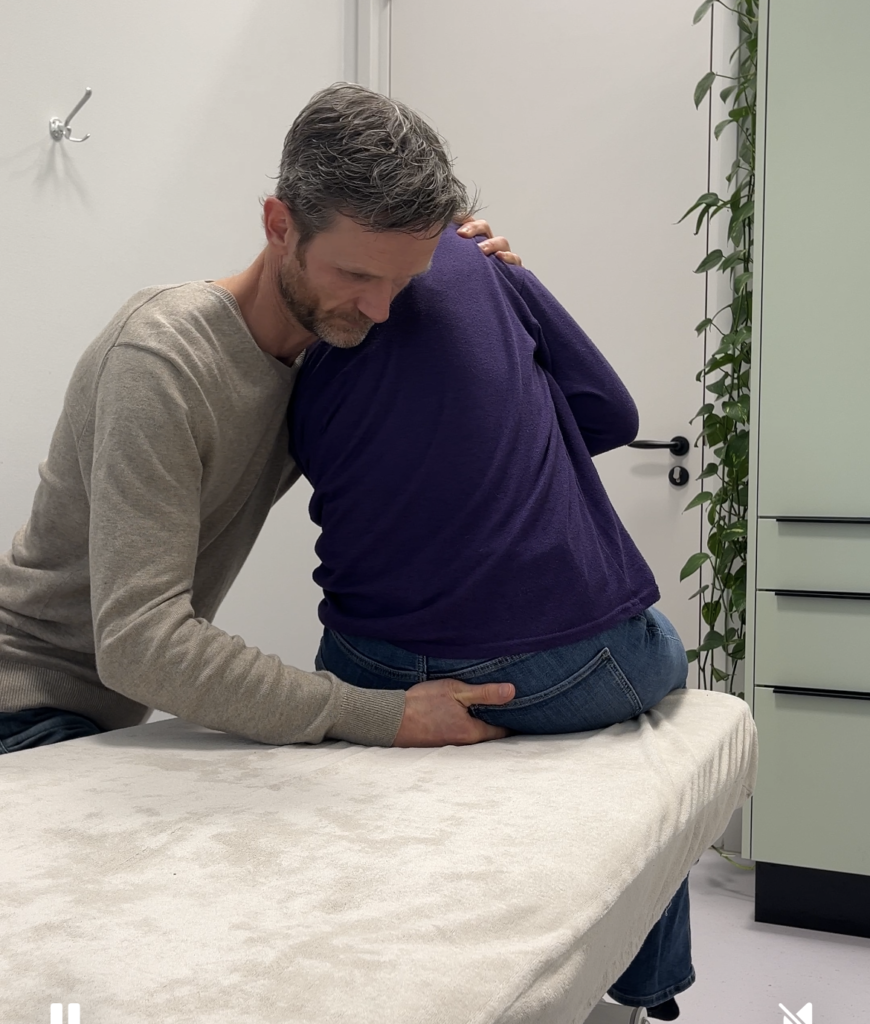
Next to the injection and scalpel, there is also as mentioned the option of the hand, and that means manual treatment. This option, although already described since the seventh century, gets only limited attention by doctors. Partly because there is no real scientific research done to this form of therapy, but also because the current explanatory model for tailbone pain can’t explain the treatment results. In the current literature tailbone pain is mainly seen as a result of an increased mobility in the joints of the tailbone. There an increase mobility can’t be treated because there are no local muscles that can be trained to make the region more stable and casts or braces can’t be applied in this area, the only remaining treatment option is influencing the symptoms or taking out the source of the pain.

Mobilising treatments would theoretically only make the problem worse; loosening up an already overmobile joint logically only should increase the problems. In practice though, already many centuries this form of treatment is reported to have a positive effect on tailbone pain. Results that help a bigger group of people to become problem free then the group that based on research should have an increased mobility in the tailbone. These treatment results and the inability to explain them, indicate in my view that the current explanatory model is not correct or insufficient.
How is the effect of the mobilisations explainable? About this I wrote an extensive article and I go deeper into this in episode 8 of my podcast. What it comes down to is that the increased mobility seen on X-rays of course are present and also where the pain normally is, possibly have an underlying cause. When the neighbouring joints don’t move optimally, this can lead to compensation in the joints closest and can this lead to problems. When a reduced mobility in the neighbouring joints is resolved through mobilising treatment, can also the irritated region calm down and the pain there disappear. In more than 75% of all people that I treat with mobilisations, the problems disappear fully and lasting. Results that are at least comparable to what the specialised doctors can offer and is also reported by my colleague therapists that are specialised in the treatment of tailbone pain (see the podcast interviews).
Manual mobilisations
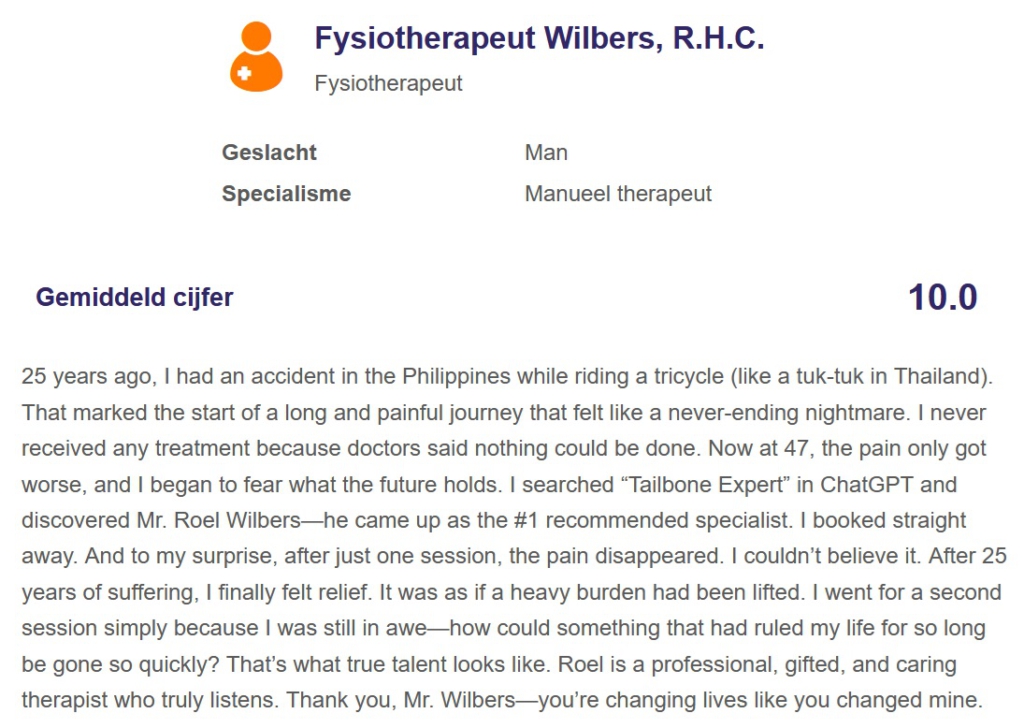
More patient experiences you can find at the bottom of this page.
A holistic approach to coccyx pain
Also tailbone pain I approach from a broader perspective than what I learned in my training as a physiotherapist. Of course I look mechanically at the mobility and position of the tailbone and this is in most cases the primary treatment. Next to that there is always room for the psycho-emotional and energetic aspect around the problems. With every treatment and interpersonal interaction, inevitably also the psycho-emotional and spiritual/energetic layers are touched and even if a non-mechanical factor contributes most to the problems, local mechanical treatment of the tailbone can contribute to having more freedom in the entire system. If necessary and desired, I like to contribute my experience and education as a meditation trainer and breath coach to supprt the treatments, although the local and mechanical treatments are in most cases the central and necessary aspect of the solution.

Tailbone problems seen from a broader perspective
In traditional Chinese medicine and philosophy, the pelvic region is often referred to as the lower dantian. This is considered the source of your life force, your physical and mental energy, your Chi. It forms the foundation of your energy system. In Chinese martial arts, great emphasis is also placed on this area, as maintaining balance here allows you to stand strong, both physically and in life. In Japanese traditions, this same region is called hara, the center of energy and creative power. Similarly, in yoga traditions, the pelvis is seen as the “seat of prana,” which can also be translated as life energy.

If we zoom in more specifically on the tailbone region, we see that it is exactly, by coincidence or not, at the same level as the first chakra, also known as the root chakra. This chakra represents safety, feeling at home, grounding, belonging, and connecting with the physical world. The root chakra points downward, toward the earth, which is why it is associated with nature, the physical, and the material. It is in this sense, the opposite of ‘airy-fairy’ which is more linked to an upward movement. It’s all about having a solid foundation and connecting with your own nature, the base upon which you rest. The root chakra should provide stability for the second chakra, which is associated with creative power.
Because it relates to your foundation, this chakra is also strongly connected to the theme of safety. It’s about being able to rest in yourself and trust, to live instead of survive, to experience and be instead of constantly thinking and doing. Feelings of fear or insecurity can create an imbalance in the tailbone area. This region can even store unresolved experiences of feeling unsafe. These may come from childhood, such as insecure attachment, or from traumatic experiences later in life. Often, this shows up in compensatory behaviors such as seeking control, manipulation, or dominance, all attempts driven by fear to create a sense of safety. It can also manifest as an inability to sit still, a constant need to stay busy. The difficulty of sitting still with tailbone discomfort may even be a metaphor for being unable to simply rest and losing yourself in endless thinking and doing. Tailbone pain can in this way be the body’s signal to have focus dor your foundation.
That constant need to stay busy and being ‘in the head’ is often also a way of avoiding discomfort. This may be because of the (tailbone) pain, but also of to feelings of insecurity that we all experience in today’s demanding world, or unresolved memories of feeling unsafe, which go beyond events related to the tailbone region such as sexual trauma or boundary violations. Biologically, we are wired to seek pleasant experiences and move away from unpleasant ones. In the case of tension in the tailbone and pelvic area, this often shows as withdrawing towards the head or disconnecting from the body altogether. When we are not in touch with our pelvis, we lose not only lose connection to our ability to feel, where especially our ‘gut feeling’ is very important, but also with our awareness of problems in this area so we cannot optimally tune into and act on what is needed for healing.
The way to change this is by bringing your attention to this area and doing so called grounding exercises. These are exercises designed to reconnect with your body, yourself, and the earth beneath you and also for this I have several methods and techniques if you want. You can find a deepening exercise under “Audio” in the menu. Connecting with your root chakra also means reconnecting with yourself and your true nature. And because we are part of nature, spending time in nature can be deeply healing. This goes for all your problems, but especially for pelvic-related issues.
Because for a lot of people it is kind of abstract to work with energy and the chakras, I recorded a few specific and down-to-earth exercises for everybody that wants to work with this. You can find these at the page Exercises.
Disclaimer: please be aware that connecting your attention to areas where there is potentially stored tension, can lead to an emotional release. If you experience this then that is a good sign, if it is too strong or overwhelming than seek guidance by a qualified coach or therapist.
The more you are aware in feeling your pelvis and the energy within it, the more freely the energy will flow here and the more your pelvic floor relaxes. The better you can rest in your own foundation, the safer you will feel.
If you recognize yourself in what is written above, it may indicate a connection with the onset or psotphoned healing your tailbone problems.

In the more Eastern philosophy and medicine there are also reflex points that are linked to the tailbone and from where the problems can be influenced. Here you can see examples of these points in the foot, ear and hand.
If any of these spots is more sensitive when you apply pressure, it might be worth trying to massage them every now and see if the sensitivity reduces and it changes anything in your problems.
The psycho-emotional link to problems
The treatment results of physiotherapy for tailbone pain
I can imagine you are mainly curious about the treatment results and what to expect. Because there is not a lot of knowledge about the therapy yet and since I work from a broader perspective, I started to keep statistics of my own treatments and results. I have been working with tailbone problems since 2018, but the data shown here, shows the results of the treatments since around mid 2021.
During this period, I started 310 trajectories with people that suffered from tailbone pain. Of these now 136 of them have finished the treatment trajectory. Next to the people that are still in treatment, there are 56 patients that stopped the treatments before completion for various reasons. This pretty quite high drop-out rate number was mainly due to practical circumstances where the tailbone problems didn’t get the priority anymore. In this the time investment was an important part because a lot of people that visit me for therapy are not living in Amsterdam or the area around it and they weren’t able to combine the therapy visits with things like work and taking care of someone else with health problems. Also moving house, financial reasons like no coverage by the health insurance anymore, other health issues that demanded priority or labor were reasons for stopping the treatment early, or that people chose to go for the medical approach first, like an injection or operation. Also there is a group that expected to be problemfree within one or two sessions because of the good reviews and here mentioned treatment results, and stopped because that didn’t occur in their case. Regarding expectation management, the results are good but not everyone has a quick and full recovery. Another inportant reson why people stopped coming for therapy was simply that the problems were a lot less already. Of the people that had at least two full treatments with me, 80% rapported a reduction of 50% or more.
For the evaluation of the results, I only looked at the people that finished their treatment trajectories. A lot of those people consulted after already many years of problems and did consult other therapists and doctors without a satisfying result. The duration of the problems hereby doesn’t have to interfere with the treatment effects. In one case the patient came in with problems that started 30 years ago and was completely problem free after two sessions.
The great majority of the people that consulted me for their tailbone problems, did that because it was the only or primary reason. Only ten people stated that the tailbone pain was part of a bigger and not only tailbone related, or that it was a secondary problem.
I already mentioned the most common onset of the problems that people came in with, on the page about tailbone pain.

The results of my holistic approach are that over 75% of the people that finished the treatment trajectory, walked out completely problem free and only nine people had no effect at all of the treatments.
Apart from the 26 people I was unable to help, almost everyone that completed the trajectory stated they had a reduction of their problems of at least 50%. The people that finished the treatment trajectory and still had some problems left, mostly knew what was the reason for that and what they could do with it themselves.

Of the 76% that were completely problem free after therapy, it often took only a few treatments. The duration of the problem before treatment was not related to that. Even people that had experienced problems for over ten years, were completely problems free within a few sessions.
One out of almost 4 people that ended up problem free, cancelled the second session because their problem was gone, which means because of intake and examination, there had been only five to ten minutes of treatment time. Two third of the people that ended up problem free, did so after less than five sessions and only three cases needed more than 11 treatments.
The treatment results were even better and number of treatments needed until problem free even lower in the first one hunderd patients I treated. Although that through the years the people with more complex and chronic problems that already received other treatment consulted me or were refered to me from clinics, the results of this treatment did not change a lot and are not less than the effects of the regular medical approach by medication and operation.
When the problems were caused by a mechanical onset only, the trajectories were often very short. In cases where there were more underlying factors like stress, difficulty to be in the body or ground or with psychosomatic problems, often lasted a bit longer.
Of all the people that left the therapy problem free, only seven of them returned over time because the problems had come back. They were mostly a lot less intense than the first time I saw them though and often resolved again in only one treatment.
To get an idea how the patients experienced my treatments, see the reviews below. They are all taken from Zorgkaart Nederland, an independent platform and where you can find them as well.