
8tracks icon Behance icon Blogger icon CodePen icon Delicious icon DeviantArt icon Dribbble icon Etsy icon Facebook icon Flickr icon Foursquare icon GitHub icon Google+ icon Instagram icon Last.fm icon LinkedIn icon Myspace icon PayPal icon Pinterest icon SoundCloud icon Stack Overflow icon StumbleUpon icon Tumblr icon Twitter icon Vimeo icon YouTube icon Yelp icon
DE STIT THERAPEUT

The Tailbone Podcast: Expert Talks

6. Marianne Bleijenberg – Pelvic physiotherapist

Marianne has a masters degree in pelvic physiotherapy and her working days are fully focused on patients with pelvic problems and tailbone pain. She is very experienced and approaches tailbone pain from a very wide approach.

Jump to transcript

Approach persistent tailbone pain as pelvic pain,
so as more than just a local disfunction

– Marianne Bleijenberg
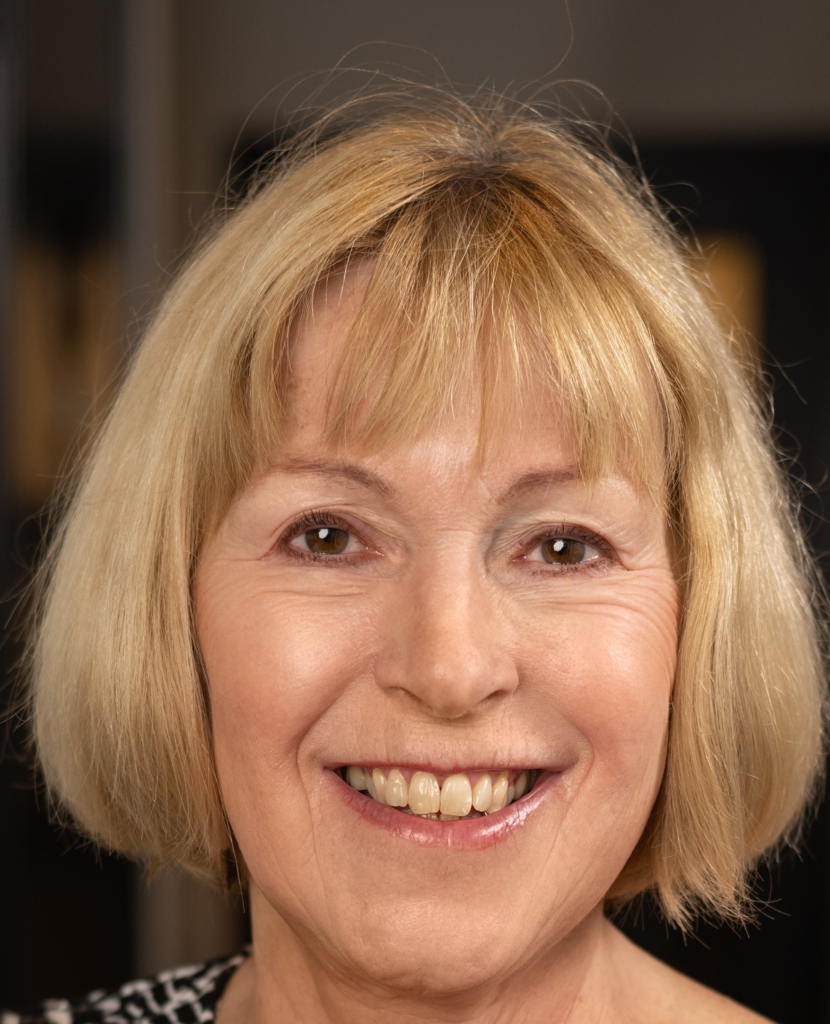
Our guest today is Marianne. She is a very experienced physiotherapist and pelvic physiotherapist. Although she is 70 years of age, she still works two days a week in the clinic she founded because she loves what she does. In her working days she sees a lot of people with tailbone dysfunction and developed an expertise on treating them. After hundreds of patients treated, she built a lot of experience around this topic, which she also teaches about to other physiotherapists.

What makes her approach different from most of the colleagues is that she approaches tailbone problems from a much wider perspective then what is taught in the courses. She incorporates next to the mechanics of the joints and influence of the pelvic floor muscles, also the psycho-emotional aspect, breathing and the influence of fascia on the tailbone. This wide scope brings the patients excelent results.

In this episode we will dive into her approach and experience as a pelvic physiotherapist. On tailbone and pelvic pain but she also has very valuable things to say on therapy in general wherefor this episode is also very informational for therapists and physicians.

You can find the podcast in the menu under Podcast as well as the links to the platforms where it is posted.


Resources

Marianne gave three practical tips and exercises for people suffering with tailbone pain (you can listen to her explanations in the episode from 1:02:30 onwards)

1) Sit on a heat pack that is placed between the buttocks from front to back under the pelvic floor and until the tailbone. In this video she explains how to apply it.

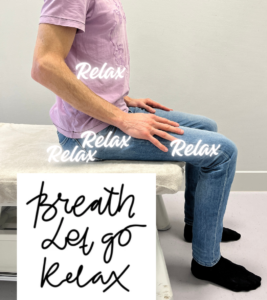
2) Sit in a relaxed but not slouched position and consciously relax the belly, the buttocks, the legs and the pelvic floor. Do this preferably every hour and then shortly for a few times. You can also do this in a standing position.
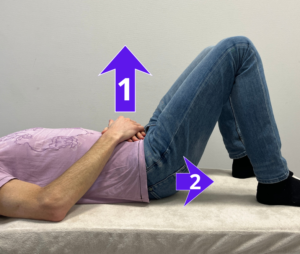
3) On your back with your knees bend and feet flat on the floor, put your hands on your lower belly and normally breath through the nose towards your hands. Without forcing it, help your breathing to move the belly upwards towards the hands on the inspiration. Feel when the belly expands, the pelvic floor relaxes.

If you are looking for more specific exercises to relax the pelvic floor and some audio’s that guide you through the process, you can find them on my website by clicking here.


Therapy by Marianne

Marianne works, at the time of recording, at Zorgpraktijk Flore in Waalwijk in the Netherlands. If you are interested in treatment by Marianne, you can find the institute here.


Get in touch

If you have any questions about anything in and outside of this episode, comments or requests, let me know! You can email me through the contact field below or directly at roel@roelwilbers.nl

Transcript

Roel Wilbers

0:04 Welcome to The Tailbone Podcast.

0:06 My name is Roel, and as your host, I bring you only experts, lists from most doctors and therapists, unknown problem.

0:12 Let's dive in with today's episode.

0:17 Welcome to this new episode of My Tailbone Podcast.

0:20 And today I will talk to Marianne Bleijenberg.

0:23 And Marianne is a pelvic physiotherapist that has a ton of experience with pelvic but also tailbone pain.

0:29 She graduated as a physiotherapist in 1982, and after having her own practice in Switzerland, she moved back to the Netherlands, where she started a practice for Physio and Pelvic Physiotherapy in 2007 in Waalwijk,

0:40 and that's in the south of the Netherlands.

0:43 Where she could very well be enjoying her pension now for a few years, and she passed the practice on to her colleague.

0:49 She loves the profession so much that she still works two days a week here.

0:54 Through her career, she saw many hundreds of patients with tailbone pain, and she also teaches courses to physiotherapists on the subject.

1:01 We know each other from a masterclass that I gave for the Institute of Cecile, who was my guest in the second episode.

1:07 And me and Marianne recently had such an enjoying conversation online about our common passion of the tailbone, that I love to have her on this podcast to share that with you in the world as well.

1:18 Not only do we see a lot of people with tailbone problems as a physiotherapist, we also have in common that we approach the matter from a very wide perspective.

1:27 One patient of mine that will be a guest on my podcast in the near future stated that he experienced the tailbone world as a group of islands where every healthcare provider only approaches it from their own expertise and there doesn't seem to be too much connection or collaboration between the specialized professions.

1:42 That bridge I try to build here with this podcast, which is mainly for patients that suffer from tailbone problems, but also for healthcare providers that work with pelvic and tailbone problems.

1:52 Me and Marianne both share an unsatisfiable hunger to dive deeper into the different approaches and don't stop where our professional education ends.

2:00 And where I am halfway through my career, it's inspiring that Marianne still has this beyond where most physios call it a day.

2:08 We both are interested in the mechanical as well as the pelvic floor influence on tailbone pain and in the latter, Marianne is very well trained as a pelvic physio.

2:18 We both incorporate factors like breathing, treatment of the diaphragm and relaxation into therapy.

2:23 And she also is very knowledgeable about fascia, which is still an undiscovered area for me.

2:28 You will find that she has a great enthusiasm for the profession and helping people.

2:32 And she shared with me that is also the reason that she's still active as a professional.

2:36 She loves the puzzle and the complicated cases that give her so much energy that she continues doing that what she loves for two days a week.

2:43 Marianne, I researched a little bit, has a lot of online reviews on the biggest independent platform for healthcare providers in the Netherlands.

2:50 And they are all very enthusiastic about her.

2:53 Some of the compliments given here is that she's skillful, professional but accessible, experienced and determined, adequate and has a clear approach, has a very personal approach,

3:06 makes you feel being heard and understood, creates a safe environment.

3:12 She is light and has a friendly approach, but also has a humorous side that is very well received by the patients.

3:19 She's a good listener and provides the time for you.

3:22 She quickly gets to the core of the problem.

3:25 Her results are very good and also quick.

3:27 And one patient called it its care with a capital C.

3:31 Today she will take us along in her broad and deep knowledge and experience.

3:35 And I'm really looking forward to this episode.

3:38 And I'm thrilled that she accepted my invite and is joining us today.

3:41 So, welcome Marianne.

Marianne Bleijenberg

3:43 Yeah.

3:44 Thank you, Roel, for this introduction.

3:47 It's incredible that those reviews, I didn't know about it.

3:50 So I suppose now you know more about me than I know about myself.

3:55 That's very nice.

Roel Wilbers

3:57 I never share the intro with the guests.

3:59 It's kind of the surprise which I did.

Marianne Bleijenberg

4:01 Yeah, I didn't know that.

Roel Wilbers

4:03 I will send you the link to your reviews.

Marianne Bleijenberg

4:05 In fact, the only thing I can say about myself and plus is, I would describe myself as a chaotic perfectionist with a sense of humor, I suppose.

Roel Wilbers

4:18 That is acknowledged by me and acknowledged by your patients in the reviews.

4:21 So that's cool.

Marianne Bleijenberg

4:22 And to be honest, I think that's so important because when you can laugh, that's the moment also you start already a relaxation of the patients.

4:32 And sometimes I really say stupid things, but they like it.

Roel Wilbers

4:37 Sometimes that's useful.

4:38 But I also know you say a lot of wise things as well.

4:41 So that's cool.

4:42 So as an introduction for yourself, who are you as a health care professional?

4:45 We kind of like a little bit got to know you already.

4:48 But who are you as a person?

4:50 A short introduction so that people know that who they're listening to today.

Marianne Bleijenberg

4:54 It's always difficult to describe yourself.

4:58 I can say I have a broad range of interests.

5:01 I read a newspaper every day since I can remember it from the beginning to the end and back.

5:07 And that's not only so in general, but also as a health care specialist, I'm very curious.

5:13 But the last years, because I'm a pelvic floor specialist, my interests are more about this area.

5:18 So I really like to learn more and more and more.

5:22 And I can remember when I started to be a physiotherapist a long, long, long time ago, I thought I knew a lot.

5:30 And then I start working and I saw, I knew only a little, a little, a little bit.

5:37 Very often I see also that colleagues who started, they think they know a lot because they read it but finally we don't know a lot.

5:44 We have to learn it through the practice over the years.

5:48 And still now I think, oh, I didn't know that, oh, I like to learn that.

5:53 But that's with everything in my life.

5:55 I'm curious.

Roel Wilbers

5:56 Hmm, that's a great asset, especially as a therapist.

Marianne Bleijenberg

5:59 Yeah, a negative aspect is that I can talk about a lot of things, not everybody likes that.

Roel Wilbers

6:06 I just got to know that as a lot of enthusiasm.

6:09 I really recognize that.

6:10 I think personally as a physiotherapist, when I thought I knew most, that was directly after my education, because you learned all the theoretical parts and especially for working with people,

6:20 there's no two, the same people.

6:22 If you work on a car, the car is pretty equal every time, right?

6:25 Different brands maybe, but things are the same place, cars react in the same way, and people are completely different.

6:30 So I really recognize that.

6:32 And also with every answer, there comes two more questions, right?

6:35 It's a non-ending process of learning.

6:38 And if you recognize that, and you also actually go into that, that's what I think makes you a great therapist, instead of holding on to what you know,

6:45 and just staying in that same perspective.

Marianne Bleijenberg

6:48 Yeah, and I'm an ex-analyst, I'm at the pelvic floor of physiotherapy.

6:51 And so the students, they have to show what they can.

6:55 And sometimes I think, oh my god, how I am doing that?

6:59 Because after a while, you're so in the habit of doing the same things, that there's no reflection anymore.

7:06 So I thought, oh my god, perhaps I'm doing that wrong.

7:09 And then I was in my office again, and I saw I did it okay.

7:12 But I think it's very good to look and always to think, okay, is what I'm doing okay?

7:19 Can I do that better?

7:20 Because sometimes you're doing some things a long time, and you forget the basic of it.

7:27 So you have to go back, reflection.

7:29 I think that's important for everybody in this life.

Roel Wilbers

7:34 I think in general, but especially for therapists and doctors, and the problem is that we start working, and we don't have any supervision anymore, right?

7:41 So there's no one next to you in the treatment room telling you or asking you what you're doing.

7:45 There's no specialist next to you.

7:46 So I think this is a great asset to have.

7:49 So you are a physio, and we already mentioned, you're a pelvic physiotherapist.

7:54 And if there's one therapist around there that you would be expected to be educated in tailbone pain, it would be the pelvic physio.

8:01 And as mentioned in a previous episode with your colleague, not direct colleague, but also pelvic physiotherapist Doreen in episode three, you're actually the one that taught me that there's a difference between a pelvic therapist and a pelvic physiotherapist,

8:14 at least here in Holland.

8:16 What was the difference?

Marianne Bleijenberg

8:17 There's a big difference.

8:19 To be honest, it's only in Holland, this and this is Caesar, and before it was the other therapy and physiotherapy.

8:24 It only exists in the Netherlands.

8:26 Pelvic physiotherapist is a physiotherapist who have done first four-year physiotherapy and then three years to master.

8:34 And a pelvic therapist is some cautious.

8:37 So the pelvic therapist may not do an internal examination, and this internal examination is very, very important.

8:45 Sometimes you think you can feel it at the outside, but feeling at the outside and feeling at the inside, there can be a big difference.

Roel Wilbers

8:53 So the pelvic physiotherapist is mostly, at least here in Holland, and I don't know how it is internationally, the better trained one.

9:01 And the pelvic therapist, I don't know, is that a protective title?

9:05 I mean, the pelvic physiotherapist, you actually have to have a degree, right?

9:08 So, and the pelvic therapist is more of a title when everybody can call themself a pelvic physiotherapist.

9:14 Is that true?

Marianne Bleijenberg

9:15 Yeah.

9:15 And I work with a colleague and she teach in the university in Brazil.

9:20 And there is also a university degree to be a pelvic physiotherapist.

9:25 And the pelvic therapist, not.

Roel Wilbers

9:29 I think this is important for patients, which are looking for help, that not every pelvic therapist is also, for instance, skilled in doing the internal examination, which I personally don't do as a physiotherapist.

9:40 I work only from externally, but I can definitely imagine that it has an extra benefit to also do the internal work.

Marianne Bleijenberg

9:46 Yeah, especially with the complicated patients.

9:51 If you have a fresh injury and the patient comes directly to you, sometimes after one or two treatments the problem is solved.

9:59 But in the moment, the problem is longer than the pelvic floor started to be involved and you have a lot of contraction of other muscles.

10:08 I think then the best is to go to a pelvic physiotherapist or a master of science.

Roel Wilbers

10:15 Yeah, definitely.

10:15 They are specialized there.

Marianne Bleijenberg

10:17 Yeah.

Roel Wilbers

10:17 Perfect.

10:17 Thanks for clearing that up.

10:19 So you did a few educations as a physiotherapist.

10:23 What did you learn about the tailbone and about the problems there and the treatment options?

10:28 Outside of the specialized courses which you did afterwards, but just in your basic training as a pelvic physiotherapist?

Marianne Bleijenberg

10:34 Nothing in the beginning, because I did it in 2007 before.

10:38 And the first time I did a course was 2013, because colleagues said to me, yes, go to that course, it's very good.

10:46 But in 2007, we didn't know nothing about it.

Roel Wilbers

10:50 So 2007 was your pelvic physiotherapy education?

10:53 And in 2013-14, you went into a specialized course about the tailbone.

10:57 Do I understand that correctly?

Marianne Bleijenberg

10:58 Yes.

Roel Wilbers

10:59 Thank you.

Marianne Bleijenberg

10:59 Yeah.

11:00 And you know, the title of Pelvic Physiotherapist is not so long.

11:04 I think since 2004-5.

11:09 And in the beginning, it was more that you had to show your competences, and then we had to do extra courses.

11:19 And then later on, then they started with the Master of Science System, 3 years' education of the Master of Science.

11:26 So I'm not, I'm still the old one.

Roel Wilbers

11:28 Old school.

Marianne Bleijenberg

11:29 Old school.

11:30 But it was already 3 years, but not with the scientific part.

Roel Wilbers

11:35 Yeah.

11:35 But also not a big awareness of the tailbone.

11:38 And what I hear from colleagues that actually doing the education right now, it is mentioned, it is mentioned that there are therapy forms, but still also in general,

11:47 and you speak, of course, to much more pelvic physios than I do, it's still a topic which is not really addressed, or at least as a pelvic physiotherapist,

11:57 it's not a guarantee that you can treat the tailbone.

11:59 Is that correct?

Marianne Bleijenberg

12:00 Yeah, that's correct.

12:01 Because I told you, I'm an examiner at the HBO, and they don't have this subject, because they need more scientific research.

12:13 And if you're learning physiotherapy, it always has to be a scientific proof, and it doesn't have.

12:21 We know about the empiric, that we have these good results, but still we need good research about it.

Roel Wilbers

12:30 More and more.

12:31 That is important.

Marianne Bleijenberg

12:31 What you're doing.

Roel Wilbers

12:33 What I'm doing, yeah, I'm preparing scientific research, yeah.

12:36 That's a very good point.

12:37 Nowadays, the education system is much more based on scientific findings.

12:42 And for instance, here in Holland, you see that, for instance, massage therapy is hardly a part of the basic physiotherapy training anymore, which I think is a great asset we're losing.

12:50 And in the tailbone world, there's not a lot of scientific research.

12:54 So it's not addressed that much.

12:55 So I think that's a very important point why it's not out there.

13:00 How did you become a tailbone specialist?

13:02 Because you actually treat a lot of tailbone people.

13:05 How did this come across and where was this interest sparked?

Marianne Bleijenberg

13:09 Yeah, in fact, the reason I started to be a pelvic fissure therapy, is because I worked on a long-ready science 1982 with pregnant women and after childbirth.

13:19 So I saw a lot of women with pelvic pain.

13:22 And then I had results, but I was not so happy.

13:26 I thought I can do more.

13:28 And then I think in 2030, a colleague said, go to this tailbone course of Marianne Feldman, because it's very good results.

13:36 And so then I started to do my first course about the treatment of tailbone.

13:42 But I was not so happy with this course.

13:44 And then I did two courses with Sietzke, but I was still not happy.

13:49 I did one again with Marianne, and then I was more happy and then more and more.

13:54 And in the beginning, I only treated women during the pregnancy before and after.

13:59 But then slowly I saw, okay, I can do this technique with also other people, men and children and with other problems.

14:08 So slowly I started to treat more and more and more people with not only tailbone problems, with problems around the pelvic.

Roel Wilbers

14:19 Yeah.

14:20 And for the listeners, this course, and Marianne is mentioning the different educations she did, she had four or five trainings, especially for the tailbone, but it's mostly one day.

14:29 It's not really extensive.

14:30 It's not a lot.

14:32 There's in Holland two educations for it.

14:34 The NEMOC method of Sietzke, what she mentioned, and Meijner-Veldman method, which is given by Cecile Rust.

14:40 And more about the method of Sietzke, that is where Doreen also is teaching, which was, I guess, in episode three, and Cecile was, I guess, in episode two,

14:48 and she teaches the more original Meijner-Veldman work.

14:51 And these courses are just one day, and maybe two days.

14:55 So it's not extensive, but you learn a technique, and this is where you actually start to be able to treat the tailbone, which is amazingly simple, often.

15:04 But you have to know what you're doing, of course.

15:06 Yeah.

Marianne Bleijenberg

15:06 I gave also a course, and I gave one in Switzerland, and I gave two days.

Roel Wilbers

15:12 About tailbone?

15:13 Yeah.

Marianne Bleijenberg

15:14 Because it's not only telling what to do, I just wanted also that they were practicing on each other.

15:21 So I want, when they get home, that they knew exactly how to do.

15:25 So for me, it's better to do it during two days.

Roel Wilbers

15:29 Yeah, I really agree.

15:31 Because before, when I did this course for the first time, I never touched the tailbone in my career, and I was already 15 years in.

15:38 Right?

15:38 So I'm creating a course now myself for physiotherapists, and I want to do it at least two days, because you want to have the feeling.

15:46 And often also, I think you recognize that patients come to you, were already with someone who did the course, the technique was applied to them, but it didn't really work.

15:54 And then they come in, and you do the technique yourself, and not that I find myself better, but I'm just more experienced, because I see half of the time only tailbone people,

16:03 and it works, and it's something that you really have to practice, and one day is not enough.

Marianne Bleijenberg

16:07 Yeah, and I think two days, the best would be then after several months, a refreshing day.

Roel Wilbers

16:13 Yeah.

Marianne Bleijenberg

16:14 Because I saw also when I did some courses, that people who had done it before, and I thought, oh my God, what are you doing?

16:20 They did it totally wrong.

16:22 So you are doing a course, you think you can do it, but nobody controls you.

16:27 And then I saw them and I think, how can you have results with this way?

16:33 How are you doing it?

Roel Wilbers

16:34 I think that's very important.

16:36 Also for the listeners, if you already were with someone that did that technique, it doesn't directly mean, and I'm not implying that everybody who did this course does the technique wrong,

16:46 of course.

16:46 But it could be that if you have someone who is a little bit more experienced, that the technique does work.

16:51 Because also the problem is there's not too many tailbone patients around.

16:54 So if you do this course and then you don't see anybody with tailbone problems for three years, and then someone comes in and you think, oh yeah,

17:02 I did this course like three years ago for one day.

17:04 It's, of course, hard to have this technique present and effective as well.

Marianne Bleijenberg

17:09 Yeah, but Roel, I think we have to leave the idea it's only a tailbone problem.

17:16 So often people come to me with pelvic pain.

17:20 They have pain during sitting, they have revert pain, they have lower back pain, and that comes out to be a tailbone problem.

17:30 I think 90% of the people don't recognize it as a tailbone problem, but they have pain.

17:37 Pain during sitting, standing up, and this pain comes because the position of the tailbone is not good.

17:45 So the pelvic is not in a good position.

17:48 So if you're only searching for people with tailbone pain, as they describe it as a tailbone pain, that's a small, small amount.

17:58 Most people have complaints, and the origin of these complaints is the tailbone problem.

18:05 But they don't recognize it as that.

18:07 They don't tell it like that.

18:08 And then I think you're very often people with tailbone problems, but you don't recognize it, and the patient doesn't recognize it.

Roel Wilbers

18:18 So you see people that actually come in?

18:20 Every day.

18:21 And do you also see people that actually have a tailbone problem where the tailbone doesn't hurt?

18:25 Or is that always part of the problem?

Marianne Bleijenberg

18:28 Not always.

18:29 In the beginning, I thought it is necessary it hurts, but sometimes it's very painful, sometimes a little bit.

18:36 But the problems they have is because the position of the pelvic is not bright, so they're standing in a little bit of a shardshift.

Roel Wilbers

18:46 So you mean the pelvic joins?

Marianne Bleijenberg

18:48 Yeah.

Roel Wilbers

18:49 The SI joins.

Marianne Bleijenberg

18:49 And then I see a big difference, and then I do a lot of tests, and then I palpate, and then very often I feel the position is not good or is a little bit painful,

18:59 but that's not only the complaint, they are coming to me.

Roel Wilbers

19:03 Understand.

19:04 Yeah, understand.

19:05 So the tailbone can hurt, but the tailbone can also not hurt, and it still can be a tailbone problem.

Marianne Bleijenberg

19:12 Yeah.

Roel Wilbers

19:13 And the physio or a manual therapist would treat a tailbone problem mainly from the pelvic joints, and then hope the tailbone also comes along, right?

19:22 Tailbone specialists often do it the other way around.

19:25 Is there an approach that you follow first?

19:27 Do you first go for the pelvic joints and then correct the tailbone?

19:29 This is what Marianne does nowadays.

19:31 Or do you approach it from the tailbone and then the pelvic joints are secondary?

19:36 Or do you just blend it in and take it all at once?

Marianne Bleijenberg

19:41 I did only the tailbone.

19:42 And then after last course with Marianne, I started to do also the other joints, and then my results are better.

19:52 But the first treatment, I don't want to do too much, because I think it's also important that you know what is working.

20:01 When you do a lot of techniques, you don't know which technique is working.

20:04 So I do only two things, and mostly I see already a big difference.

20:10 I send them home, I give them some exercise, and let them come after two weeks.

20:14 Sometimes it's not necessary, because the problem is solved.

20:17 And then I start to treat more things, not too much in one time, because if I do too much, I don't know what's working.

Roel Wilbers

20:24 Yeah, fully agree.

20:26 You say you do one or two things, the first treatment, is that always kind of the same start, or does it completely differ per patient?

20:33 What do you do with the first treatment?

Marianne Bleijenberg

20:35 I do my research, I'm looking at the position, and then I do the correction of the tailbone.

20:40 And then I look at the SI joints, and if there's a problem, I very often also do, sometimes I do some rotation of the hip, and I see it's very stiff,

20:50 it can be because the piriform is involved also, and then I send them home with some exercises.

Roel Wilbers

20:57 So you actually start with the tailbone, and then maybe the pelvic joints, and then because you also have this huge amount of knowledge about the pelvic floor,

21:05 that comes later along, and of course you also take that into account.

Marianne Bleijenberg

21:10 It's also already with the interview you have with Rene, sometimes people have pelvic floor issues, not tailbone pain.

21:19 I do the correction and then it's already much better.

Roel Wilbers

21:23 For the pelvic floor.

21:24 For the pelvic floor.

Marianne Bleijenberg

21:27 When you only talk about the tailbone pain, you do a limitation of your treatment, but I talk about pelvic pain.

21:35 It's bigger, it's included because the coccyx is a part of the pelvic.

21:41 Yeah.

21:42 Then depends, is the fresh injury, then you need one, two treatments, or do they have already during a longer time, and then a lot of muscles are involved and have a lot of contraction and pain,

21:57 and I need more treatments, and then I have to do also the pelvic floor.

22:02 So it can be that somebody comes for a urine loss, and they have a very tensioned pelvic floor.

22:09 I do this tailbone correction, and they have already less problems after.

Roel Wilbers

22:16 Very clear.

22:16 I mean, I focus here so much on the tailbone because it's The Tailbone Podcast, but of course it's a part of a bigger area, and all is of course interconnected.

22:26 I think, and I just want to hear your opinion about it, I don't think there's a tailbone pain without an increased pelvic floor tension in general.

Marianne Bleijenberg

22:34 That is because when it's fresh, when it's a young child and they fall with skiing and have this tailbone pain, they have really a tailbone pain, then normally the pelvic floor is not involved.

22:44 Then after two to three turns, okay, already.

Roel Wilbers

22:47 I'm more talking about that there's this defiance muscular, this protective specimen in the pelvic floor already, and I hardly see any acute patients as well.

22:56 Makes most of the problems for years.

22:58 And there's always this interconnection between what I think I see is a heightened tension in the pelvic floor and pain in the tailbone.

23:05 So they kind of influence each other and yeah, it's just choosing the way in.

23:09 It's very interesting for me to hear that you actually start with the tailbone.

23:12 And it's also an easy technique to do for the first time, right?

23:14 So this technique is pretty simple.

Marianne Bleijenberg

23:16 Patients always say, what did you do?

23:19 I say, it's magic what I'm doing.

23:21 Because to be honest, it's so an easy, slow movement, nothing special.

23:28 And then suddenly the problem is almost solved.

23:32 That's incredible.

23:34 Every time, I'm also astonished about what's happening.

23:39 They cannot bend forward in the beginning, and I do this correction, and then they bend forward without any problem.

23:45 They cannot stand on one leg, and they can stand on one leg.

23:48 It's incredible.

23:50 That's magic, isn't it?

Roel Wilbers

23:52 It definitely seems so for the patients.

23:54 I had this one patient of mine, which I think I told this story before here on the podcast, but she came in for the second time.

24:02 I said, how did it go?

24:03 And she said like, well, yeah, well, 80% of the pain is gone, but, Roel, let's be honest, it wasn't really impressive what you did the first time,

24:12 right?

24:14 She was just like, what?

24:16 You just hardly touched me.

24:18 And I think it's good also for the listeners to know that it's such a mild technique.

24:22 And I often compare it to a pinky finger.

24:24 You don't have to really have a lot of force to influence that, right?

24:27 If you do just the right thing, a lot of things can happen.

24:31 But that's also your experience.

24:32 Nice to hear that.

Marianne Bleijenberg

24:33 In the beginning, I did a lot of more things to do the correction, but slowly I discovered I cannot do it in a much easier way, mostly.

Roel Wilbers

24:41 Yeah.

24:42 And sometimes less is more.

24:43 And I may not call it the 22nd technique.

24:45 And it's surprisingly mild, especially patients that already had injections and stuff, which is less fun.

24:52 Hey, how do people find you with their problems?

24:55 Are they referred or do they come to colleagues or?

Marianne Bleijenberg

24:59 No, you know, I was the first one who did it in Wajawijk and then I learned with my colleagues.

25:06 And then all the midwives, they know it, we are specialized.

25:10 So a lot of pregnant women comes to me or after pregnancy.

25:15 And then the doctors, they know more and more.

25:19 And on the school, you're talking with somebody, as you said, I have tailbone pain.

25:23 So they know everybody says you have to go to there.

25:26 It's on our website.

25:28 So I have people from Tilburg, from Den Bosch, from Rosendahl, from far away.

25:33 Our patients coming to me and they say, oh, my daughter has also problems, can she comes to you?

25:38 And then, yeah, that way.

25:43 We have a lot of work, extremely.

Roel Wilbers

25:46 And then you're mainly talking about tailbone problems.

25:48 I mean, pelvic physios in general are pretty booked, right?

25:52 So, but there's a lot of tailbone people coming to you.

25:56 I have an idea about the percentage of people that you see that have tailbone-related problems.

Marianne Bleijenberg

26:01 Oh, tailbone-related.

Roel Wilbers

26:04 Or, tailbone pain or tailbone?

Marianne Bleijenberg

26:06 Yeah, this is pelvic pain.

26:08 So, what I thought was, in the beginning, it can be only a tailbone pain, but after a while, the whole pelvic is included and then the pain is not only the tailbone with everywhere,

26:20 70-80 percent.

Roel Wilbers

26:22 Where the tailbone is involved and you actually treat it.

Marianne Bleijenberg

26:26 Yeah, but in the beginning not that, because I told you in the beginning, I thought it's only related to that.

26:31 And then I slowly, I saw, okay, almost every patient has a tailbone issue and who isn't fallen on the ice during skating or on the snow or from the stairs or a car accident,

26:45 I also ask often.

26:46 So very often you see there is an accident involved or it's hypermobility.

26:51 There I see very often people with hypermobility, with tailbone problems.

Roel Wilbers

26:56 You mean general hypermobility, so that people are very flexible or more in the pelvic area or in general?

Marianne Bleijenberg

27:02 General.

27:03 Okay.

Roel Wilbers

27:04 And how do they react to this treatment?

27:06 Because what we actually do is we loosen up the tailbone, right?

27:09 We make space, we increase mobility, actually.

27:12 And if you have a hypermobility, your mobility is on average already higher, right?

27:17 How do they react to this therapy?

Marianne Bleijenberg

27:20 Also good.

27:21 But those are the patients who come once, twice a year.

27:25 They say, oh, I feel it.

27:27 It's again not a good position.

27:28 And I have a treatment of 10, 50 minutes.

27:31 Of course, I sent them for training to more of course ability.

27:37 But still, they can do a very stupid movement and then talk, they feel the tailbone is again out of position.

27:43 But that's handful, not a lot.

Roel Wilbers

27:46 Yeah.

27:46 I think for the listeners, you can maybe compare this, like if you have a weak ankle and every now and then you sprain your ankle again, and then it's done again and you can go on.

27:54 And with the tailbone, often you just need, sometimes there's a little correction to help you.

Marianne Bleijenberg

27:59 Yeah.

28:00 And I have one person, she calls me one, twice a year.

28:04 And then she comes and after 10 minutes she goes out because I don't need more time.

28:09 And then, oh, I feel it's much better.

28:10 And then she leaving.

28:12 And then they say, oh, what we have to do when you really stop working.

28:17 I said, does it matter?

28:19 Just give me a call, phone call, and I will come and help you.

Roel Wilbers

28:22 Until the last breath.

Marianne Bleijenberg

28:25 My mother is 93 till 93 about it.

Roel Wilbers

28:29 And the pelvic floor directly relaxes again.

28:32 With that reassurance.

28:35 So what are the main problems that people with tailbone issues which can of course lead to pelvic pain in a broader perspective?

28:42 Which are the main problems they present themselves with?

28:45 What do you hear from the patients that have a tailbone dysfunction?

Marianne Bleijenberg

28:47 Yeah, pain during sitting or stand up after sitting, standing a long time, walking during a long time.

28:56 That's lower back pain also.

28:59 But that's the majority of that kind of complaints.

29:02 And then after a while, this revered pain.

29:04 So they say I have pain in my hips, in my buttocks, in my legs.

29:08 And that's very often also the tailbone issue.

Roel Wilbers

29:12 And that's also coming, like you already explained, because you're gonna compensate the way you sit, the way you move.

29:18 So the whole area is gonna have a different strain on it.

29:21 So it has to compensate.

29:22 And there's a limit to the compensation, of course.

29:25 If you have like pain in your knee and you're gonna limp, that's also gonna influence your lower back and your hip.

29:30 After a certain amount of time, it will hurt, right?

Marianne Bleijenberg

29:32 Yeah, I see very often also pregnant women, and because the midwife sent it directly to us.

29:38 And then I think because the child is growing and the pressure of the child on the pelvic floor.

29:43 And I think there was already a small issue of the tailbone because the child is now pressing on the pelvic floor, then the tailbone start to be painful.

29:55 And they wiggle a little bit and they have the pelvic pain.

29:59 Then that's the main group I see.

Roel Wilbers

30:02 And that is mainly in the later parts of the pregnancy.

30:05 Not always.

30:07 How do you explain the first parts of the pregnancy that there's tailbone issues, because then the weight of the baby is still small, right?

Marianne Bleijenberg

30:13 Hormones, changing of hormones.

30:15 And sometimes I see those are those patients with already hypermobility and a lot of stress also.

30:22 When you have stress, then the pelvic floor started to be contracted.

30:26 But it's a small group.

30:27 But sometimes it's 13, 14 weeks or earlier.

30:32 And people who had already a child and were already before for treatment in our office, then in the moment they feel something, they call already, because the sooner you come,

30:42 the quicker we can solve the problem.

Roel Wilbers

30:45 Yeah, for sure.

30:47 Kill the monster when it's little.

30:48 Yeah.

30:49 It's funny because if I talk to colleagues, often they say I see people with tailbone problem often in a very late stage.

30:56 So they were doctors already and therapists and were treated.

31:00 A lot of people couldn't help them.

31:02 And then they finally ended up Googling themselves and they find a specialized therapist and they come over.

31:08 But the nice thing what I hear from you is because what I'm also with this podcast trying to do is to spread the message.

31:14 You already did a very good job in the area where you work.

31:17 So that is already in an early stage, people know, hey, there's something to do about it.

31:21 Because what I recognize is a lot of patients are misinformed or not informed about the availability of a therapy.

31:28 And of course, most doctors and therapists also don't know, right?

31:31 I mean, it's over 90% of doctors and therapists that don't know.

31:34 But you seem to have covered that problem in your area at least already.

Marianne Bleijenberg

31:39 Yeah.

31:39 And it's on our website too.

31:41 So when you're looking on Google, you will find this, huh?

Roel Wilbers

31:44 Yeah, true.

31:44 But at least a lot of people, what I hear, they actually go to the doctors and say, okay, we cannot treat it or there's nothing to be done,

31:50 or you have to have an injection or whatever, right?

31:52 But they don't actually go and search anymore because they say, okay, this is what the doctor says, there's no availability.

31:57 But it's really nice to hear that this is actually, I think a little bit the goal of the tailbone experts to have the message out there which I think you already created.

32:04 That's really nice to hear.

Marianne Bleijenberg

32:06 What you were telling in the beginning, that's very important that your patient told you, that we have not a group of specialized tailbone therapists, and that's a pity.

Roel Wilbers

32:18 It's small.

Marianne Bleijenberg

32:19 It's too small.

32:20 And the problem is also, and that's typical for a physiotherapist, the average, we physiotherapists think we can solve every problem.

32:31 We cannot.

32:33 Sometimes you have to admit you cannot solve it and send it to a colleague.

32:37 But I have colleagues who will do it, but still not enough.

32:41 They try to treat, it costs a lot of sessions, it costs a lot of money, and they don't solve the problem.

32:48 What I learned from an osteopath, and that's a very good one, if you don't have results of the treatments, you have to rethink.

32:56 You have to send to another or do another treatment.

32:59 Just don't go on treating it if it doesn't work.

Roel Wilbers

33:03 Yeah, I think very good advice.

33:05 I think every person that is in healthcare has an intention to treat and help people, right?

33:10 Because we're not in this jobs for the money, it's not the best paid part.

33:14 So people are there with their heart and they want to help.

33:16 But this is also a pitfall.

33:18 If you cannot help and you want to help, you can over treat.

33:22 I think this is what you're mentioning, right?

33:24 And also I have actually the same thing for me, if patients ask me the first session, how long do you think it's going to take, right?

33:30 How many sessions?

33:31 Which is of course a very difficult question to answer.

33:33 I always say, you can expect that within three treatments, you have an improvement of your problem.

33:38 Otherwise, I have to reconsider if I'm the one that can help you.

33:41 Yeah.

33:42 I think a very, very good message for health care professionals in general, also doctors, to know what you can do, but also what you cannot do, right?

33:51 Where your boundaries are.

33:52 Then refer, because in the tailbone, what they are are specialists.

Marianne Bleijenberg

33:56 But on the other side, I always tell patients, you're not a machine.

33:59 It's not a drop of oil and you're going better.

34:03 It depends a lot of things.

34:06 That's also that one patient is more complicated and with the same problems than the other patient.

34:13 Sometimes I think, I need a lot of sessions to solve the problem.

34:19 Then very quick, the problem is solved.

34:21 And sometimes I think, oh, this is very quick and then it needs longer.

34:26 I think you have the same experience.

Roel Wilbers

34:28 I'm smiling already.

34:29 It's nice to hear that someone at the end for your, I mean, of course, you're over the retirement age, but you're still, let's say, autumn of your career,

34:38 but you also have this experience.

34:40 Like, I'm surprised also every time again.

34:42 I'm not as far in the profession and you still have that as well.

34:45 Yeah, I also recognize that definitely.

34:48 And also, I think what you mention here is that every patient is different because I would like to ask you how you see and approach this tailbone pain,

34:55 because every different discipline has its own approach.

34:58 Doctors look mainly at pain and inflammation and nervous system abnormalities, deformities in the structure, on imagery, like x-rays or MRIs.

35:06 And therapists look for mobility function of the joints.

35:10 Manual therapists look more at the SI joints.

35:12 Pelvic physiotherapists more from the pelvic floor.

35:15 There's a lot of aspects which are already mentioned, which can influence the problem, right?

35:20 What aspects do you take into account when you see someone where there's a tailbone dysfunction?

Marianne Bleijenberg

35:26 The first thing, a pelvic visio is not only the pelvic floor.

35:30 You can say it's from your diaphragm, you need to have to give it a name, a pelvic visio therapy, but it's not only the pelvic floor, it's much more.

Roel Wilbers

35:40 I just, sorry to mention that, like very good that you mentioned this.

35:44 I just mentioned this because the tailbone itself is not always addressed in the education.

35:49 So, that's the closest thing they've got often as I think pelvic floor therapy, but definitely very good that you mentioned that the pelvic therapist is more than just the pelvic area or pelvic floor.

Marianne Bleijenberg

35:59 Yeah, and I told you also in the beginning, when you start as a visio, you think you know everything and also you don't know anything.

36:07 And so over the years, partly due to my experience, I have been working more and more in the chain, because you start with the big toe and you end with the end in the middle of your head.

Roel Wilbers

36:20 Top of your head, yeah.

Marianne Bleijenberg

36:21 And based, and I know you fully agree, on the biopsychosocial model.

36:26 You're not only a body, you are a person, your environment, everything, the social influence.

36:32 So you cannot treat only the pain, but still you see a lot of people, when you come to the physio and say, oh, I have pain in my lower back,

36:41 at the left side, they only treat at the left side, in the lower back.

36:44 And I think, oh, just look a little bit further in this change over it all.

36:50 And so step by step, I changed my way of treating.

36:53 I don't just treat the tailbone, I told you already, but both physical therapists and doctors too often assume that the location of the pain is the cause of the pain.

Roel Wilbers

37:06 A lot of people see the patient as big as the area of their problem.

Marianne Bleijenberg

37:10 Yeah.

Roel Wilbers

37:10 And what you actually, which I also super admire in your approach, you actually treat the patient instead of the pain.

37:17 You say, I look from the toe until the top of the head, right?

37:20 Which aspects do you incorporate in your approach for people that have tailbone pain or dysfunction?

Marianne Bleijenberg

37:26 How do you mean that?

Roel Wilbers

37:27 Because as a pelvic physiotherapist, you have knowledge about the pelvic floor.

37:32 You look at the pelvic joints, like your SI joints.

37:34 You look at the tailbone movement mobility itself.

37:38 But you also know you use things like fascia, diaphragm, breathing, and those kind of things to approach pelvic problems and tailbone problems.

Marianne Bleijenberg

37:46 Since 1982, I think I did everywhere a course to become better.

37:51 And I have a mixture of all those techniques.

37:53 I did mainland, I did the DEM therapy.

37:57 A lot of courses I did.

37:59 And everywhere I take a little bit and I make my own receipt.

38:03 So, that's so difficult because I use this mainland techniques, I use this techniques from the pelvic physiotherapy.

38:11 I use the techniques of the DEM.

38:14 I use the techniques of the fascia.

38:16 It's a big, big melting pot, is it?

38:18 Forever.

Roel Wilbers

38:18 Yeah, you have your own recipe.

38:20 And your toolkit is very big.

38:21 And then you take out what, and also the psychoemotional part, which I also heard you mention, which is very important.

Marianne Bleijenberg

38:28 And I think this is due to my experience.

38:30 Sometimes people come in, and then I see them walking in, I see already the way they are coming in, how they feel, how they are.

38:38 And then very quick, I have developed a kind of feeling.

38:42 I know there's something more than only this pain you have.

38:47 It can be also pain inside because there is grief, there's anger or something else.

38:54 And that can influence also the pain.

38:58 But I don't have to tell you that.

38:59 You are specialized in that.

Roel Wilbers

39:02 Yeah, but I think what you really bring to the table here is a lot of experience.

39:06 And it's not just that you know the people, maybe, but you know how people are, and you recognize much quicker a pattern or a symptom than when you are struggling just out of school and trying to get the info on the table.

39:18 You just see and you feel.

39:20 And I think also what is good, and I think you use that a lot as well, correct me if I'm wrong, but also the intuition part, right?

39:27 You're going to trust more about what you feel and when the gut feeling is pointing in a certain direction and you know how to handle that with the toolbox you have.

Marianne Bleijenberg

39:38 Yeah, sometimes it's astonishing.

39:40 I was talking to a patient and she had a lot of pain and it was difficult to treat.

39:46 And then she asked me, what is a pelvic fissure exactly doing?

39:51 And I told her about going to the toilet to pee, but also sexual things.

39:56 And then she started to tell me a story about her abuse when she was a child.

40:02 And it was a kind of coming out.

40:05 And then I thought, okay, that's why you have your pain.

40:10 And then she talked with her husband, directly contacted a psychologist and is trying to solve this problem of her past.

40:19 And then I thought, what was I doing?

40:22 Nothing, but I only was explaining a little bit, what is a pelvic physiotherapist doing?

40:27 And that was for her, the trigger.

40:29 But I think also she feels very safe and start to tell about it.

40:33 And she didn't tell anybody about it in her life.

40:36 And she was 48.

40:38 Wow.

40:39 Yeah.

40:39 And I think that's your life experience of your experience.

40:43 And some people have this already very young because they're very empathic.

40:47 They feel it.

40:48 I needed a little more time.

Roel Wilbers

40:52 It was there.

40:54 Yeah.

Marianne Bleijenberg

40:54 Yeah.

40:55 But I think also that to become alt is not also so nice.

40:59 A lot of negative things.

41:00 But if you try to be open, you can be a more social person.

41:05 You don't see the things so black, white.

41:08 You see it more things together.

Roel Wilbers

41:11 That's also a gray area.

Marianne Bleijenberg

41:13 Yeah.

41:13 And I think patients, they feel that also.

Roel Wilbers

41:20 I think it's so important to create this safety as a therapist that people can express and also open up.

41:25 And then you can also get a complete overview and they will tell you more than just their pains.

Marianne Bleijenberg

41:30 Yeah.

Roel Wilbers

41:31 And I think a very important takeaway message here of this conversation we have is that tailbone problems or pelvic problems in general, tailbone dysfunction, can have such a wide range of influencing factors that is important to stay open.

41:47 And it's not just the tailbone mechanics, right?

Marianne Bleijenberg

41:50 Yeah.

Roel Wilbers

41:50 There's so much more at play and super nice that you take all of these into account.

41:55 And also say if there's a specialized thing there, like for instance, with this patient who has maybe more of a psychoemotional wound, which is influencing or causing the problem,

42:05 that it's good to dive into that one.

Marianne Bleijenberg

42:06 Yeah.

42:07 I think if you have a pelvic therapist who knows about the tailbone, you have a little bit of a plus.

42:13 I always ask about the function of the pelvic floor, because the pelvic floor is for doing pee and for the caca and sexuality.

42:22 And I explain what the pelvic floor is doing, and that can influence the tailbone pain.

42:29 So if you only treat the tailbone and don't treat those things, then it can be, it will not become better.

Roel Wilbers

42:38 And especially with the chronic problems, right?

Marianne Bleijenberg

42:41 Yes, yeah.

42:41 Always the pelvic floor is involved, always, yeah.

Roel Wilbers

42:46 And then sometimes, like you already explained, you can treat the tailbone and the pelvic floor follows, but it's also sometimes the pelvic floor needs attention as well.

42:54 And that's where a pelvic physiotherapist is definitely the specialized one.

42:58 For sure.

43:00 The diaphragm and breathing, you also incorporate that into therapy for pelvic floor or tailbone patients.

Marianne Bleijenberg

43:06 Always, always.

Roel Wilbers

43:08 Can you tell a little bit more about that?

Marianne Bleijenberg

43:10 Yeah.

43:10 And I explain to the patients that your lungs are in the rib cage, and when you are breathing, this rib cage is moving, the diaphragm is moving,

43:20 your belly is moving, and also your pelvic floor is moving.

43:23 Like a small trampoline, when you breathe in, it's relaxed and when you breathe out, it contracts.

43:30 And if your belly is too contracted, and your rib cage is too contracted, you cannot relax your pelvic floor.

43:39 When you have pain, very often, you have a defense muscular, that may mean you started to contract to avoid pain, but in fact, the pain will become worse.

43:51 So I can treat the tailbone, which will tell you if your belly is very contracted, your rib cage, your diaphragm is contracted, your shoulders are contracted, nothing changed,

44:02 because you still have too much contraction.

44:04 So you have to learn to relax, and sometimes the exercise is so easy, to learn to relax, to learn this breathing, the diaphragm, the belly, and then also the pelvic floor starts to be relaxed.

44:19 And if the first or second treatment doesn't have enough results, I start to look at that always, always.

44:29 The pelvic floor issue is always the breathing, as always.

Roel Wilbers

44:35 I think Doreen also mentioned, your pelvic, physiotherapist colleague, that breathing exercises are very important for the pelvic floor.

44:42 And what I understand from you here is, just to see if I understood that correctly, that you use the breathing to create also the circumstances for healing,

44:49 because if there's too much stiffness in the diaphragm or in the rib cage or in the pelvic floor, it will interfere with healing.

44:58 And then you loosen it up, you relax it more, you bring more mobility and relaxation in it.

45:03 Yeah.

Marianne Bleijenberg

45:03 Yeah.

45:03 Okay.

Roel Wilbers

45:03 Perfect.

45:04 And the fascia, that's a big topic in the physical world the last few years.

45:10 You're very modern in that one, that you took that up.

45:13 What is fascia and how is that important for tailbone problems?

Marianne Bleijenberg

45:16 Yeah.

45:17 You know, when I started to become a physio, a long, long time ago, we had fascia treatments.

45:22 We call it Bindweefselmassage.

45:25 And it's not something new.

45:28 It's something all day recovered.

45:31 And we call it now fascia, but in Dutch it's Bindweefsel.

Roel Wilbers

45:35 Connective tissue.

Marianne Bleijenberg

45:36 Connective tissue.

45:37 Yeah.

45:37 And before I was treating the trigger points that are points in the connective tissue.

45:46 And then I start to learn more and more about the fascia.

45:49 And I did a course at Lene van Heeren.

45:51 She is from South Africa and she's extremely good, because what she is learning is the patients can do it at home.

45:59 My opinion is I start to treat a patient as less as possible, and I want to give them a lot of things they can do at home.

46:10 Not exercises, but things to relax this connective tissue, the fascia, and when you can relax it, then you will have less pain and it works so good.

46:21 It's incredible.

Roel Wilbers

46:23 Just also for the listeners, this connective tissue, what we're talking about, is actually everything that is maybe not muscle, organ, or bone, or tendon, or blood vessel,

46:33 or nerve.

46:34 It's connecting everything.

46:35 I think before it was, well, no, in the middle probably, because what you said is true.

46:40 I also had Jan-Jaap de Moree, this was the book of connective tissue and physiotherapy education, which was in my time just mentioned, it was the second part of the 90s when I did my physioeducation.

46:52 Then the connective tissue became this thing which is there but not important.

46:56 But now the discovering that is actually pretty important, and this also has a function and we can treat that.

Marianne Bleijenberg

47:02 We had the book of Thierry Leuven, I was in the 70s.

47:05 In the beginning, when he was studying physiotherapy, it was exercises, massage and electrotherapy.

47:12 The last two, they are not anymore.

47:15 A lot of physiotherapies, only what they're doing is training.

47:20 Then you don't need to become a physiotherapist to do only training, and you go to the fitness instructor and do giving these exercises.

47:29 So we have to touch people, we have to touch to feel where the problem is, not only touching, also exercises, but not only exercise, also touching.

Roel Wilbers

47:42 Yeah, I think very important.

47:43 When I see interns nowadays for physiotherapists, they have a lot of knowledge and they know exactly where to find the information, but often have a lot of difficulty to actually touch a person.

47:53 Because that's not something that they learned.

47:55 I'm very, very valid.

47:57 And just touching is also a very big therapeutic effect, right?

Marianne Bleijenberg

48:00 Yeah.

Roel Wilbers

48:01 And actually within the tailbone area, it is pretty funny or amazing or worrying, and whatever you want to call it, that when people come and see me and they were already at three,

48:12 four, five different therapists and doctors, they sometimes say you're the first one that actually touched my tailbone area.

48:18 I said, they didn't examine this?

48:20 Yes, yes.

48:21 So and I think what you came in for the tailbone, but they didn't touch the area, I said, no.

48:26 And I can also kind of understand because I never touched the tailbone before I got the training in it.

48:31 It's not in the basic curriculum, but it's so important and can be just so healing just to touch it already.

Marianne Bleijenberg

48:36 It's true.

48:37 Yeah, that's incredible.

Roel Wilbers

48:40 And just to round this up from the fascia perspective, you do this for the same reason, also to create circumstances for healing, same as the breathing, and you incorporate all of that to create the optimal circumstances so the body can do its healing work.

Marianne Bleijenberg

48:53 Yeah, I will explain what I've learned.

48:56 In fact, the fascia, there are several layers.

48:59 And normally between the layers, there is some water.

49:02 Our body exists of 70% of water.

49:06 And when you have problems, these layers are sticking together, so they cannot move smoothly.

49:12 It's in fact the same what an osteopath is doing.

49:15 And when it's sticking together, it cannot move anymore.

49:19 And then it started to give complaints because the tissue is so restricted.

49:24 You have this trigger point, you have a lot of pain, and then you get your revert pain.

49:30 When you treat the fascia, what you're doing is to release these layers, so they're not sticking anymore together.

49:38 There is some space.

49:40 And then the liquid can come inside it, and the movement will become better.

49:45 And that's why it's so important to treat that also, and because the people can do it at home very easily with this spiky ball, because three-year-olds, and you can treat yourself when you have some pain.

49:59 And I thought, yeah, but it is so logic, makes sense.

50:03 And then why don't we treat it more?

50:06 Because it's so essential to treat that, to release all those tissues.

Roel Wilbers

50:11 Yeah, thanks for adding that.

50:13 Because I think the example which you gave, like that the pelvic floor is tight, or your rib cage is tight, or your lower back is tight, is pretty graspable for people to understand how this influences the area.

50:26 But with the fascia, good that you explained this about the layers, it's kind of harder to understand.

50:31 But now I think it's just loosening up the area, so the flow is back and everything can heal.

50:37 So in this sort of context, how do you see the role and importance of imagery, like x-rays or scans for problems in the pelvic or tailbone area?

50:47 To be honest, please.

Marianne Bleijenberg

50:48 I think I had all those years, one or twice, an x-ray.

Roel Wilbers

50:53 That they came in with the x-ray or that you asked for the x-ray?

Marianne Bleijenberg

50:56 Yeah.

Roel Wilbers

50:57 Yeah.

Marianne Bleijenberg

50:58 What's very funny, but I cannot remember who taught it.

51:01 In the beginning, we learned, don't touch a tailbone who's broken.

51:06 But the last time I thought Cecile taught it, you can do the mobilization also when it's broken.

51:13 And I was thinking, why don't I ask to make an x-ray?

51:18 Perhaps it's not necessary.

51:20 Only when I don't have results, and mostly I do have results, then I send the patient back to the doctor or advise to go to the clinic,

51:31 and then they will do their x-rays.

Roel Wilbers

51:34 I fully agree on you.

51:36 Sitske in our education says what I remember, when the bone was broken more than 3 months ago, it's probably fine.

51:43 And you don't treat the broken part, of course, but you also treat the surroundings.

51:48 And if the surroundings are stiffened up, your pelvic joints stiffen up and stuff, the healing cannot be optimal.

51:54 So it's not a limitation for treatment.

51:57 And of course, you're not going to, and this is also not what you're saying, push on the fracture, right?

52:01 But you can treat the area to make sure that the healing finds place.

52:06 That's what you're saying, I think, right?

52:09 And also what we see, what we know from the literature, that things that you actually see on an MRI or an X-ray, like broken bones or tumors or those kind of things,

52:17 are so rare.

52:19 And of course, we always have to take it into account, right?

52:21 And we ask our questions, right?

52:23 And with a broken bone, there has to be an injury, for instance.

52:26 But yeah, it's not fully no goal for treatment.

52:29 And we can still do a lot.

52:31 And again, it's rare.

52:32 So I think also here we share the same idea about imagery, that it often doesn't really have a lot of extra benefit.

52:40 I especially also for a lower back, I think in like 26 years of physiotherapy now, I saw a lot of people that came in that already had X-rays for the lower back.

52:49 I don't think it was ever useful.

Marianne Bleijenberg

52:52 No, and I learned it already.

52:53 I don't know how many years ago.

52:55 Then you have people who have always lower back pain, and then you do an X-ray, you don't see anything.

53:01 And then you have that people and have never have complaints of the lower back, and you look afterwards and you see a lower back where you think how it's possible they didn't have pain.

53:12 So that doesn't say anything.

53:14 Yeah.

Roel Wilbers

53:15 And also what you say now is very important.

53:17 There's also the false positive danger.

Marianne Bleijenberg

53:19 Yeah.

Roel Wilbers

53:19 Right.

53:19 So if you make an MRI of a lower back, there's a huge percentage of people without any problems that have a herniated disc.

53:26 So whatever you see on an MRI, I recently had a patient, there was this MRI taken and they saw that the tailbone was a little bit more tilted forward.

53:36 And that was directly the big problem where the tailbone that is a little bit forward on an X-ray or on an MRI, it can be just a normal position of the tailbone.

53:45 And it can also be the result that there's a heightened tension in the pelvic floor because of the pain and the tailbone is pulled a little bit forward.

53:52 And this is not the neutral position, right?

53:54 So I think it's very useful imagery, but we have to use it at the right times.

Marianne Bleijenberg

54:00 Yeah.

54:01 Don't create problems.

Roel Wilbers

54:04 Yeah.

54:05 The therapy which we do is direct but mild on the tailbone and also a lot working in creating the circumstances.

54:14 Do you often see that the therapy sessions are painful for people during or afterwards?

54:20 And do you ever see that the problems get worse because of treatment?

Marianne Bleijenberg

54:24 Yeah.

54:25 I have to explain that.

54:26 I always explain people also.

54:28 I show them the spine and it doesn't matter what's the position of your spine.

54:32 Your head is always right up.

54:35 So when your pelvic is not horizontal, but in the other way, then you have a curve in your spine, but still your head is right up.

54:44 But if I push my spine to the left, I already started to feel some tension in my lower back and in my buttocks, et cetera.

Roel Wilbers

54:52 This composition postures where the alignment is off.

54:55 Yeah.

Marianne Bleijenberg

54:56 But if this position is already over, I don't know how many years.

54:59 And then there's a therapist and puts you in a good position.

55:03 Your body starts to think, my God, what's happening now?

55:07 So you can have a reaction on the action.

55:10 You can have a lot of more pain.

55:12 It's like the osteopaths say, this come after two weeks because your body has to refine his new balance in fact.

55:20 So I always warn my patients, they can have more pain, much more pain.

55:27 And if you warn your patients, they can have, but they weren't worrying about it.

55:32 When I give some exercise, sometimes they say, oh yes, I did have a lot of pain, but after three, four days, suddenly my pain was completely gone.

55:41 And sometimes they still have pain.

55:44 That can happen, because not everybody is the same.

55:48 And then I have to treat a little bit, and then mostly then it will disappear also.

55:52 Especially when it's more a chronic pain, and then the muscles are so tight, and it takes more time to relax.

55:59 So the body is still fighting against everything.

56:04 That's quite normal.

56:05 And if I have patients and the pain will continue, sometimes I see they have less pain, but still they have pain.

56:12 Then I start to do an internal examination, a pelvic visual, and then very often I do it anal, inside, not to correct the position of the tailbone.

56:23 It's very often the tailbone is in a good position, where are a lot of trigger points around the tailbone.

56:29 And after you have it so many years, you cannot relax it by yourself.

56:33 And then I start to treat it sometimes with my finger.

56:36 So treating the trigger points, and that works very, very good.

56:40 I put a probe inside.

56:42 I have to explain to patients that before, and I treat with eight hertz.

56:47 This is a kind of electro-therapy.

56:49 And that is stimulating the circulation and the relaxation in this area.

56:54 And then they feel a big, big difference.

56:56 You can measure in the beginning also the tension of the pelvic floor muscles.

57:00 You do the treatment and then you see all the tension is going down.

Roel Wilbers

57:05 Yeah, what I recognize from your story about the pain afterwards.

57:09 There's a lot of times compensation, right?

57:11 And I think one of the things I mostly hear also, that it was not the exact pain where they come in for, but it's a different form of pain,

57:18 right?

57:19 And do you also sometimes experience that they have more pain locally at their problem, like the tailbone after the therapy sessions?

57:26 Or is that rare?

Marianne Bleijenberg

57:27 Yeah, it can, because if you have long time pain, the pain is so general, you don't know any more where is the origin of the pain.

57:35 And so you do a correction and a lot of tissues started to be relaxed, then it can be that this tailbone pain is jumping out now, because therefore it was covered by the other pain.

Roel Wilbers

57:46 That doesn't even have to mean that the tailbone is more painful, but you're more aware of that.

57:53 And during the treatments, are the treatments itself, do you often hear that people feel that they're painful or uncomfortable or unpleasant?

Marianne Bleijenberg

58:00 Sometimes, but then they have big problems to relax, to sit good on my head.

58:06 But in fact, the treatment is quite short.

58:10 And only a few people, they are so tired.

58:13 And I first start to do some relaxation exercise, to learn them to relax a little bit more, to do the treatment of the ghost.

58:21 But that is perhaps one every five to four years, three years, so rare.

58:26 But normally, they feel it a little bit, but they can handle it.

58:30 But it can be painful.

58:32 It's so painful that you contract it completely.

58:35 And do you have this, what their friendship, the defense muscularity, so you cannot do your treatment.

58:40 But normally, they can relax enough, and they still say it's painful, but they can handle it.

58:47 And then very often afterwards, they say, oh, I feel a big difference already.

58:53 And what I like, I always do this.

58:55 I learned that from Sitzke, this movement, so bending forward, standing on the right leg, on the left leg, and active straight leg raising.

59:04 I test and then I do the treatment and then I re-test.

59:07 And especially this forward bending, suddenly they can bend forward 15 centimeters more than before.

59:13 And they can stand on one leg.

59:15 And it was not possible before.

59:17 And they totally astonish.

59:18 And I say, oh, I feel completely different.

59:22 And they walk again normally.

59:23 That's so incredible.

59:25 For me, every time, it's like you are a gynoculist and you see every time the baby is born and you still are astonished about it.

59:32 It's like this treatment.

59:33 I think, how it's possible?

59:35 What am I doing?

59:36 And it's incredible what's happening.

Roel Wilbers

59:38 Yeah, it's super cool to see.

Marianne Bleijenberg

59:40 It's magic.

59:40 It's magic.

Roel Wilbers

59:42 To see at your age, with all due respect, that you're still so astonished about it and triggered about it and happy about it.

59:48 Right.

59:49 So it's super cool.

59:50 But this is what we mostly see, I guess.

59:52 Sometimes it's painful during or maybe a little bit afterwards, but mostly there's a relief.

59:57 Yeah.

59:58 And with the pelvic floor, right?

1:00:00 I heard you say about the pelvic floor is too tight, too tense.

1:00:04 Is it possible that there's too weak pelvic floor connected to a tailbone issue?

1:00:10 Do you also see that?

1:00:12 What I understand or actually how I work with the pelvic floor is that it's mostly too tight.

1:00:18 And we try to relax it with exercises, right?

1:00:20 It's a limited capacity I have compared to a pelvic physio.

1:00:23 But can it also be too weak that you have to kind of strengthen it according to three problem problems?

Marianne Bleijenberg

1:00:28 Listen, too tight and pelvic floor doesn't mean it's a strong pelvic floor.

1:00:33 Not everybody who is very tight and is strong.

1:00:37 So that doesn't mean it can be that you have a tight and pelvic floor, but still it is a weakness in the holding of the pelvic floor.

1:00:46 You understand me what I mean?

1:00:47 Yes.

Roel Wilbers

1:00:47 So it can be the same.

1:00:48 I think if we can look at the neck and shoulder muscles, it can be tight, it can be tense, but it doesn't mean that the muscle is strong.

1:00:55 It's just contracted.

1:00:56 Is that what you mean?

Marianne Bleijenberg

1:00:57 Yeah.

1:00:58 If not, it means that everybody was tight, it is very strong.

1:01:01 That's not it.

1:01:01 That would be easy.

1:01:03 But I think that because the pelvic floor muscles are attached to the tailbone, the pain is not because of the position,

1:01:16 it is because of the tightness of this muscle, and then the fascia around is so over stimulated, then it develops the pain.

1:01:26 But I don't think that only not a good position can develop the pain.

Roel Wilbers

1:01:32 And according to the pelvic floor, it's mostly too tense, right?

1:01:36 Contracted.

1:01:37 And do you sometimes strain it, like for coordination or for strength?

1:01:41 Or is it mainly relaxing what you do with the pelvic floor?

Marianne Bleijenberg

1:01:44 Mainly relaxing.

1:01:45 And if they have other issues, the loss of urine, for example, and that can be the pelvic floor is too tight.

1:01:54 And so the closure of the pelvic floor is not possible because the muscle is too tight.

1:01:58 And so when you are coughing, the pelvic floor has to act very quick to close it, to avoid urine loss.

1:02:06 And when you tighten, you cannot do that.

1:02:07 So you have to relax.

1:02:09 And then when I see the coordination is not good, or the strength is not good, then I will train that.

1:02:16 But after every treatment I do for the tailbone pain, I give them some very easy exercises for at home to relax this area, this region.

Roel Wilbers

1:02:29 Is there an exercise which you can share with us?

1:02:32 Or if there's people listening and saying, hey, I want to also do something with this pelvic floor, or maybe recognize that they have pelvic floor issues?

1:02:40 Is there anything you can teach us now, what they can do at home?

Marianne Bleijenberg

1:02:44 First, I very often say, it is buy a very easy cold pack, but the cold pack can also be a heat pack, and then you warm it up in cold water or in the microwave,

1:02:53 and then you put it in between your buttocks, because this warmth is stimulating the circulation and gives a relaxation of your pelvic floor.

Roel Wilbers

1:03:02 So you sit on it, or between your buttocks from behind, or from below?

Marianne Bleijenberg

1:03:06 Between your buttocks is the pelvic floor.

1:03:08 So if you have a big one, you're sitting on it, but you have to put it in between your buttocks to touch the pelvic floor.

Roel Wilbers

1:03:15 But just to understand, sorry, if you stand in between the buttocks is from behind, but you want it from below that appearing?

Marianne Bleijenberg

1:03:21 The pelvic floor is from the front, from your symphysis to your coccyx.

1:03:25 Then you have your buttocks, and in between your buttocks is the pelvic floor.

1:03:28 You should put it from the beginning to the end, so from the front to the back, and then you sit on it.

1:03:33 It's in between your buttocks.

Roel Wilbers

1:03:35 Yeah, yeah, I understand.

Marianne Bleijenberg

1:03:36 Sit on the hot pack, and this warmth helps to relax, to stimulate the circulation and relaxation.

Roel Wilbers

1:03:43 Nice.

1:03:44 So that's very simple.

1:03:45 And is that actually what you give people?

1:03:47 Is it just sit on the heat pack or have it there or down?

Marianne Bleijenberg

1:03:49 They're only sitting, and you can do it when you want.

1:03:52 Then I tell them to do every hour to sit in a relaxed position, not in a lazy but relaxed position.

1:04:00 And I ask them to, we call it in Dutch the four B's.

1:04:04 I ask them to relax the belly, to relax the buttocks, to relax the legs, and to relax the pelvic floor.

1:04:14 Only in your mind, two seconds.

1:04:18 And then I said to them, okay, sit right up again, and come back to this lazy position.

1:04:25 And now you think you are relaxed, and now start to do it again.

1:04:31 Relax your buttocks, relax your belly, relax your buttocks, relax your legs, and your pelvic floor.

1:04:36 And they feel they are going down a little bit more.

1:04:39 So you relax in this whole area, not only your pelvic floor, but because if your belly is contracted, and I let feel them, and if you put your belly inside,

1:04:50 you feel your buttocks start to contract, and also your pelvic floor start to contract.

1:04:54 So relax your belly, your buttocks, your legs, and your pelvic floor.

1:05:00 Then I do the first time, because I don't want to give too much information the first time.

1:05:06 My experience, if you tell too much, they are at home and they forget 50 percent.

1:05:12 Then the second time, then I look, okay, what's the breathing?

1:05:16 And then I start this breathing exercise if necessary.

1:05:20 What you can do at home is to lay on your back, your legs are banded and you put your both your hands on your belly.

1:05:30 You close your mouth a little bit, so you start to beat by your nose through your nose, and you imagine that your trunk is a balloon.

1:05:40 And if you want to fill a balloon with air, you don't fill only the upper part, so where your diaphragm is, but you feel also where your belly is.

1:05:49 It's a little bit exaggerated.

1:05:51 You push your belly a little bit outside when you do your inspiration, and then the expiration will come automatically, and when you breathe in, you push again your belly a little bit outside,

1:06:03 and then you feel that the pelvic floor starts to relax at that moment.

1:06:08 That's a very easy exercise.

1:06:11 What's important is that you don't start to do, breathe in and breathe out.

1:06:17 We don't do that during the day.

1:06:19 And I tell also people always, there is nobody who tells you, oh, I forgot to breathe today.

1:06:26 Everybody breathe all day long.

1:06:28 But you can hold your breathing for a while, and then your tension will go up.

1:06:34 Just don't hold it.

1:06:35 Just continue to breathe in.

1:06:37 Don't exaggerate.

1:06:38 Don't do this or don't do that.

1:06:41 That's not normal.

Roel Wilbers

1:06:42 No force.

Marianne Bleijenberg

1:06:43 No force.

1:06:44 Yes.

Roel Wilbers

1:06:45 All right.

1:06:45 So we actually got three.

1:06:48 And I hope you kind of tried.

1:06:49 I was, of course, exercising along.

1:06:51 So to recap, we have, and I put this in the show notes actually, so you can read it on the website as well.

1:06:57 A heat pack and to sit on it to relax the pelvic floor.

1:07:00 Small one.

1:07:02 The second one is to multiple times a day, every hour, just to sink in and relax the belly, the buttocks, the pelvic floor and the legs.

Marianne Bleijenberg

1:07:10 Maximum two seconds.

1:07:11 And if you will get one hour, it's not a problem.

1:07:14 But when you send every hour, a small sign to this part, then it will become automatically.

1:07:20 So you're changing your habit.

Roel Wilbers

1:07:23 Yeah.

1:07:24 And a third one is lying on your back with your feet flat on the floor and trying to...

Marianne Bleijenberg

1:07:29 Your knees bent, yeah.

Roel Wilbers

1:07:30 And then trying to inflate the balloon, which is your whole trunk and not just the rib cage, but also your belly and do that without force.

Marianne Bleijenberg

1:07:38 Yeah.

1:07:39 Yeah.

Roel Wilbers

1:07:39 Yeah.

1:07:40 Great.

1:07:40 Thank you.

1:07:41 I think that's three very useful things which people can do directly at home and to help with the recovery of their issues.

1:07:46 Yeah.

1:07:47 Thank you very much for sharing that.

1:07:48 Great.

Marianne Bleijenberg

1:07:49 In fact, we're talking about tailbone pain.

1:07:53 But we're also talking that if the pain is chronic, you don't feel anymore, except at the tailbone, you feel all your body is aching as problems.

1:08:03 And I can remember, I think it was two, three years ago, a woman came in, she had a car accident 30 years ago, and she had a diagnosis of whiplash.

1:08:14 And she has chronic pain.

1:08:15 She could work three, four hours a day, and then she was exhausted, could do anything.

1:08:20 She went to the pain clinic, she got this infiltrations, but they didn't know what to do with her because they didn't know anything.

1:08:27 She had always pain, pain, pain, pain, pain.

1:08:30 And they sent to me for tenses and kind of, you know the tense?

Roel Wilbers

1:08:36 Yeah, that's an electrostimulation which actually diminishes, decreases pain.

Marianne Bleijenberg

1:08:40 She was calling me, and then I was thinking, car accident, because I know now from the tailbone pain, when you have a car accident, the tailbone can also come in a wrong position.

1:08:54 Then I told her, may I do an examination to you?

1:08:57 She said, okay, yes.

1:08:58 Roel, you won't believe it.

1:09:01 The coccyx was in a very strange position.

1:09:04 The pelvic was a difference, I think, five, six centimetres.

1:09:08 So there was a pelvic problem, not a whiplash problem.

1:09:13 So I started to treat her.

1:09:16 Finally, I sent her also to an osteopath, but now she doesn't need any infiltrations anymore.

1:09:22 The tent she doesn't use anymore.

1:09:24 When she now finish work, she can do other things.

1:09:27 She was so angry.

Roel Wilbers

1:09:30 Not at you.

Marianne Bleijenberg

1:09:32 And that is what I see so often.

1:09:34 Then once there is a diagnosis, the next person believes that's the diagnosis.

1:09:41 And very often nobody starts to retest.

1:09:46 The whole time they thought it was a whiplash.

1:09:48 Of course, when you're standing like the Tower of Pisa, you will have a headache and you have neck pain, of course, because your body has to work very hard to not fall aside or forwards.

1:10:00 And that I see still very, very, very often.

1:10:04 That's what we were talking about, looking in the chain, looking in general.

1:10:09 They only have looked to the whiplash pain and didn't look further for 30 years.

1:10:16 Wow.

1:10:17 And I don't think she's the only one.

Roel Wilbers

1:10:19 No, I can imagine.

1:10:21 And I can imagine she was angry that you changed her problem so dramatically, where she ran into this healthcare system that couldn't help her.

Marianne Bleijenberg

1:10:30 Yeah.

Roel Wilbers

1:10:31 I want to ask you about the results of the treatment.

1:10:33 Do you have any idea of how big the percentage of people is that you see for tailbone related problems that you can actually solve or help?

Marianne Bleijenberg

1:10:41 I think more than 90%.

1:10:44 It is very rare that I have to send somebody back to the doctor.

1:10:47 It's very rare.

Roel Wilbers

1:10:49 Okay.

1:10:49 And then it's mostly fully gone?

1:10:51 Or do they have rest problems?

Marianne Bleijenberg

1:10:54 Sometimes a little bit less problems, but for them it's not so important anymore.

Roel Wilbers

1:11:00 It's a small amount.

Marianne Bleijenberg

1:11:01 You know, Roel, I think when you don't have a big pain, every day you have a little bit pain, but you don't be aware of it because it's normal to have a little bit pain.

1:11:11 When you have a long time pain and most of the pain is cured, then you feel a little pain.

1:11:17 You already think, oh my god, the pain is coming back.

1:11:20 So then that is like castor fighting.

1:11:23 So I think people have to learn not to think by every pain they feel, the problem is back again.

1:11:31 I think almost everybody, and certainly when you fought, this has every day a little bit pain here and there.

1:11:38 And if you are starting to be aware of it, and you think, oh, it's painful, oh, it's painful, it will become worse.

1:11:46 And if you think, okay, I continue, then it will disappear mostly.

Roel Wilbers

1:11:50 I sometimes also say to people that actually say, okay, I have a little bit of pain again.

1:11:54 I ask him, if you wouldn't have this history of tailbone pain and you just have felt it, would you have called a doctor or a therapist?

1:12:00 He said, no, this is just like I felt some...

Marianne Bleijenberg

1:12:02 That's a good question.

1:12:03 Yeah, oh, that's a good question.

1:12:04 I learned something from you.

Roel Wilbers

1:12:07 I'm honored.

1:12:08 Yeah, I fully understand the story.

1:12:10 Yes, you also have to educate the people.

1:12:12 Like if you ever feel tenderness, it's often not even pain, that tenderness in the area, it doesn't mean that you're back at square one again, right?

1:12:20 Or there's something really wrong.

1:12:21 And the effects, how often do you need for people to get to that end result?

Marianne Bleijenberg

1:12:28 That depends.

1:12:29 When it's a fresh one, sometimes one, two treatments.

1:12:33 So when I do one treatment, I tell, okay, we will make a new appointment in two weeks, but when you don't have any more pain, just call me.

1:12:41 Very often.

1:12:43 Then sometimes three, four, it depends.

1:12:46 And when it's chronic, it is not only the tailbone, you have to treat all the body and that takes more time.

1:12:53 It depends also what is the patient doing itself to become better, are you passively and you ask me to solve the problem, are you active, do you exercises,

1:13:03 can you relax very well, and what are you doing that influences also your pain?

Roel Wilbers

1:13:10 Are you sitting all day while you have a tailbone problem, or are you...

1:13:14 Definitely, definitely important.

1:13:15 What I see, and I don't know if you see the same thing, purely for the tailbone itself, I often don't need too many treatments.

1:13:24 But it's more like, if it's a longer trajectory, if I understand you correctly, it's more about the surroundings that has to be incorporated instead of just the tailbone,

1:13:33 which often reacts pretty quickly.

1:13:34 It's not like 20 or 30 sessions that you need for just the tailbone, right?

Marianne Bleijenberg

1:13:38 I know I have a very low average.

1:13:40 I think between one, three, about, sometimes a little bit more.

1:13:44 But nine is very often.

1:13:45 Nine is very often.

Roel Wilbers

1:13:47 Yeah, so nine treatments is already a lot for you.

Marianne Bleijenberg

1:13:50 Yeah.

Roel Wilbers

1:13:50 And do you often see people coming back?

1:13:52 Because you just mentioned this person that comes once or twice a year.

Marianne Bleijenberg

1:13:56 Not often.

1:13:57 That is those small group, I think, three patients.

Roel Wilbers

1:14:01 Yeah.

1:14:03 So that's also what I experience and also what I hear from you and also from Doreen and other colleagues is that it's effective, it works quick and it's durable.

1:14:12 Like problems don't often reoccur.

1:14:14 It's not like this weak angle that 50 percent comes back after a certain amount of time.

1:14:18 Which we unfortunately after injections see a lot when the injection wears off, that people go from injection to injection to injection.

Marianne Bleijenberg

1:14:25 That's true.

Roel Wilbers

1:14:26 And with this therapy, it's a lot more durable because you actually, I think, go more for a cause instead of the symptom.

1:14:31 Yeah.

Marianne Bleijenberg

1:14:32 And I see people who get this injection that they don't like, it's very painful injections and not very often it really helps and it comes back.

1:14:41 The two or three patients who are coming back is those who have the hypermobility or some other issues.

Roel Wilbers

1:14:49 Yeah, that's you can explain.

1:14:50 And especially also what you do is you look at the bigger picture.

Marianne Bleijenberg

1:14:54 Yeah.

Roel Wilbers

1:14:54 So that also prevents a problem more from coming back instead of you just adjust the tailbone and you just don't think about the pelvic floor, the fuss,

1:15:01 the breathing, the relaxation, whatever.

1:15:03 So this also definitely helps, right?

1:15:05 Yeah.

Marianne Bleijenberg

1:15:05 Yeah.

1:15:06 I think we all have to work like that.

Roel Wilbers

1:15:09 That would be definitely the ideal world, so I agree on that one.

Marianne Bleijenberg

1:15:12 Yeah.

1:15:13 Yeah.

Roel Wilbers

1:15:14 The last few questions, what in your opinion is necessary for further development regarding tailbone problems to come to better care for the tailbone patient in the future?

Marianne Bleijenberg

1:15:23 The people like you.

Roel Wilbers

1:15:26 Thank you.

Marianne Bleijenberg

1:15:27 And yeah, scientific research, because we know, I can remember once a doctor told me from the empirics or what we see on the field, there the science will come,

1:15:39 because we notice something and about what we see, then they start to do scientific research.

1:15:44 They don't do it out of the blue.

1:15:46 Normally they say, oh, this treatment, they say they have good results.

1:15:51 Let's start to look how it works and what it means.

1:15:54 So we need that.

1:15:56 On the other side, it's so pity that on this pelvic physiotherapy course that we say, we only learn the pelvic fissures, those things will really have a scientific research.

1:16:09 However, we know it works and you can solve a lot of problems.

1:16:14 We need this research, but on the other side, it's pity when we don't want to use it because we don't have this scientific research.

Roel Wilbers

1:16:24 True.

Marianne Bleijenberg

1:16:25 But we know, it's pity we didn't do it from the beginning, that we listed it from, okay, what's the problem, what I'm doing, what are the results?

1:16:32 Then you have something already on paper, and that's not double-blind, of course, and the golden standard, blah, blah, blah.

1:16:39 But then you have enough proof to do it.

1:16:43 But I'm sure it will come one day.

1:16:47 We need it very much.

Roel Wilbers

1:16:49 I think for sure you're right here, and also the problem there is that it's hard to find funding as not working for a hospital.

1:16:57 It's a small group.

1:16:58 Someone said to me, yes, nice what you're doing, but it's not proven by science.

1:17:03 And I said, that doesn't mean that it doesn't work.

1:17:06 And the unfortunate thing with this, the mobilization of the tailbone was the first described therapy for tailbone problems.

1:17:11 It's already there for like thousands of years.

1:17:14 That is already described as effective, and we see it on a daily basis ourselves.

1:17:19 But without the scientific proof, it's hard to touch ground.

1:17:23 But also to do the scientific research is hard.

Marianne Bleijenberg

1:17:26 Yeah.

Roel Wilbers

1:17:27 I'm in the middle of writing an article for the Dutch magazine for doctors to make this more known.

1:17:34 And they also say, where's the scientific backup?

1:17:36 And it's hard to get published if you don't have the scientific backup.

1:17:39 And to do research where we're not trained in, I as a physiotherapist either, it's hard and you have to have financial backup and you have to have interest,

1:17:47 and it's still a niche market.

1:17:48 So it's a difficult situation where we're often in, but I think we agree both or like most therapists that actually therapy works.

Marianne Bleijenberg

1:17:55 Yeah.

1:17:57 Your podcast is about tailbone pain.

1:17:59 And sometimes when people are three, four or five years old, they're falling hard on the ground and they have some tailbone issues and then it's less and then they are adults and they become pregnant and then it comes out,

1:18:12 but then sitting pain, but also this pelvic pain.

1:18:15 So the tailbone is part of the pelvic.

1:18:18 And when you say there are not enough people with this tailbone pain, you forget all those people who are also this pelvic pain, this chronic pelvic pain.

1:18:28 You see that very, very, very, very often.

1:18:31 And the tailbone is a part of it.

1:18:34 And when you can treat the tailbone, you treat also the pelvic pain.

Roel Wilbers

1:18:40 It can be the central pillar in problems.

1:18:42 Yeah.

1:18:43 Of course, not always, but definitely.

1:18:45 And I hope we can spread awareness here.

1:18:48 When you end your career, there's going to be a huge amount of experience that will unfortunately disappear.

1:18:54 Who will take over from you if you don't work anymore?

1:18:56 Where is the south of Holland going to go to around?

Marianne Bleijenberg

1:18:58 Well, I started in 2007 alone, and then the fish therapy was grown.

1:19:03 So I have now three colleagues who can do the treatment, and one is also a pelvic fish shell.

Roel Wilbers

1:19:08 Perfect.

Marianne Bleijenberg

1:19:09 I teach them by myself in the office.

Roel Wilbers

1:19:12 That's nice to hear, especially for the people in your area, that they can again relax their pelvic floor and know that there is help.

Marianne Bleijenberg

1:19:20 And we're working also with an osteopath.

1:19:22 He is also in the office, and as colleagues, if you don't know exactly, we send to the other colleagues.

Roel Wilbers

1:19:28 Perfect.

1:19:28 Great.

1:19:29 As the last question, what tip of advice would you have for people with tailbone pain?

1:19:35 I mean, that's the people that listen probably to this podcast.

1:19:38 Is there one thing that you would advise them or want to tell them or have as a message?

Marianne Bleijenberg

1:19:44 Just don't wait and go to find a pelvic floor therapist with this experience.

1:19:51 You can read it on the website.

1:19:53 I know from Cecile, I have the names of the people who can treat tailbone pain.

1:19:59 And I thought, Seatsko also, when you have done the car show, I said, Seatsko, not to a journalist, but go to one who is specialized.

1:20:06 And don't wait too long.

Roel Wilbers

1:20:09 Yeah, because often we see them when it's already years of problems, right?

1:20:12 So if you're in the Netherlands, it's pretty easy to find.

1:20:15 If you go to my website, de stuittherapeut.nl, under afspraak maken, there you find the links to the website of as well, Seatsko as Cecile, where all the therapists are registered that did the specialized education.

1:20:30 If you're internationally outside of Holland, there's this great website called coxics.org and the founder that was the guest in previous episode, John Miles, and he has this for world-wide for doctors and therapists that are actually experts in the tailbone area.

1:20:45 This is where you can find a specialized therapist.

1:20:48 But your takeaway message, if I understand correctly, is there's help and keep on searching.

1:20:53 Don't accept when a doctor tells you there's nothing to do because there's actually help out there.

Marianne Bleijenberg

1:20:58 And in fact, it's on the program that I go this year to Portugal, to Porto, to teach there the people.

Roel Wilbers

1:21:05 Oh, awesome.

1:21:06 The pelvic physiotherapist and also about tailbone problems.

Marianne Bleijenberg

1:21:09 Yes, yes, yes.

Roel Wilbers

1:21:11 So we're both spreading the word.

Marianne Bleijenberg

1:21:13 Yes.

Roel Wilbers

1:21:14 And the techniques and the message.

1:21:16 OK, that's great.

1:21:18 Is there anything you want to add here at the end of the episode?

1:21:20 Because I think we learned a lot, and it's great to have your enthusiasm and your expertise here.

1:21:26 Is there anything we left out or didn't address that you think is important?

Marianne Bleijenberg

1:21:31 No, I think we taught already everything, and the main match is when you have tailbone pain, don't wait too long, and don't accept when your doctor say,

1:21:40 we cannot help you, because there's always somebody who can help you.

Roel Wilbers

1:21:43 Yeah, that's important.

1:21:46 Yeah, it's only a smart amount of people that we actually cannot help.

1:21:49 And they're there, of course, we have also not a 100% success rate, but it's high.

1:21:54 It's like what you mentioned above 90.

1:21:57 It's the same what I hear from colleagues, what Doreen said, what Cecile said, so what I experience.

1:22:02 Maybe one last question, and especially for you, is there anything that still puzzles you and you would have clarified about tailbone issues because you have this huge amount of experience?

1:22:11 Is there anything that you still think like, hmm, this is something I'm really interested that it's going to be researched or?

Marianne Bleijenberg

1:22:17 We just discussed it before.

1:22:19 Sometimes I'm thinking, is it only the position of the tailbone because the whole this pelvic area is a very complicated area with a lot of nerves and a lot of systems.

1:22:29 What is happening exactly?

1:22:30 What is happening when you're doing this treatment?

1:22:34 It cannot be that only do a correction of this very, very small bone that gives such a change of pain.

1:22:42 Now, very often I'm wondering what's happening there.

1:22:45 Is it not only the tailbone?

1:22:46 It must be much more what's happening there.

Roel Wilbers

1:22:50 The magic of nature.

1:22:53 Yeah, this is very fascinating.

1:22:55 I think what we learn and just like if you look at quantum physics, what we learn as a physiotherapist or a massage therapist or whatever, we push somewhere and we actually move matter.

1:23:05 I mean, if you look at quantum theory, matter doesn't even exist, right?

1:23:09 So there's a lot of emptiness.

1:23:11 So what is actually happening?

1:23:12 This is very important.

1:23:13 And what I mostly tell my patients as well is that I don't do the healing.

1:23:18 A doctor or therapist doesn't do the healing.

1:23:20 That is what your body does.

1:23:21 That's what nature does.

1:23:22 And we just create circumstances.

1:23:24 And what we do, and this is not often what I add, but I think this is fully true, and according to your comment as well, we often don't know.

1:23:33 We apply something.

1:23:34 And what is actually happening there?

1:23:35 And what is the magic of healing?

1:23:36 What the body and the nature does?

1:23:38 And also often surprises us.

1:23:41 That's a really cool mystery.

1:23:42 And I hope in our lifetime, we get some peek of unraveling that.

1:23:46 That would be cool.

Marianne Bleijenberg

1:23:48 And the belly region is the emotional region.

1:23:50 And the pelvic floor is also part of it.

1:23:52 And you can find it back in our language.

1:23:55 When you're love, you have butterflies in your belly.

1:23:58 When you're anxious, you have rage in your belly.

1:24:02 And when you have a daughter, I have daughters, I can remember when they have the birthday, they're always complaining about belly pain, but there's no pain, all this,

1:24:11 this.

1:24:12 So I think also the tailbone is part of it.

1:24:15 There's a lot of emotions are inside this region.

1:24:19 And that can also have an influence of this pain.

1:24:24 And perhaps we are releasing all those emotions.

1:24:28 Sometimes people start also to cry after the treatment.

Roel Wilbers

1:24:32 Very valuable addition.

1:24:34 If you look at the eastern approaches, like the first chakra is exactly at the tailbone, which is the place of feeling safe, home, grounded, the pelvic area,

1:24:43 the lower dantian, and also the eastern approaches is connected also to the basic energy.

1:24:49 Like it's not for nothing, probably that the reproductive organs and all our expression, our gut feeling is in there.

1:24:55 There's so much more than what Western medical science looks at.

1:24:59 And I think that's also very important to take into account and to work holistic there as well.

1:25:04 And we already mentioned the psycho-emotional part, but also definitely the energetic part, which is much more addressed in the eastern philosophy.

1:25:12 And if you're interested as a listener, I'm going to record a complete episode on that one in the future.

1:25:17 Oh yeah, that's very nice.

Marianne Bleijenberg

1:25:18 You have still enough time, Roel.

1:25:19 You are very young.

Roel Wilbers

1:25:21 Thank you.

1:25:22 My daughter disagrees.

1:25:24 She says, you're old, you have wrinkles, you have gray hair.

1:25:26 Although, dominantly, my hair is definitely not gray yet, but I will take this along.

1:25:32 I want to massively thank you for today, Marianne.

1:25:35 It was, as always, a very big pleasure to talk to you.

1:25:38 I think it was very valuable for the listeners.

1:25:41 I enjoyed myself and I learned stuff.

1:25:43 So thank you so much for giving us your time and energy, enthusiasm and sharing your wisdom with us.

Marianne Bleijenberg

1:25:49 Yeah.

1:25:50 And also thank you to invite me.

1:25:52 And it was also a very pleasure and it's so nice to hear.

1:25:56 A lot of things we think the same and we're still very curious and want to treat patients, to help people.

1:26:02 So thank you very much for the invitation.

Roel Wilbers

1:26:04 Yeah, you're more than welcome.

1:26:05 And this is the cool thing, I think, with all the therapists that I know, I definitely feel a connection with you on how we think and how holistic and broad we look at the matter and stay curious and want to learn and want to develop and make our own recipes for other people.

1:26:21 So that's an inspiring.

1:26:23 Yeah, definitely.

1:26:24 Thank you.

Marianne Bleijenberg

1:26:25 Okay.

Roel Wilbers

1:26:26 So to end this episode, thank you for listening and checking in here.

1:26:30 And I hope it was useful.

1:26:32 And if there's any questions regarding this episode or outside of that, any comments, any feedback, any requests, any complaints, let me know.

1:26:41 You can send me a question and I can also take it along in maybe a Q&A session or episode that I want to record.

1:26:49 So thank you for tuning in.

1:26:50 Hopefully tune in for the next time.

1:26:51 I have a lot more interesting guests for you lined up and have a nice day wherever you are.

1:26:59 Thanks for tuning in.

1:27:00 If you're looking for more high quality info, tips or exercises, you can find me at tailbonetherapist.com.