
With the right knowledge and experience,
tailbone pain is not a very complicated problem
to treat and solve in most cases
– Elif Gürkan

Our guest in this episode is Dr. Elif Gürkan. She is an experienced Turkish physician that worked in several different countries. She runs her own clinic in Istanbul now and a true specialist on tailbone pain. Next to having experienced tailbone pain herself, she treats tailbone patients for over 25 years and was one of the pioneers in her country on this topic. She trained with Dr. Maigne, a name that came by multiple times in the podcast and is one of the ‘godfathers’ in the field of tailbone diagnostics, treatment and research.
Now, over 3000 patients further, she shares her experience and wisdom with us. We will go into where tailbone pain comes from, what is the underlying mechanism and her experiences treating it through manual mobilisations and injections. Elif also is one of the organisers of the upcoming 5th International Symposium on Coccyx Disorders in Turkey, where she will be presenting about manual therapeutic techniques and teach a workshop.
More about that you will learn in this episode and we will of course also dive into the topic of her speciality: tailbone pain and how to diagnose and treat it. She will share with us her extensive knowledge and experience.
You can find the podcast in the menu under Podcast as well as the links to the platforms where it is posted.
Extra’s
During this episode you heard Elif talk about a lot of topics and here is some extra information and links.
5th International Symposium on Coccyx Disorders : July 4-5. 2006 in Istanbul-Turkey
Are you interested in diagnostics and treatment of tailbone pain? Learn for the absolute elite experts at the World Symposium.

All the info you can find over here: https://www.istanbul-coccyx.com/en
Next to Elif and me there will be a lot of therapists, doctors and researchers presenting their findings and sharing knowlegde and experiences.

Exercises
Elif shared two exercises what people wit tailbone pain can do.
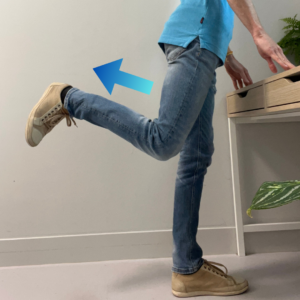
Glute strengthening
This very simple exercise wil help you to activate the glute musculature. Stand in front of a table and flex the knee of one leg. Now move the leg backwards so you extend in your hips. In this way the glutes are activated and this can be benificial to help you with your tailbone pain.
Make sure to train both sides. As with all exercises for muscle activation, make sure you feel the muscle tiring and that there is no pain in the tailbone during or after the exercise.
Squat sitting
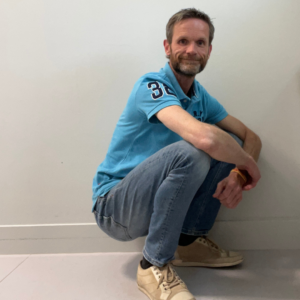
Short moments (7-9 seconds) of sitting in this position is beneficial for the tension around the tailbone. In this position you can gently push a little bit downwards towards the anus, just as you would when defecating on the toilet. Make sure you don’t make it a strong push; all is in order to relax the pelvic floor.
This exercise was also mentioned by Sary in episode 7 and in that episode we dive deeper into this exercise.
I also in detail present it on my website and you can find this on this page.
Pillow for tailbone pain
Finally Elif mentioned what are good and less recommended pillows to sit on when you have tailbone pain. She shared this one:
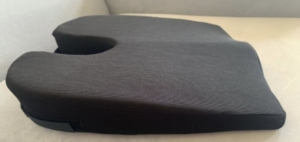
The pillow has a hole in the back where the tailbone is and instead of the doughnut or ring shaped ones (often advised but less effective), leaves space for back support and supports the sitting bones. This one is also wedge formed, so less thick at the front side. This helps to easier sit straight up.
The choice for the best tailbone pillow can be a very personal one in my personal experience. I have several in my practise to people can try them, and I recorded a video about the several options of tailbone pillows some time ago. It is in Dutch but might still be useful to see if you don’t master the national language on my Instagram page through this link.
Consultations by Elif
You can find the clinic of Elif by clicking here.
Get in touch
In you have any questions about anything in and outside of this episode, comments or requests, let me know! You can email me through the contact field below or directly at roel@roelwilbers.nl.
Marjolein – Patient
There were a lot of occasions where doctors and therapist
send me home with the message that there was nothing
they could do for me anymore and without any advise for a next step
– Marjolein
Our guest today is Marjolein. She was pregnant of her second child when her tailbone pain started. What followed was years of a lot of pain and restrictions. The path of finding adequate treatment led to strong desperation and even suicidal thoughts. Her tailbone problems made her inable to sit and work and in the end had serious implications for her career, sports and social life.
She saw a variety of doctors and therapists that mostly were not able to come with an answer to questions she had and were not able to help her. Often she was left with nothing more then: ‘we unfortunately cannot help you anymore’. She really had to find her own path to specialists in the field. Today she shares her story in what she learned along the way and how finally she found the relief she was looking for.
In this episode you will get the expert view from the patients perspective. I think that a lot of people suffering from tailbone problems can relate to her story and can find recognition and comfort in her experiences.
You can find my podcast in the menu under Podcast as well as the links to the platforms where it is posted.

Bonus
One of the striking things we specialists in tailbone treamtent run into and where we talk about in this episode, is that imigary being done for tailbone pain, often doesn’t include the tailbone… I saw several examples of this before and Marjolein was so kind to share her MRI scan where clearly the most interesting part is missing and should have been where the arrows are pointing to.
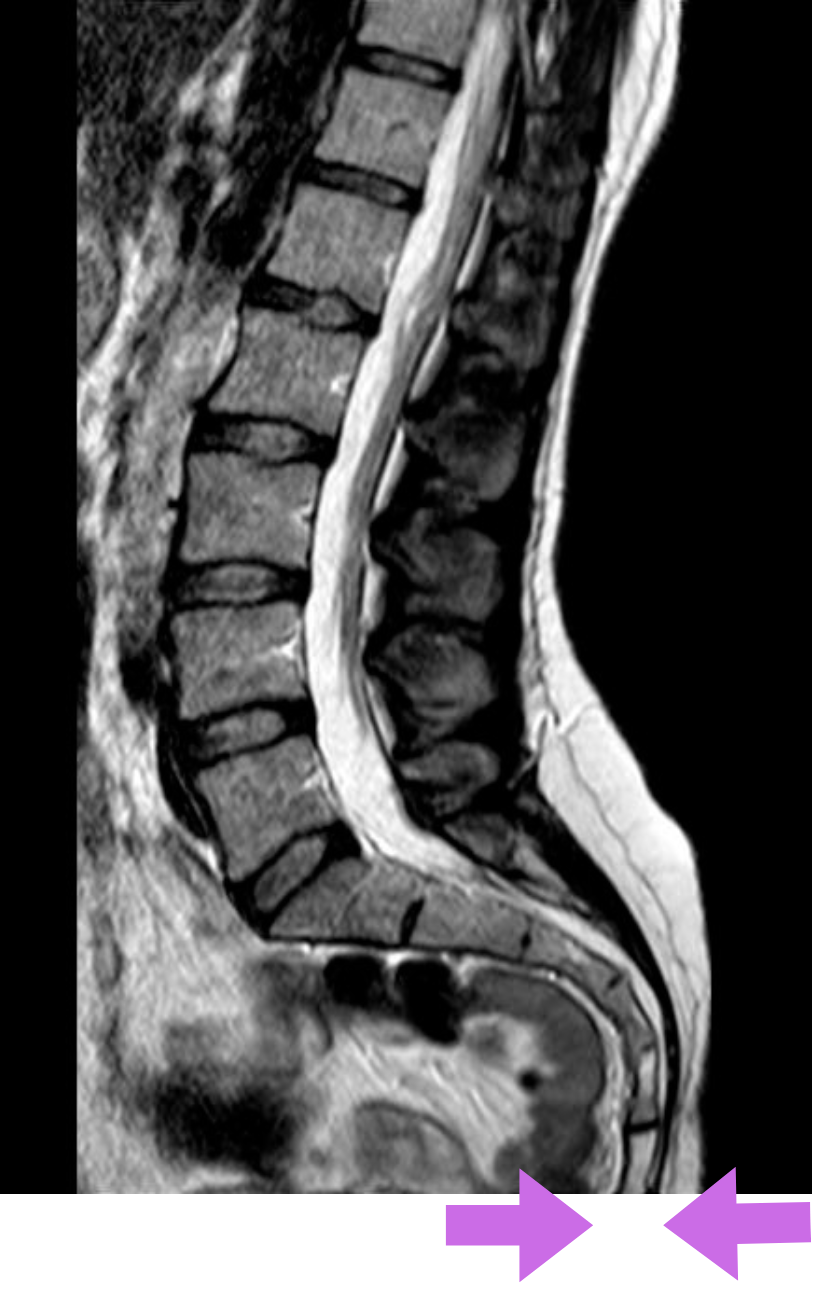
If you have imagery done for tailbone pain and want to check if the problem area was actually on it, you can compare it to this image.
Get in touch
In you have any questions about anything in and outside of this episode, comments or requests, let me know! You can email me through the contact field below or directly at roel@roelwilbers.nl.
Roel Wilbers – Physiotherapist
There are many different ways to approach a tailbone problem
and in almost all cases there is a solution available
– Roel Wilbers
So in this episode it is my turn to inform you about tailbone pain. You know me probably as the host of this podcast. Or maybe from my website tailbonetherapist.com (destuittherapeut.nl in Dutch). I work over 25 years as a physiotherapist and musculoskeletal manual therapist, and for the last ten years I specialised in tailbone pain. I did the two courses available in the Netherlands about treating tailbone pain and now launching my own course. With this I like to contribute to the field with new and more manual techniques to treat the tailbone from externally, and also the more holistic approach.
Half of my working days as a physio I only people with tailbone pain and they visit me from all over the country. Next to that I regular have consultations online with people with tailbone pain from abroad. Also I am involved in doing scientific research about the treatment of tailbone pain and will be one of the speakers at the upcoming World Symposium on Coccyx Disorders in Turkey.
In this episode you will hear my take on tailbone pain and what I learned over the years of my teachers and hundreds of patients. Also I will explain how I incorporated my braoder view on health and healthcare and my training in meditation and breathwork into the therapy I offer. In this episode I will provide you also with more background info about how tailbone pain is perceived in the scientific and medical world, what the scientific literature says and how it came about, and also where I think there is something missing in the current explanatory model and approach.
Here I will also introduce to you a for this podcast new expert on tailbone pain: Michael Durtnal. He sadly passed away a few years ago, but I want to share his findings on treating tailbone pain with you and honor al his contributions to the field.
With the info of this richly packed episode, you will get a broader understanding of how to understand tailbone pain, and to make the best choices for yourself in choosing a treatment intervention. For the latter I will dive more into my specialty; the treatment with manual mobilisations from externally and why they work so well but are so rarely applied and advised by doctors.
You can find the podcast in the menu under Podcast as well as the links to the platforms where it is posted.
Resources
During this episode, there were muliple resources mentioned.
1. Michael Durtnall
To start with: the expert I introduce in this episode: the late Michael Durtnall. You can fond more of his work on the website coccyx.org of Jon Miles that I interviewed in episode 4. Click here for the page dedicated to Michael Durtnall.
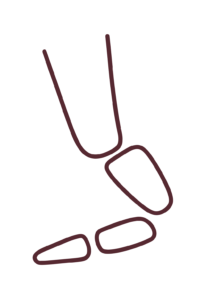
As promised also a visual of what he discovered on many Xrays in sitting position. You see the sacrum as the upper bone and below the in this case three tailbones. The right side is the back, the left side is the belly side. What strikes first is that there is a sharp bend between the second and third bone and this is what is seen as the problem; an increased mobility occuring under pressure from below so an instability. And in some cases it is interpreted not as a joint problem but as a broken tailbone, but as you can see the individual bones are intact.
That the problem is interpreted to be at the sharp angle makes sense because it is here where the pain often also is. But if you look again and can also see, is that the second bone is not flexing forward as you should expect in sitting and the tailbone makes a more or less even curvature forwards, but it is more backwards. Now the bones below get in to trouble because of the pressure below and have to compensate for the lack of flexibility of the bone above. So is it an INcreased mobility where the angle is, or is this the compensation for a DEcreased mobility above. This quite changes the approach of treatment as you can imagine and more about that I explain in the episode, but here the visual. And although it can be as clear as in the picture here (which is of an actual Xray), it is sometimes more subtle, but clearly visible if you look for it. This is almost always missed by doctors unexperienced with tailbone pain so now you know and have Xrays, take a look at if this is the case with your taibone.
2. Exercise
As mentioned I have a lot of exercises and tips on my website.
The tips you can find by clicking here, the exercises over here.
Of course there also was an exercise I gave during this episode, and the audio you can find over on the page connected to this episode.
3. Article
I mentioned the extensive article I wrote about how tailbone is explained now in science and where this model has it’s limitations in my view. I am currently in the process of updating it and when that is doen I will post it here.
4. Course for colleagues
If you are a heathcare practicioner and are interested in learning about tailbone pain and how to treat it yourself, and you have some colleageus that also want to participate, let me know and I am more that happy to arrange a course with you! For more info please send me an email at roel@roelwilbers.nl and we will see how and where to make that happen.
Therapy by Roel
I work in Amsterdam and for appointments you can find me here. I also do online consultations if you want to consult me for your tailbone issues and are not able to come to see my in my practise.
Get in touch
In you have any questions about anything in and outside of this episode, comments or requests, let me know! You can email me through the contact field below or directly at roel@roelwilbers.nl.
Sary van der Hasselt – Osteopath
It is rare that it is only a tailbone issue,
we have to look at the whole system
– Sary van der Hasselt
Our guest today is Sary. She is born and raised in Belgium and has a masters degree in osteopathy. Nowadays she lives in and works in the Netherlands and is co-owner of an osteopathy clinic that has several locations. She also teaches at the International Academy of Ostepathy, and through the years has specialised in pelvic problems. A big part of the patients she sees, consult her for tailbone pain. Sary is my personal go-to when my therapy isn’t effective or doesn’t help sufficiently and there doesn’t seem to be a problem that needs medical attention.
As an osteopath she approaches health problems from a wide perspective. Next to the mechanical aspect like the joints and muscles, she also examines and treats the neurological, vascular, visceral and fascia components of problems. In this episode she will explain how she works and what components she sees that are connected to tailbone problems.
As you will hear, Sary is very knowledgable in the theoretical and the practical part of treating tailbone pain and is another true expert on the topic.
You can find the podcast in the menu under Podcast as well as the links to the platforms where it is posted.
Resources
During this episode, Sary gave us two exercises regarding tailbone pain.
1. Squat-sitting
First and foremost, her favorite exercise: squat-sitting. The deep squat pose is sitting with your buttocks on your calfs/heels, the hips open and the feet as flat as possible on the floor. It is a great posture and stretch for the lower back, the back of the pelvis, the pelvic floor and the back fascia. It is also a very natural way of sitting that still normal in many Asian and African countries, or wherever people live more traditionally. We in the industrialised countries are often so used to sitting in chairs that we are not capable of getting into this pose anymore, although as kids we all were capable of doing so.
As the pictures here show; my daugther has no problems with it, where I need to have some support to prevent falling over:
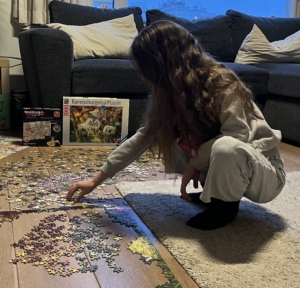
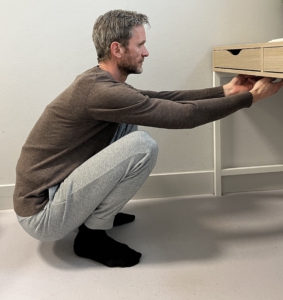
These are the instructions:
- Sit with your buttocks on the back of your lower legs
- Put the feet as flat as possible on the surface below
- Make sure that the hips are open, so the knees are spread and not close to each other
- If you are not comfortable or stable straight away, make sure you hold on to something so you don’t fall backwards, which especially with tailbone pain is something you want to prevent
- Don’t torture yourself! Stretch is normal in the beginning, but respect any pain and adjust to that by more support, releasing the stretch on these structures and limiting the time in the pose.
It is a great stretch for often stiffened up and tight areas in and around the pelvis.
It is not too suitable for people that have prolapses (often accompanied by a heavy feeling in the pelvic floor) or the first 2-6 months after delivery. When you feel it is too strainious on your pelvic floor and you have a hard time contain your urine for example, this exercise is probably too early for you; your pelvic floor must be able to hold it. Also take care when you have any knee, hip, pelvic, lower back or other problem or restriction. Be mindful of that what your body is capable of and what not and follow its feedback.
Built it up slowly to get used to the pose and the ligaments, fascia, muscles and all other structures can adapt to a less shortened position again. While training it, start somewhat more on the front of the feet if the stretch is too much for your fascia under the foot and slowly work to more flat contact with the floor. Because it can be quite straining, try the pose first for maybe just seconds at a time and then slowly built up to a level where it finally actually becomes pleasant and relaxed. When you are a bit used to it and more stable in it, you can easily integrate this posture into your daily life by performing activities in squat-sit.
I actually edited some of this episode in this pose and as you can see, with something under my heels until my body is flexible enough to do without.
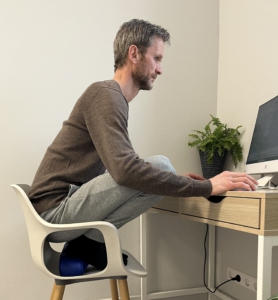
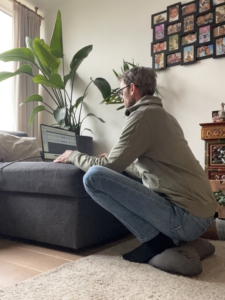
2. Knees wide
Sary also advised not to cross the legs or squeeze the knees while sitting. Optimal for the pelvis and structural tension is that the hips are open and the knees a bit wider apart. So sit a bit more ‘unlady-like’ to help your pelvis. While lying in bed, you can put a pillow between the knees to reduce pelvic ension if you have pelvic issues.
To open up the pelvis and hips, Sary also shared an exercise. For this you are on your back, with the knees bend and the soles of your feet together so your knees are spread to the sides. This pose is in yoga also known as the reclined butterfly pose. Put a pillow or towels underneath the knees to support the legs a bit, but make sure you feel the stretch in the muscles on the inner side of the thighs, the adductors, that can be tight if you squeeze or cross your legs often.
Therapy by Sary
Sary works at the OsteoYou and at their clinics in Amsterdam-Zuid and Hendrik-Ido-Ambacht. If you are interested in consulting Sary, you can find here here.
Get in touch
In you have any questions about anything in and outside of this episode, comments or requests, let me know! You can email me through the contact field below or directly at roel@roelwilbers.nl.
Marianne Bleijenberg – Pelvic physiotherapistApproach persistent tailbone pain as pelvic pain,
so as more than just a local disfunction
– Marianne Bleijenberg

Our guest today is Marianne. She is a very experienced physiotherapist and pelvic physiotherapist. Although she is 70 years of age, she still works two days a week in the clinic she founded because she loves what she does. In her working days she sees a lot of people with tailbone dysfunction and developed an expertise on treating them. After hundreds of patients treated, she built a lot of experience around this topic, which she also teaches about to other physiotherapists.
What makes her approach different from most of the colleagues is that she approaches tailbone problems from a much wider perspective then what is taught in the courses. She incorporates next to the mechanics of the joints and influence of the pelvic floor muscles, also the psycho-emotional aspect, breathing and the influence of fascia on the tailbone. This wide scope brings the patients excelent results.
In this episode we will dive into her approach and experience as a pelvic physiotherapist. On tailbone and pelvic pain but she also has very valuable things to say on therapy in general wherefor this episode is also very informational for therapists and physicians.
You can find the podcast in the menu under Podcast as well as the links to the platforms where it is posted.
Resources
Marianne gave three practical tips and exercises for people suffering with tailbone pain (you can listen to her explanations in the episode from 1:02:30 onwards)
1) Sit on a heat pack that is placed between the buttocks from front to back under the pelvic floor and until the tailbone. In this video she explains how to apply it.
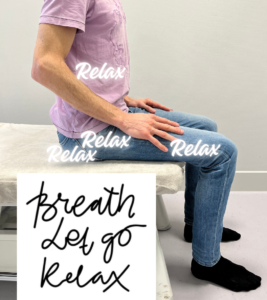
2) Sit in a relaxed but not slouched position and consciously relax the belly, the buttocks, the legs and the pelvic floor. Do this preferably every hour and then shortly for a few times. You can also do this in a standing position.
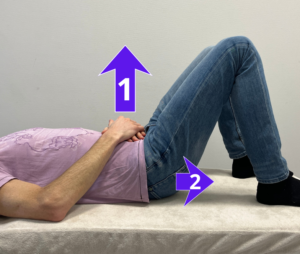
3) On your back with your knees bend and feet flat on the floor, put your hands on your lower belly and normally breath through the nose towards your hands. Without forcing it, help your breathing to move the belly upwards towards the hands on the inspiration. Feel when the belly expands, the pelvic floor relaxes.
If you are looking for more specific exercises to relax the pelvic floor and some audio’s that guide you through the process, you can find them on my website by clicking here.
Therapy by Marianne
Marianne works, at the time of recording, at Zorgpraktijk Flore in Waalwijk in the Netherlands. If you are interested in treatment by Marianne, you can find the institute here.
Get in touch
If you have any questions about anything in and outside of this episode, comments or requests, let me know! You can email me through the contact field below or directly at roel@roelwilbers.nl
Sabine – Patient
It took me years to find it,
but specialists and effective treatment for tailbone pain exists!
– Sabine

Our guest today is Sabine. She was a 33 year old midwive when her tailbone pain started with a car accident. It led to a lot of pain, not being able to work anymore and a very restricted daily and social life. Now, 17 years later, she shares her story about how tailbone pain affected her life, but also her path in the medical and therapeutic world in finding the right help and specialised healthcare professionals.
She saw a variety of doctors and therapists, underwent treatments and injections and mainly shares a message of hope and recovery. In this episode she will tell her story, which I will guide by explanations about the things that occurred. It became a pleasant, informative and touching conversation which I love to share with you.
In this episode you will learn about the patient perspective of tailbone pain. This expert from experience gives a valuable insight where not only other patients, but also doctors and therapists can learn from. We go into what help and information is given and how she eventually found a solution that helped her.
You can find my podcast in the menu under Podcast as well as the links to the platforms where it is posted.
Bonus
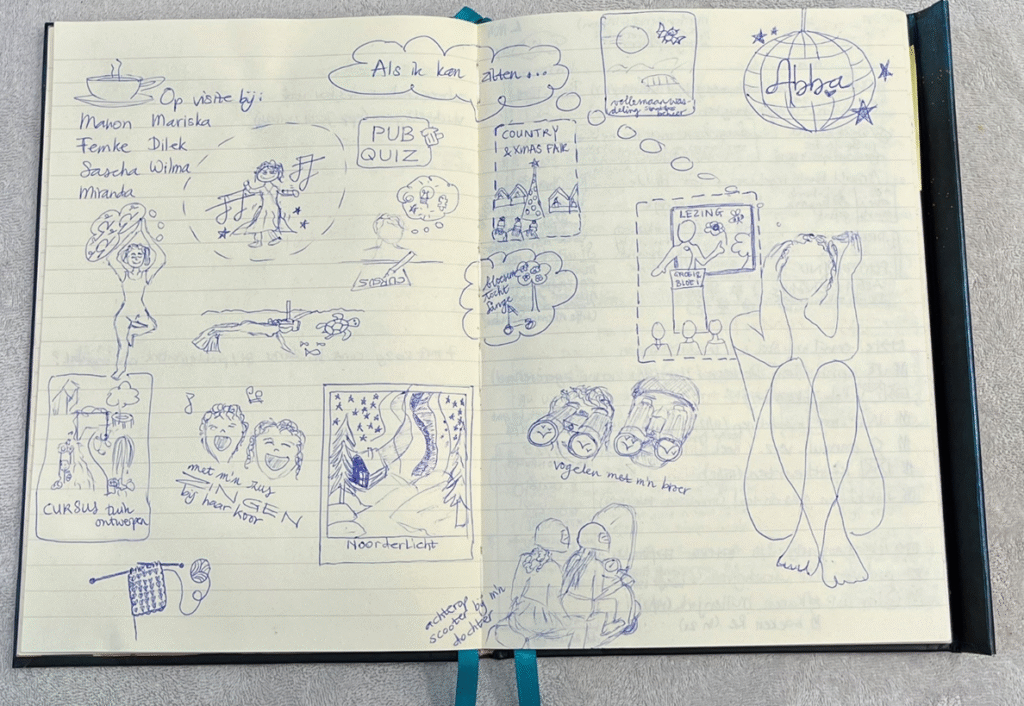
In the episode Sabine shares how she found specialised treatments gave her hope again in healing and how that led her to create a vision board drawing about her desires and goals in the process towards recovery. She gave consent to share it with the listeners and you can see it here. it gives a good insight how things that people without tailbone pain do on a regular basis and take for granted, often are dreams for people that suffer from it…
Get in touch
In you have any questions about anything in and outside of this episode, comments or requests, let me know! You can email me through the contact field below or directly at roel@roelwilbers.nl.
Jon Miles – Researcher and patient
You are not alone as a patient
and there are solutions out there
– Jon Miles
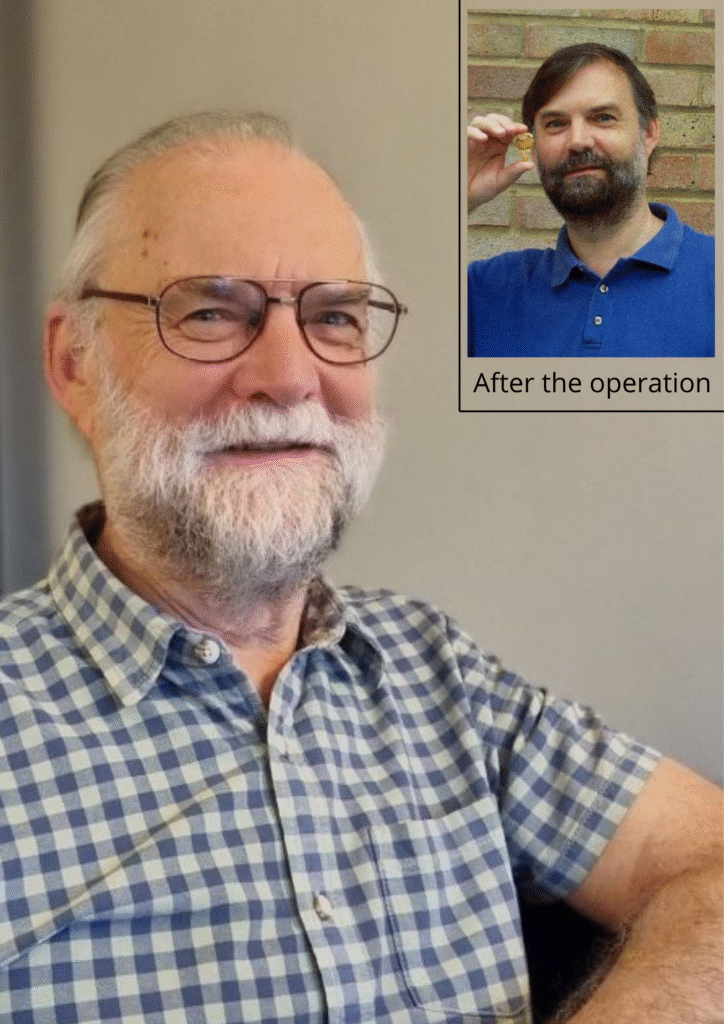
Our guest today is Jon. He is from the UK and a researcher on the topic of tailbone pain. He is worldwide a very well known person in the tailbone world, knows a lot about the literature and also unfortunately understands how it is to suffer from coccyx pain because he did so himself for many years. He underwent almost all the therapies out there and finally had it surgically removed in 1999.
We are going to learn about his personal story as a patient, but also about his interest in the topic which led to the website coccyx.org, the probably biggest online platform for tailbone pain worldwide that had up to 150.000 unique visitors a month. On this he shares a lot of information, also by specialists, links to scientific research, patient reviews and how to find specialists that treat tailbone pain worldwide.
Next to that we will cover the research he has done himself and presented at the first and second edition of the International Symposium on Coccyx Pain.
You can find the podcast in the menu under Podcast as well as the links to the platforms where it is posted.
Resources
As mentioned in the episode, Jon’s website www.coccyx.org has hundreds of pages about tailbone problems and thousands of patient reviews about the different sorts of treatments. Visit it for more info and as well to find a specialist near you.
It also has Jon’s personal story and his presentations that he held at the first and second International Symposium on Coccyx Pain. You can find those by clicking here.
Get in touch
In you have any questions about anything in and outside of this episode, comments or requests, let me know! You can email me through the contact field below or directly at roel@roelwilbers.nl.
Dorien van Mulligen – Pelvic physiotherapist
The pelvic floor and the tailbone influence each other strongly
and in chronic pain both need evaluation– Dorien van Mulligen
Our guest today is Dorien. She is a physiotherapist, a Cesar exercise therapist and has a masters degree in pelvic physiotherapy. Her working days are fully focused on patients with pelvic girdle pain and pelvic floor muscle complaints such as urination, defecation, sexual problems. More than half these have tailbone pain.
Next to her work in the clinic, she also is a teacher at the course where physiotherapists learn how to treat tailbone problems. She is a true expert on the subject and will take us along in het knowledge and experience about it.
In this episode we will dive into the problems that arise from tailbone pain, the treatment of it and the importance of the pelvic floor.
You can find the podcast in the menu under Podcast as well as the links to the platforms where it is posted.

Resources
Dorien talked about the importance of the pelvic floor and breathing and other exercises to mainly relax these muscles.
The specific advice she gave for people with tailbone pain was:
- Relax your pelvic floor by breathing to your belly and pelvis (she explains the exercise at 1h03m in the episode)
- If you are in pain, prevent sitting
- Never push yourself when you are in pain by geting yourself in too much strain in daily life but also when doing exercises
If you are looking for more specific exercises to relax the pelvic floor and some audio’s that guide you through the process, you can find them on my website by clicking here.
Therapy by Dorien
Dorien works at the ProFundum Instituut in Dordrecht. If you are interested in treatment by Dorien, you can find the institute here.
Get in touch
In you have any questions about anything in and outside of this episode, comments or requests, let me know! You can email me through the contact field below or directly at roel@roelwilbers.nl.
Cecile Röst – Physiotherapist
It started with one technique,
but since then there has been a lot
and ongoing development in tailbone therapy
– Cecile Röst

Our guest today is Cecile. She is a physiotherapist, manual (musculoskeletal) therapist, and clinical epidemiologist, specialised in pelvis and tailbone pain. She founded a physiotherapy clinic where she still treats patients herself, and half the patients she sees come for tailbone pain.
She also runs a training institute for physiotherapists focused mainly on pregnancy-related pelvic girdle pain and tailbone problems, under the name Rost Therapy. Here she also teaches several courses for physiotherapists on treating tailbone pain from externally. This is for a big part based on the work of Meine Veldman who developped this technique and with whom she collaborated a lot and participated in research about the effectiveness of this method.
In this episode we will go deeper into how treatment for tailbone pain through manual mobilisations works, what the outcomes are, how there is an ongoing development in tailbone therapy and how she added to that evolution.
You can find the podcast in the menu under Podcast as well as the links to the platforms where it is posted.
Resources
Cecile was so kind to record a video especially for this podcast episode and after the short introduction, you will have a visual of how to sit down and stand up, how to widen and relax your your tailbone area. And of course she demonstrates her Peacock exercise.
More about Cecile
Do you want to know more about Cecile? You can find her at: bekkentherapie.nl
Get in touch
In you have any questions about anything in and outside of this episode, comments or requests, let me know! You can email me through the contact field below or directly at roel@roelwilbers.nl.
The world of tailbone pain
Tailbone pain can be effectively treated
although only a small percentage of healthcare providers,
within all the professions that see these patients,
are aware of that
– Roel Wilbers
Welcome to this podcast and the tailbone therapist
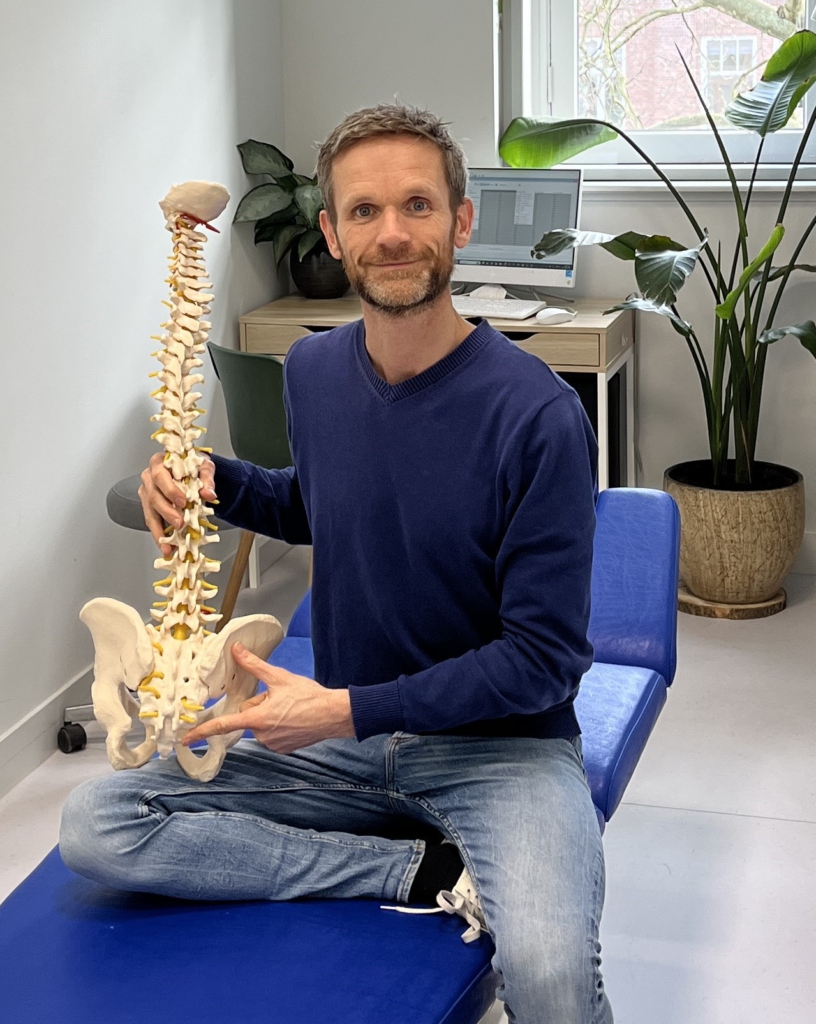
In this first episode you will all about this podcast, why it started and what it will bring you. It is also an introduction into the world of tailbone problems. Some myths and often heard ideas about this will be debunked and you will already get some practical info and tips.
In this episode we will go deeper into how treatment for tailbone pain through manual mobilisations works, what the outcomes are, how there is an ongoing development in tailbone therapy and how she added to that evolution.
You can find my podcast in the menu under Podcast as well as the links to the platforms where it is posted.
More about tailbone pain
For more info about tailbone pain and the treatment options, you will find here on my website. There will be a lot of info but also tips and exercises that can directly relieve your pain.
Get in touch
In you have any questions about anything in and outside of this episode, comments or requests, let me know! You can email me through the contact field below or directly at roel@roelwilbers.nl.