8tracks icon Behance icon Blogger icon CodePen icon Delicious icon DeviantArt icon Dribbble icon Etsy icon Facebook icon Flickr icon Foursquare icon GitHub icon Google+ icon Instagram icon Last.fm icon LinkedIn icon Myspace icon PayPal icon Pinterest icon SoundCloud icon Stack Overflow icon StumbleUpon icon Tumblr icon Twitter icon Vimeo icon YouTube icon Yelp icon
DE STIT THERAPEUT

The Tailbone Podcast: Expert Talks

1. The world of tailbone pain

In this first episode, that aired on tailbone awareness day 2025, you will all about this podcast, why it started and what it will bring you. It is also an introduction into the world of tailbone problems. Some myths and often heard ideas about this will be debunked and you will already get some practical info and tips. In this first episode, that aired on tailbone awareness day 2025, you will all about this podcast, why it started and what it will bring you. It is also an introduction into the world of tailbone problems. Some myths and often heard ideas about this will be debunked and you will already get some practical info and tips.

Jump to transcript


Tailbone pain can be effectively treated

although only a small percentage of healthcare providers,
within all the professions that see these patients,
are aware of that

– Roel Wilbers

Welcome to this podcast and the tailbone therapist
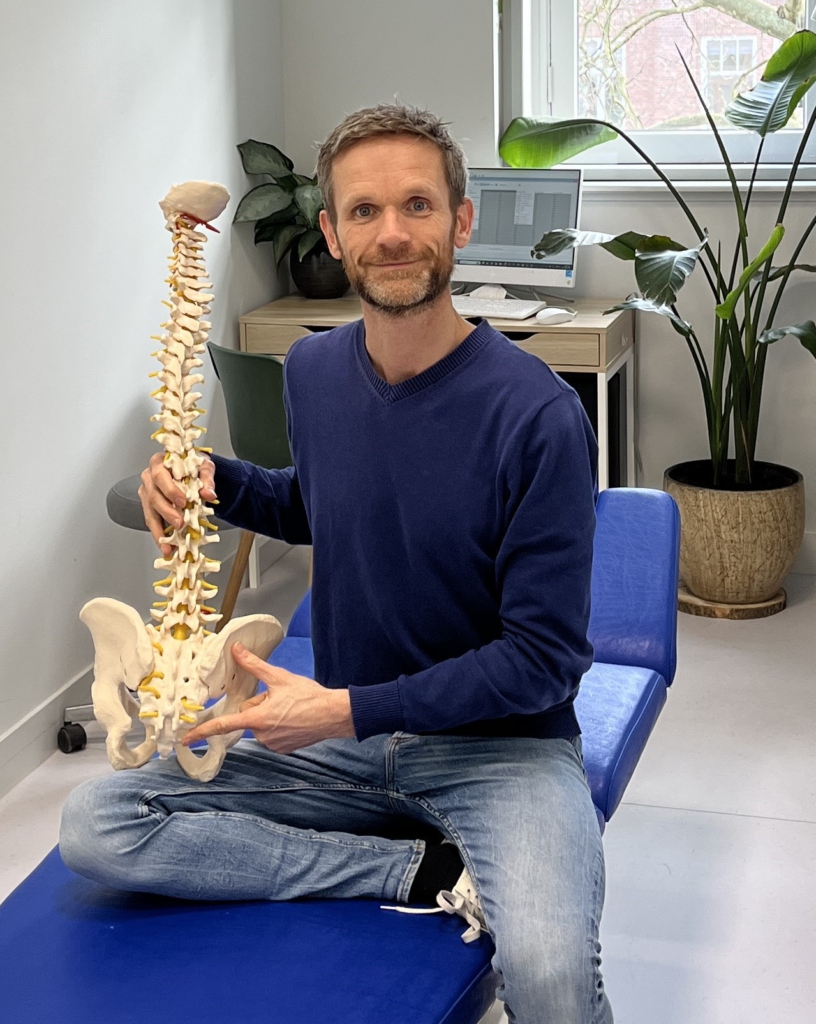
In this first episode you will all about this podcast, why it started and what it will bring you. It is also an introduction into the world of tailbone problems. Some myths and often heard ideas about this will be debunked and you will already get some practical info and tips.

In this episode we will go deeper into how treatment for tailbone pain through manual mobilisations works, what the outcomes are, how there is an ongoing development in tailbone therapy and how she added to that evolution.

You can find my podcast in the menu under Podcast as well as the links to the platforms where it is posted.


More about tailbone pain

For more info about tailbone pain and the treatment options, you will find here on my website. There will be a lot of info but also tips and exercises that can directly relieve your pain.


Get in touch

In you have any questions about anything in and outside of this episode, comments or requests, let me know! You can email me through the contact field below or directly at roel@roelwilbers.nl.

Transcript

Roel Wilbers

0:04 Welcome to The Tailbone Podcast.

0:06 My name is Roel, and as your host, I bring you only experts on this for most doctors and therapists on known problems.

0:12 Let's dive in with today's episode.

0:16 Welcome, welcome, welcome at The Tailbone Podcast Expert Talks.

0:21 And in this episode that aired on Tailbone Awareness Day 2025, I will tell you more about this podcast, why I started it, and what it will bring you.

0:29 But also an introduction into the world of Tailbone Problems.

0:32 Debunk some myths and often heard statements, and I will already give you some practical info and tips.

0:38 So let's start with the why.

0:40 The most important reason for starting this podcast series is the information that is available out there for people with Tailbone Problems.

0:47 On the one side, this is extremely limited, and you really have to search for specific information about this problem.

0:53 And also for quality information, because a lot that is out there just isn't in line with the knowledge we currently have.

0:59 And this is what I will bring you through this podcast, and through the experts themselves, that I will interview for this.

1:05 And it's important that we have experts, because almost all doctors and therapists haven't had any education about the tailbone and its problems, even the specialists in the pelvic area.

1:15 So to start out with on the topic of tailbone pain, how do you know that you have tailbone pain?

1:20 Well, most people definitely know they have pain in the area of the tailbone.

1:25 It's often very painful and disabling for life's activities.

1:28 To really differentiate between coccyx pain, so tailbone pain or other pain in the area, or coming from other factors than the tailbone itself, there are two main criteria to go by,

1:38 in my opinion.

1:39 The first one is pain at the tailbone itself.

1:41 And the tailbone is located right behind the anus.

1:44 I often see patients that consult me for tailbone pain, but they end up having pain in their pelvis and sometimes even lower back.

1:51 So the tailbone is not located at where the belt is.

1:54 It's a lot lower.

1:55 It's just behind the anus.

1:57 There's a few finger widths behind it.

2:00 The second criteria if you have tailbone pain is that there's pain by pressure on it.

2:05 So what we mostly hear is that tailbone pain is provoked by sitting.

2:09 So when you sit down, there's going to be pressure on the tailbone area, and this is going to lead to the known symptoms.

2:16 Another way of pressure is pressure by the finger.

2:19 So if you locate the tailbone all the way down, and you push on it, that there's pain.

2:24 So just as a practical part to take you along, if you start at the lower back, where the belt is, and then you kind of walk down with your fingers all the way down over the sacral bone,

2:34 towards the end of the spine, you will see in between the buttocks that you end up where the structure is still kind of hard, bony.

2:44 That's where the tailbone is.

2:46 And mostly the pain is at the tip of the tailbone, so you have to walk all the way down around the corner a little bit, and push there.

2:53 So if there's pain in the tailbone area by pressure, this is one of the factors how you can determine that it's actually tailbone pain.

3:01 If there's no provocation of the known symptoms by sitting or pressure, or the location of the pain is not at the tailbone itself, it's highly doubtful that we're actually talking about tailbone pain.

3:12 So just for you to know if you're at the right podcast, if you're listening this because you have tailbone pain.

3:17 Back to the topic of the lack of information out there.

3:20 What I often hear from patients is that their doctor or therapist tells them that there's nothing that can be done about these problems.

3:25 But that tailbone pain mostly takes a lot of time to heal.

3:29 Both these statements are not backed up by clinical knowledge, nor what is published in scientific literature about coccidinia.

3:35 And this is the term tailbone pain is referred to medically.

3:38 Dinea means pain, and coxie comes from coccyx.

3:42 That's a Latin word for tailbone, and that is used in the English language as well.

3:46 This Latin word originally came from the Greek word coccyx, if I pronounced that correctly, and that means cuckoo in Dutch, cuckoo.

3:54 And that's a bird, and the cuckoo's beak resembles the shape of the tailbone.

3:59 And that's why ancient anatomists came up with the name coccyx for this specific bone.

4:04 So just a geek side note for the ones that are interested.

4:07 Coccydynia is something that can be very well treated, and often with quick results.

4:12 And this will be the central topic in this podcast series.

4:15 Let's start with the acute tailbone pain.

4:17 In most cases of tailbone pain that is there for just a few days or weeks, it will heal by himself.

4:22 Just like for example happens with a sprained ankle.

4:24 Pain and functional impairments will decrease over a matter of days or weeks, and the body can fix this itself.

4:30 The problems that persist longer, and that we call chronic, and the reason why people visit a doctor or therapist for, indeed often take longer time to heal,

4:38 and don't heal if there's no adequate treatment given.

4:41 The same goes for chronic ankle problems after a sprain, when there's something wrong that the body cannot fix.

4:46 And maybe the best comparison here is that of a dislocated or loxated shoulder.

4:50 When nature fixes almost all problems, as long as we create the right circumstances for it, a loxated shoulder won't heal by itself and needs specialized help.

4:59 This comparison, by the way, doesn't mean that the underlying cause of tailbone pain is in most cases a loxation, just to make sure that this is well understood.

5:07 That healing of tailbone pain often takes a long time according to healthcare professionals, is mainly because they don't have the skills to treat it, or even the knowledge that effective treatment options exist,

5:18 so they don't refer to the people that I will introduce you to in this podcast episode.

5:23 And this is understandable, because the tailbone is a niche subject in almost all medical and therapeutic educations, and it's very specialized knowledge.

5:31 In my education, for instance, as a physiotherapist, it was only mentioned in anatomy classes.

5:36 And this was a four-year full-time training.

5:38 Same goes for my training as a musculoskeletal manual therapist, which is a three to four-year specialization after physiotherapy, and it teaches you more about mainly the functioning and manual treatment of joints,

5:49 with skills comparable to what a chiropractor does.

5:52 Nothing about coccydynia.

5:54 Mostly chronic tailbone pain doesn't need extra time, it needs specific help.

5:58 Even when the problems are very severe or present for years already, they can become better with often just a few treatments by specialist, therapist or physician.

6:07 And this is what I see on a daily basis.

6:09 That a lot of healthcare professionals tell patients with coccydynia that often it takes a long time for tailbone pain to heal, might be because they think there's no therapy available.

6:18 Or even it's another way of saying, I don't know what's going on, and often problems recover automatically over time.

6:23 And fingers crossed that this will be the case here as well.

6:27 In the end, every doctor or therapist has an incentive to help and to give their patients some form of advice.

6:32 And unfortunately, this specific advice given about tailbone problems doesn't help the patient, and even can make the patient stop searching for a solution because the specialist said that there's nothing to do.

6:42 And this will keep them from finding the effective help that is available.

6:45 And with this podcast, I want to help you in this search.

6:48 So on one hand, there's only limited information available.

6:51 On the other hand, the info that is out there is often not of high quality.

6:55 And this is the second reason why I started this podcast.

6:58 If I compare the knowledge I attained the last year studying coccadinia and treating many patients with tailbone problems as a physio, mostly with very good results, the info that is given through easy access sources like YouTube and social media platforms often leave me nothing than flabbergasted.

7:13 And I'm not only talking about the influencers that sometimes just pick any subject that might get them views or likes, nor about the people that had an injury themselves and only tell the story from one perspective and don't have any medical or therapeutic training,

7:25 nor an overview of the problem.

7:27 Both of them are pretty present in the top rankings of tailbone posts though.

7:31 I'm also not even talking about some trainers that have the exercise for you when you have tailbone pain.

7:36 And telling from the way they present their knowledge, they also mostly have no training or deeper knowledge about the subject.

7:42 And next to that, it is highly questionable if the tailbone can be influenced by exercise or is trainable.

7:48 Although the tailbone consists of joints, and there seems to be consensus among experts that the main problem is in the biomechanics, so how the coccyx does or doesn't functionally move,

7:57 unlike most joints in the body, it is hard or impossible to target the tailbone joints through exercise.

8:04 I researched this intensively, and in that I tried all of the recommended exercises that I encountered, of course.

8:10 But exercises mostly influence the surrounding areas in the soft tissue, so the muscles and the ligaments.

8:16 Tension or sensitivity here is mostly the result of tailbone pain, and not the cause.

8:21 So with the exercises you just influence the symptoms and not the underlying problem, which definitely can bring you some relief, but that's temporary.

8:29 It is hardly ever the solution, and the expert therapists that use exercises almost always use them as a support to the treatment, and not solely or as a treatment itself.

8:39 And like I do as well, exercises can be very valuable, but the message that I often see online is that there is one problem-solving exercise.

8:47 And this will often just demotivate people, because if the exercise that helps so many of the clients of the trainer that talks about it doesn't help me,

8:55 then my problem must be unsolvable.

8:57 So just to be clear, it's definitely not bad to do, for instance, breathing exercises or pelvic work for a tailbone pain.

9:03 Again, I also apply them in my therapy sessions.

9:05 But as long as the tailbone itself isn't addressed to, it won't get you far most of the times.

9:11 I don't think that these people are in there just for the fame and that they really want to help people.

9:15 But the given information and advice mostly isn't correct or effective.

9:19 Next to the post of people that had no medical or therapeutic training, which can be useful but should be addressed with some caution, especially in these markets like the tailbone pain,

9:28 there's also doctors and therapists that spread their opinion about coccidinia online.

9:32 And where they often seem to talk from an expert view, remind yourself that this topic is not addressed in almost any medical or therapeutic education.

9:41 And listening to them from an expert's perspective, also the info that they share mostly isn't based on too much experience or knowledge on the subject, unfortunately.

9:49 When a famous basketball player some years ago injured his tailbone, it inspired people to inform people about what was going on.

9:56 In one of those videos a doctor was talking about the coccidinjury and explaining that the tailbone is one bone at the end of the spine, where almost all medical literature states that this is the case in less than 1% of the people.

10:08 Just this basic anatomical knowledge is often not known by medical professionals.

10:13 What we know from the anatomy of the tailbone is that it consists of multiple bones, and it's not like the name states one single bone.

10:20 And this is a mistake that not only non-medical trained people make, because the word tailbone or coccyx indicates that there's only one bone, but also a lot of doctors and therapists assume this.

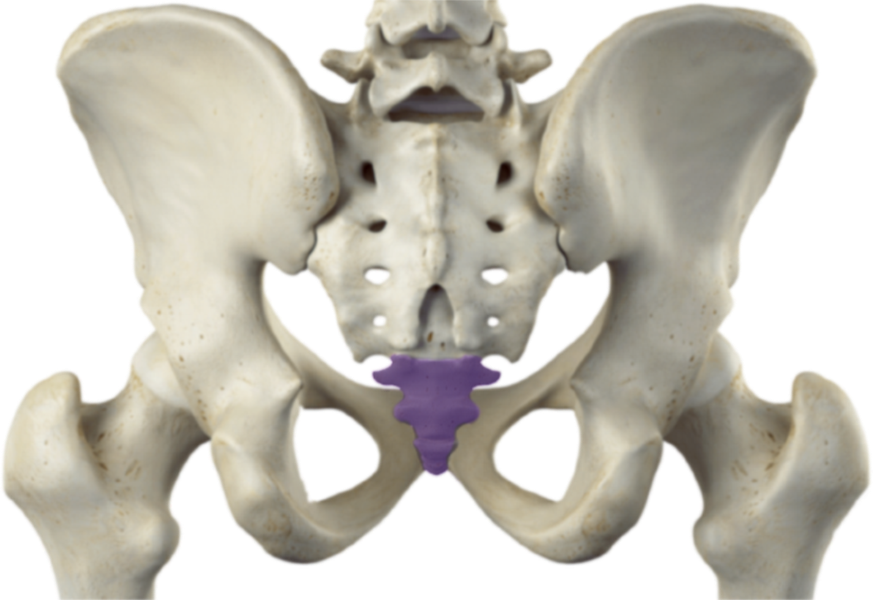
10:31 So to debunk this directly, the tailbone consists of three to five bones, called vertebrae, that are often partly fused into segments, which are independently moving parts of bone.

10:43 Those tailbones, which should be a better name, move one to another.

10:48 So movement exists between the bones of the tailbone itself, and mostly also the tailbone has mobility toward the sacral bone that lies above it.

10:56 This joint can be bonally fused as well, but definitely not always.

11:01 That the tailbone is interpreted to be one bone might also exist because the sacral bone above it, in between your lower back and your tailbone itself, is almost always one bone.

11:11 Where probably originally it was five separate vertebrae, they merge into one solid bone, and it's part of the pelvic ring.

11:19 And if you have not a lot of anatomical knowledge, just look it up online for a picture about it.

11:23 And there you will probably see by the way as well that the tailbone is depicted as consisting of different separate bones.

11:30 And there's complete consensus that the coccyx is not one bone and it has mobility.

11:35 And almost all experts agree that the disturbance of the biomechanics is the main problem where people with tailbone problems suffer from.

11:43 Another thing that is often mentioned online by people with tailbone pain, but also by doctors and therapists, is about broken tailbones, the broken coccyx.

11:51 And where it can seem like that on x-rays or scans, because there is often not a regular nice curve of the tailbone, and it looks deviated in a certain direction,

11:59 a fracture is rare.

12:01 What is seen on x-rays or scans is mostly an angle or dislocation in a joint, and not in the bone itself.

12:08 And that indicates a joint problem and not a broken bone.

12:11 And this difference you can tell yourself by looking at an x-ray, but is still often missed by doctors.

12:17 Also the available literature on coccydynia states that fractures are rare.

12:20 They can occur, but they are rare.

12:22 And especially if there was no traumatic incident at the old set of your problems, it doesn't make sense that there's a fracture, that a bone is broken.

12:31 And by now you maybe already have more knowledge about the tailbone than a lot of doctors and therapists out there.

12:36 With all the respect to everyone that shares information about it, the specific knowledge about coccydynia is rare.

12:42 And next to information that is not backed up by science and current knowledge, the advice and treatment given for tailbone problems is often copied from problems in other areas of the body.

12:52 Mostly this is compared to what to do with lower back problems or pelvic problems.

12:56 I regularly see patients where therapists before me were convinced that they could solve their tailbone problems with core strengthening exercises, which have hardly any effect on the tailbone itself and only the surrounding area.

13:08 And this is hardly ever where the problem is with coccydynia.

13:11 Also, the tailbone has a completely different biomechanics than the lower back and the pelvis, starting with that they are weight bearing areas, areas that are influenced by gravity a lot,

13:21 where the tailbone is a free part of the spine that is not affected by gravity, but under mainly external compression.

13:27 Even the concept version of treatment for coccydynia for the Dutch general practitioners, which I had an insight to, gave general advice based on copying info from other areas in the body and problems that are occurring there.

13:39 The tailbone is quite unique in its function and problems.

13:42 And this advice is well intended again, but mostly not copyable to the tailbone or just based on symptom relief in general and not a solution for the problem.

13:52 And finally, there's also advice given on parts of accurate knowledge, but then translated in a way that makes it inaccurate.

13:59 I had a patient some time ago and she told me that her doctor mentioned it was better to wait with trying to become pregnant because of her tailbone problems,

14:07 which is kind of a life altering statement.

14:10 If this was based on knowledge on the topic, then of course it's valid and useful advice, but this specific comment is as far as I know not backed up or even mentioned in the literature,

14:19 and I read a lot of it, nor by clinical experience.

14:23 What is true and what the statement is maybe based on is that pregnancy and labor are factors that can cause tailbone pain.

14:29 This doesn't automatically mean it makes already present tailbone pain worse, though.

14:34 On the contrary, I have a few patients where the tailbone pain actually fully disappeared during the pregnancy, and in some cases it even didn't come back afterwards anymore.

14:43 That doesn't mean pregnancy or labor cannot trigger or worsen already present tailbone pain, but just that this is definitely not a sure thing.

14:51 I understand the doctor wanted to give good advice to this patient, and the link between tailbone pain and pregnancy and labor is present as an onset, which by the way is often overestimated because the data in my personal database of over 300 people,

15:04 the onset of pain of these patients in there was only for 5% related to pregnancy and 8% after labor.

15:09 And data like this and more info I share openly on my website tailbonetherapist.com or the stuidtigerpuit.nl for the dutch listeners.

15:17 And I will share a link in the show notes for anybody that is interested.

15:20 And hereby it's important to state that for pregnancy to be seen as an onset for the pain, the problems must have started after conception and before labor,

15:29 and which sometimes can already happen in the first stages and before there are any real rate changes yet.

15:34 The onset of labor is defined as problems starting during labor or within two weeks afterwards, as standard is described in the literature by Dr. Menier.

15:43 But back to the medical advice patients get.

15:45 This example clarifies how a lack of knowledge can influence people's lives, and something I hear a lot of unfortunately.

15:52 Again, with all respect to my colleagues, in and outside of healthcare, invalid information can really have the opposite effect of helping people.

15:59 As a healthcare professional myself, I try to stay aware of the limits of the knowledge and expertise I have about certain topics.

16:06 And I also personally know that the incentive to help people in our professions, and of course outside of that, often is very strong and sometimes can overrule this awareness.

16:15 And I believe that the intentions of the doctors, therapists and trainers, and even the more famous or commercially orientated people that post about tailbone problems, is mostly pure and coming from a perspective to help.

16:25 But inaccurate information and opinions, not based on the wider spectrum of knowledge and experience, can actually add to the misery that the patients I see go through.

16:34 Not only because it can make patients more confused and distracted from the real info out there, when the advice given doesn't work, it might also stop them from searching for help.

16:43 So this hopefully answers the why of this podcast.

16:46 I want to bring you only high quality information and a hopeful message that coccidinia can be treated when seen by a real specialist.

16:54 And this is also based on the tailbone patients that I see on a daily basis.

16:57 And although you mostly need a professional that is specialized in this specific area, and just a small percentage of doctors and therapists is skilled in treating tailbone problems,

17:06 I am not the only one, of course.

17:08 And to them out there, I want to give the stage in this series.

17:12 I want to make these episodes as accessible and practical as possible.

17:16 The value will be mainly in information about what the problem is, and what the treatment options are if you're suffering from acute or chronic problems.

17:23 With acute problems, it's mainly giving it a chance to heal.

17:26 So avoid sitting or any other painful activity, maybe use a special tailbone pillow, which we will talk more about in these episodes, and maybe some therapy to support any other pain in these surrounding areas.

17:37 But in most cases, tailbone pain will heal.

17:40 In this phase, I think it's also important to refrain from any medication.

17:45 I'm not a doctor, so I'm not trained in giving any medical advice.

17:49 But what pain or inflammation medication does, is that it suppresses mainly the symptoms.

17:54 And especially in an acute phase, you want to be in touch with your body.

17:57 You want to hear what the body tells you about what to do and what not to do.

18:01 And when you numb these symptoms, how attractive it can be, of course, you cannot feel where the limits of the body are at this moment.

18:08 And you can easily overdo it, and therefore increase the problem and the pain afterwards, when the duration of the pill or any other form of medication isn't there anymore.

18:17 So just be aware of that.

18:18 And this kind of goes for all problems, of course.

18:21 Also the idea of trying to kill inflammation in the acute phase doesn't make too much sense if you know what inflammation is.

18:27 Inflammation is the first part of the recovery process of the body.

18:31 So we actually need this phase.

18:33 Inflammation makes sure that there's increased blood flow, that healing can take place, and we don't want to interfere with that, especially in the acute phase.

18:41 So also there be aware and talk to a medical specialist about this first, instead of suppressing symptoms, which in the long run can actually keep the problem alive or make it worse.

18:52 I hope this makes sense.

18:54 For chronic problems, of course, different things apply, but also there, you want to stay in touch with your body.

19:00 Nature heals, in my opinion, not doctors or therapists.

19:04 We just create the circumstances for healing.

19:06 You want to be aware of what your body tells you, in which indications it gives you for healing.

19:11 And in cases of chronic coquedinia, it is definitely a good plan to find a specialized clinician that can help you with it.

19:17 And this specialized info you will also get here in this podcast episodes.

19:21 Of course, it's not custom made to your problem, but it will definitely give you tips, tricks and insights how to handle your problem better, and how to increase healing.

19:30 There will also be supportive exercises, and advice and tools bring direct relief, although they often not solve the underlying problem itself.

19:39 For me, it's kind of striking that although there are podcasts and videos out there about tailbone pain, the real specialists are hardly ever interviewed or mentioned.

19:47 In the online content like YouTube or podcast episodes that I've encountered, less than five had actually these people talking.

19:54 The bulk of the info out there is delivered by people that have no training or expertise whatsoever in this area.

20:00 And in this podcast series, I want to offer you the true experts from all over the world by interviewing them.

20:05 These people that actually regularly treat people with tailbone pain.

20:09 And they will be from different disciplines, so you get a clear and broad view of what's out there.

20:13 You will get the approach and treatment options explained by the clinicians themselves.

20:17 And my job is to make sure that this info is brought to you in an accessible way, and there's no medical knowledge or education needed to understand the information.

20:25 And since you will be hearing me in every episode, maybe it's good to shortly introduce myself and explain why I am an expert.

20:32 Since 2016, I'm treating people with tailbone problems as a physiotherapist.

20:36 And as mentioned, I had completely no training in the subject through my physioeducation, as well as the other trainings I did since.

20:44 Next to not having any knowledge or skills about the subject of coquedinia, I hardly encountered any patients with these problems in my work either.

20:51 Tailbone problems are a lot less common than for instance lower back issues or pelvic problems.

20:56 But also these problems are often misdiagnosed or underdiagnosed by doctors and therapists.

21:01 And a lot of patients don't seek help because they are told by their first doctor or therapist that nothing can be done about it.

21:07 I first realized that there was something like tailbone pain when one of my best friends, Eva, fell on her butt trying as a mom to stand on a skateboard in a toy shop.

21:15 Back then, I was a physio for over 10 years, but I had to deliver her the same message that most people get when they go with these problems into healthcare.

21:22 There's nothing that I can do to help you, unfortunately.

21:25 I referred her to an osteopath that unfortunately also couldn't help her.

21:29 Five years later, I received two messages within a week that changed my career.

21:34 One of them was of Eva, and that she found a therapist that solved her problems in one single session, after five years of suffering, which I witnessed from close by.

21:43 In the same week, I got a message from a different friend of mine, that I knew from a different group, so didn't know Eva, and he shared that he visited a therapist that had corrected his tailbone,

21:53 and this solved his back problems and pelvic problems, which he had for many years, and this gave him a lot more energy and even more focus.

22:00 After many years of problems and visiting a lot of different therapists, he finally felt that the solution was found for his problems, and he was so enthusiastic about it that he wanted to share this with me,

22:10 because I was one of those therapists that treated him along the way, but couldn't solve his problem.

22:15 And it turned out, both friends were talking about the same therapist.

22:19 And this therapist was Meyne Veldman.

22:21 Something in me was triggered, and that was stronger than just that there was a treatment in my own profession that helped both of my friends.

22:28 I emailed this therapist, and he referred me to his colleague that gave a course about this method, and I signed up for the first available one.

22:35 And this is where my journey started.

22:36 Meyne Veldman developed this technique to externally treat coccydynia, and where most therapies directly aimed on the coccyx mean that one finger goes up rectally and the other finger is on the outside,

22:47 and then the coccyx is moved, he developed a technique where you can even keep your clothes on and it's corrected from the outside.

22:54 And Meyne by now is over 70.

22:56 He still works two days a week because he loves his profession and helping people, and I'm in close contact with him.

23:01 And he was so enthusiastic about the work I do that he came over to Amsterdam, which is a two and a half hour drive, which in Holland is a lot by the way.

23:08 And we exchanged techniques and he came over to teach me the things he knew and added to the concept in the last few years.

23:14 His colleague that gave the course about his method is Cecile Rust.

23:18 And she was my first teacher in Tailbone Promise, and will be my guest in the next episode.

23:22 So in that episode, a lot more about Meyne Veldman and Cecile Rust and the external mobilization.

23:28 But I was very enthusiastic about this topic, and people need to know about this.

23:32 I saw first hand how much suffering people can have of tailbone problems.

23:36 So I made a page about tailbone pain and the treatment of it on my personal website, that I already had for my work as a physiotherapist and a trainer.

23:44 Unaware that it seems that I was the only one to do this, people started to find me through this page, and I started to treat more and more people with it.

23:52 And often they were quickly problem free, just as my two friends.

23:55 Even a national newspaper found me through my website and interviewed me as an expert about this condition.

24:01 After a while, I started documenting information about this treatment and building a database with info about the patients and their therapy results.

24:08 And I was mainly to learn from it myself, because there's not a lot of info out there, also not for doctors and therapists.

24:14 And I don't know why I started doing this, and I never did this about any condition that I saw as a physio before, but there was something that triggered me about tailbone pain.

24:22 And this grew steadily over the years, and right now, end of 2025, this database contains over 325 people.

24:28 And it's grown with around 100 new patients a year.

24:31 Half of my working days, I see people with tailbone problems, and they visit me from all over the country for treatment, and since recently even from abroad.

24:40 People from Belgium and Germany travel often for hours to see me for therapy, and also people bring their relatives from abroad to me when they are visiting the Netherlands.

24:48 I also got in contact with other experts, like specialized doctors, and did both the courses available in the Netherlands for treatment of tailbone problems.

24:56 I learned from the experts themselves, and even accompanied them during their work, like sort of an intern, and there witnessed how local injections are given and even tailbone operations.

25:05 And I got to know more and more about the topic.

25:08 Also, I did a deep dive into the literature, and developed an interest in scientific research, which I actually never had.

25:14 And this led to a collaboration with the Vrije Universiteit here in Amsterdam.

25:18 And this year, I guided the first group of students for their end thesis, where they analyzed my database and the treatment results, and helped me to more professionally set up my database,

25:26 to prepare it for quality scientific research in the future.

25:30 This also led me to writing scientific articles.

25:33 And based on the first one, where I present a new way of understanding tailbone pain, I got an invitation to present my findings on the International World Symposium on Coccyx Pain in Istanbul and Turkey in 2026,

25:44 which is kind of cool and I'm looking forward to.

25:47 And next to that, I also taught colleagues and doctors about the treatment of tailbone pain.

25:51 And I even gave a masterclass on tailbone treatment for the institute where I followed my first training on tailbone pain.

25:57 And next to the two already very good courses that I attended about the external mobilization of the coccyx, I'm also busy with creating a course to teach physiotherapists myself.

26:06 Because of the broad experience I have by now and the new treatment techniques that I develop, I think I have something extra to add to the field.

26:13 And mainly because of my broader and more holistic approach of tailbone problems.

26:18 I was always interested in more than just the mechanical approach that I learned as a physio, and mainly also the eastern medical philosophy towards health.

26:25 And I like to incorporate all the knowledge and experience I gained over the years with this broader view to help my patients.

26:31 I already incorporate the experience and skills that I have as a meditation trainer, what I do for many years already, and I have another podcast about and wrote a book about,

26:40 and as a certified bread coach in multiple courses.

26:43 And for more about the exercises with breathing and meditation that I developed for people with the tailbone pain, you can visit my website through tailbonederepris.com, and there I share them openly and free of charge.

26:55 Also in this podcast, the more holistic side of tailbone problems will be addressed and you will notice that my approach here is very concrete and down to earth.

27:02 On a lot of topics, you can go into a lot of levels and directions with me, but you won't encounter too much irreverence, I think.

27:09 The same as with meditation and bread work, I approach it in a very down to earth and concrete way, so it stays accessible for a lot of people.

27:16 And if you want to know more about it, just experience it yourself, and again, you can find this on my website.

27:22 So that's a bit of background info about where I come from, how I got here, and what I do.

27:27 My main work remains the direct treatment of people with tailbone problems.

27:31 As mentioned, people visit me from all over for that, and by now I often see the worst cases that have many and long time problems.

27:37 And despite that, only less than 10% of the people that consult me, I'm not able to help.

27:42 And around 80% that finish the treatment trajectory are fully problem-free.

27:47 And the other 10-15% is getting better, and almost always they report a reduction of 50% of more of their problems.

27:53 But I can't help to become fully problem-free.

27:56 And those I refer to other specialized colleagues.

27:58 And some of these you will get to know in this podcast series.

28:02 The experts on this topic that I will bring you very widely, from researchers to patients, and of course the doctors and therapists in the different fields that actually treat the people with these problems on a regular basis.

28:13 And because tailbone pain doesn't really belong to any specific medical or therapeutic field, they come from different expertises.

28:21 People with tailbone pain often end up at the practices of orthopedic surgeons, proctologist, urologist, gynaecologist, gastroenterologist, pain departments of hospitals and clinics.

28:32 What we call a revalidatie arts in Dutch, and I understand in English, it's a physiotherapist, neurologist, psychiatrist, psychologist.

28:40 All of these see people with tailbone problems.

28:43 And also the therapeutic field.

28:44 There's a wide variety of different experts that people with tailbone pain visit.

28:49 Like the physiotherapist, the pelvic physio, the manual therapist, the chiropractor, the osteopath, the orthomanual doctor, the occupational therapist, the acupuncturist, and I'm probably forgetting a few here.

29:00 It's a niche in almost every of these professions.

29:03 And within each of these, there's only a small percentage that has actually knowledge and experience with tailbone pain.

29:08 And for all of them goes, that they actually got next to nothing about tailbone problems in their education.

29:14 And they became an expert to practicing it and develop or further develop the therapy themselves.

29:19 And I know how that is from my own experience.

29:21 These people I selected for you.

29:23 And they are the ones here that you will be listening to.

29:25 And not your general doctor or therapist that can be very knowledgeable and skillful, but that has no specific expertise or experience on this subject, but often seem to pop up online in the top rankings of videos and podcasts about tailbone pain.

29:38 So quality info from the real experts, and you will start to understand this problem from different angles.

29:44 These experts will explain in an accessible way how they see and understand the tailbone problems, and what the treatment options are, and how they work, and what the results are that they see.

29:53 All the interviews will be in English, to reach a bigger audience than just our small country here in the Netherlands.

29:59 And that also means that all the Dutch guests I will interview will have to talk to each other in a different language than normal, and let's see how that goes.

30:06 A lot of guests will be Dutch, because these are the people that I personally know that are experts in the field, and have valuable things to say about the topic.

30:13 Also, especially in the therapeutic area, and mainly physiotherapy, we have quite some specialized therapists in this area.

30:20 I recently had a German patient that came over to Amsterdam for treatment, because he couldn't find a specialized therapist in Germany, a country that is five times bigger than our country.

30:29 And next to that, the visual education in the Netherlands internationally has a quite high standard, and people from abroad come to our country to do their visual educations.

30:37 And of course, as I stated, we have Meyna Veldman, the one that developed this treatment technique, especially for tailbone problems, and which is very effective, but until now barely thought abroad.

30:47 And again, you will learn more about this pretty easy to learn technique that is applied from externally, and this makes it a very low threshold for as well the therapist to apply,

30:55 as also the patient, because it doesn't involve internal work, which a lot of people find uncomfortable, and this I can fully understand.

31:02 More about this we will talk about in the next episodes and beyond.

31:05 The knowledge and skills to help people with their tailbone pain are out there, and there's a lot of development.

31:10 You have to search for it though.

31:12 And although most patients I see found me online through Google or ChatGPT, the information also there is very superficial and influenced by the low quality information on the web.

31:22 And one of the goals of this podcast series is also to debunk some myths or commonly stated and repeated things about the tailbone and its problems.

31:31 So finally, why do I do this?

31:33 Well, I mainly just want to help.

31:35 For full transparency and disclosure, there's no financial gain for me here.

31:40 These episodes will not be sponsored, and my schedule as a physiotherapist is already more than full with people with and without tailbone pain.

31:47 I invest time in these episodes in finding the experts, preparing for the interviews, doing them and editing them myself, which takes me up to I guess three to five hours per episode.

31:57 Next to that, I pay the costs for airing this podcast myself, and I'm not linked to any external parties, and I don't have any secondary benefits.

32:05 And that's for me all fine, I just wanted to give you full transparency here.

32:09 Because I like to help people, and the subject of the tailbone really became a passion for me, of the work and costs involved here I'm happy to invest,

32:16 and I hope it helps you.

32:18 If you like to help me, you can do that by liking this episode if the platform you listen to has that option, and maybe my social media channel on Instagram,

32:26 under the Dutch word de stuittherapeut, where I also share a lot of free info about tailbone pain, in the hope that it reaches more people.

32:34 On Instagram the info is still in Dutch only, but on my website you can find a lot in English as well, including the exercise and audios to help you and to relieve tailbone problems directly.

32:44 And if not clear yet, also in the next episodes you will learn that the subject of tailbone pain is something I'm passionate about.

32:50 And I will guide you throughout this series.

32:52 If you have any questions, comments or requests, please let me know.

32:56 You can find my email just as the website in the show notes with this episode.

33:00 There for future episodes you can find a link to a webpage about the guest and content of the episode.

33:06 So please share any questions you have.

33:08 It can lead to a brand new episode and maybe an episode around Q&A, where I answer your questions.

33:13 For now, I hope this episode was already useful for you.

33:16 And there's a lot more to come.

33:17 Most experts directly responded enthusiastically so far to be part of this project.

33:21 And let's see how far we get with this.

33:24 So thanks for listening and enjoy the other episodes where I will give the stage and word to the specialists themselves.

33:29 I wish you a very nice rest of your day and all the best from Amsterdam.

33:35 Thanks for tuning in.

33:36 If you're looking for more high quality info, tips or exercises, you can find me at tailboneterrorist.com.