
8tracks icon Behance icon Blogger icon CodePen icon Delicious icon DeviantArt icon Dribbble icon Etsy icon Facebook icon Flickr icon Foursquare icon GitHub icon Google+ icon Instagram icon Last.fm icon LinkedIn icon Myspace icon PayPal icon Pinterest icon SoundCloud icon Stack Overflow icon StumbleUpon icon Tumblr icon Twitter icon Vimeo icon YouTube icon Yelp icon
DE STIT THERAPEUT

The Tailbone Podcast: Expert Talks

4. Jon Miles – Researcher and patient

Jon is from the UK and a researcher on the topic of tailbone pain. He is the founder of the website coccyx.org, the probably biggest online plaform for tailbone pain worldwide and a very well known person in the tailbone world. He knows a lot about the literature and also unfortunately understands how it is to suffer from coccyx pain because he did so himself for many years. He underwent almost all the therapies out there and finally had it surgically removed in 1999.

Jump to transcript


You are not alone as a patient
and there are solutions out there

– Jon Miles
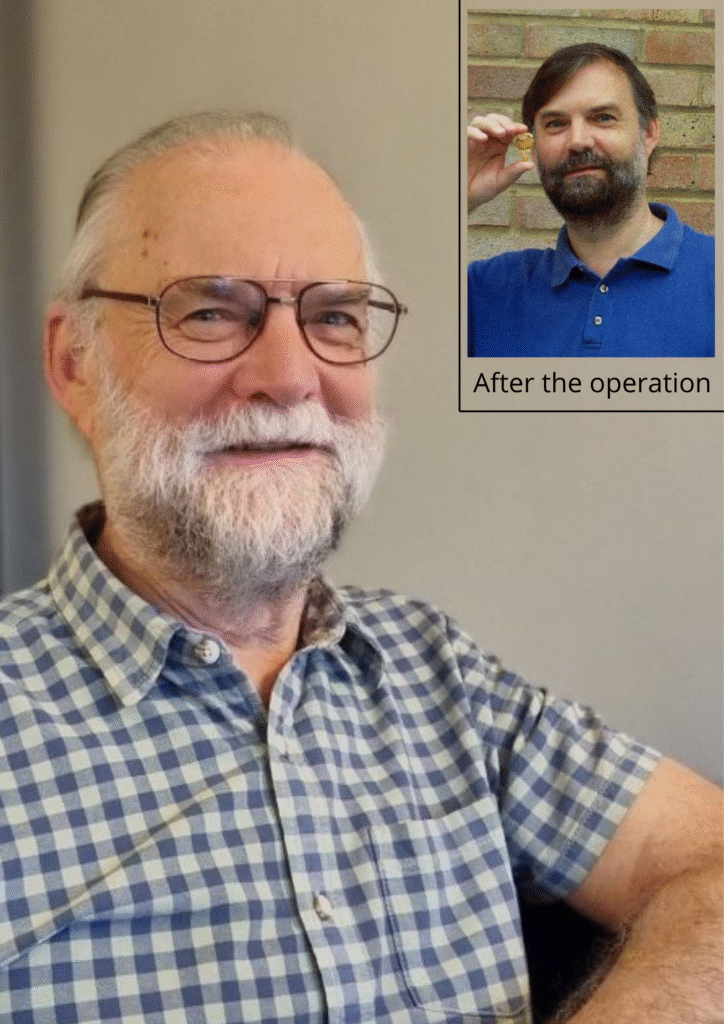
Our guest today is Jon. He is from the UK and a researcher on the topic of tailbone pain. He is worldwide a very well known person in the tailbone world, knows a lot about the literature and also unfortunately understands how it is to suffer from coccyx pain because he did so himself for many years. He underwent almost all the therapies out there and finally had it surgically removed in 1999.

We are going to learn about his personal story as a patient, but also about his interest in the topic which led to the website coccyx.org, the probably biggest online platform for tailbone pain worldwide that had up to 150.000 unique visitors a month. On this he shares a lot of information, also by specialists, links to scientific research, patient reviews and how to find specialists that treat tailbone pain worldwide.

Next to that we will cover the research he has done himself and presented at the first and second edition of the International Symposium on Coccyx Pain.

You can find the podcast in the menu under Podcast as well as the links to the platforms where it is posted.


Resources

As mentioned in the episode, Jon’s website www.coccyx.org has hundreds of pages about tailbone problems and thousands of patient reviews about the different sorts of treatments. Visit it for more info and as well to find a specialist near you.

It also has Jon’s personal story and his presentations that he held at the first and second International Symposium on Coccyx Pain. You can find those by clicking here.


Get in touch

In you have any questions about anything in and outside of this episode, comments or requests, let me know! You can email me through the contact field below or directly at roel@roelwilbers.nl.

Transcript

Roel Wilbers

0:04 Welcome to The Tailbone Podcast.

0:06 My name is Roel, and as your host, I bring you only experts on this for most doctors and therapists on known problems.

0:12 Let's dive in with today's episode.

0:17 Welcome everybody for a new episode for The Tailbone Podcast.

0:21 And today, I have a different kind of an expert for you than you've heard so far.

0:26 Jon is from the UK, and he's a researcher on the topic of tailbone pain, and a person that knows a lot about the literature and the practical part of having tailbone pain,

0:35 because he suffered from coccyx pain for many years, and he has his coccyx surgically removed.

0:40 His interest in the subject didn't stop there.

0:43 In the same year of his operation in 1999, he started the website coccyx.org.

0:48 And this is worldwide probably the most known and visited platform about the subject, and has a ton of information written by specialists, but also literally thousands of patients' reviews on their experiences with tailbone pain and the different therapies they underwent.

1:02 I spent hours on there researching the subject, and it gave me a huge amount of valuable info that to this day I didn't find anywhere else, online or in the scientific literature.

1:12 And it even includes, and that's a thing I love, a whole of famous people that had tailbone problems.

1:17 Jon is a very well-known person in the tailbone world, worldwide.

1:21 He seems to be connected to every one of the world experts and was at every of the world symposiums of coccyx disorders, where the 5th edition will be held next year.

1:30 That's in 2026 in Istanbul.

1:32 He gave presentations on the 1st and 2nd edition that were in 2016 and 2018.

1:37 And today we will go into his great talks he gave there.

1:40 He personally helped me a lot and even had an essential role in my research for my first scientific article on table pain.

1:46 After that, he got me in touch with a world-known expert, a doctor of who I loved, that he reviewed my article.

1:52 And that got me invited as a speaker on the World Congress next year.

1:56 Also, he gave valuable feedback and a great helicopter view on the subject, where we specialists tend to lose ourselves every now and then into our specific field.

2:04 Jon is unique in the tailbone world, and I wish every field would have such a knowledgeable and independent person that connects and differentiates the way Jon does.

2:13 So you can imagine I'm super happy that Jon agreed to be a guest on my podcast and gives us his time and knowledge to dive deeper into this subject.

2:21 Welcome, Jon.

Jon Miles

2:22 Thank you very much, Roel.

2:23 I'm very glad to be here.

Roel Wilbers

2:25 I hope this introduction was more or less complete and gave the listeners at least an idea of who you are and that we are listening to today.

2:32 And maybe it's good to start with giving us a short introduction in who Jon Miles is and then work towards your tailbone expertise because you have no medical or therapeutic background,

2:43 as I understood, right?

2:44 So could you maybe introduce yourself to us as a guest?

Jon Miles

2:49 I'm 75.

2:50 I'm a retired radiation physicist.

2:54 I spent most of my career with the UK National Radiological Protection Board, working on the natural radioactive gas radon, which comes out of the ground, gets into houses and can cause lung cancer.

3:10 And so I and my group were measuring radon in houses throughout the UK and mapping to find the areas with the highest levels and to reduce them in houses with high levels.

3:23 So I've been retired now for 15 years.

3:27 And apart from working on coccyx.org, I do a lot of reading.

3:34 I like walking, cycling, and I'm a volunteer helping to restore a local canal that was abandoned about 100 years ago.

Roel Wilbers

3:45 That's very diverse.

3:46 And of course, you became a tailbone expert, unfortunately, by own experience.

3:52 Can you maybe tell us a little bit more about your path you went through there and even decided to get an operation?

3:59 I believe I read on your website, it was in 1993 that it started.

4:03 And can you take us back there and explain what happened, please?

Jon Miles

4:06 Yes, it happened when I was riding my bike.

4:10 I rode over a drop and lost the pedals and landed with my coccyx on the tip of the saddle.

4:18 And that caused the injury.

4:21 And at first, I just assumed it was a bad bruise and it would get better.

4:28 And so I didn't go to a doctor for a long time.

4:32 But eventually it became clear that it was more serious than that.

4:36 And I went to the doctor and I was advised to take painkillers, which was no help.

4:43 Then I was referred to a physiotherapist.

4:47 And I don't think she knew anything about coccyx pain.

4:51 And she made the problem worse by pressing on it.

4:56 And eventually I was referred to a pain relief unit at the hospital.

5:03 And that wasn't helpful either.

5:07 The doctor assumed that because it was more than a year since my injury, the injury must have healed and it was only pain left.

5:18 So he would treat the pain, not the injury.

5:22 And so I was given strong painkillers and encouraged to sit when they took effect.

5:30 But of course, because the injury was still present and the coccyx presumably dislocating when I sat, it made the pain worse.

5:39 I had a steroid injection, which helped but only briefly.

5:45 So as time went on, I was standing at work to avoid the sitting.

5:52 And eventually I got painful feet from standing all day.

5:58 And the pain started spreading.

6:01 I got hypersensitive skin from my navel to my knees.

6:06 So wearing clothes was uncomfortable.

6:10 They say this is neuropathic pain.

6:12 This is the nervous system generating the hypersensitivity.

6:17 Anyway, by 1999, I got to the situation where I felt I either had to take early retirement on ill-health grounds or have the coccyx removed.

6:32 And so I went for the surgery.

6:35 Of course, at that time, I searched all I could for information about coccyx pain, but it was very difficult to find anything.

6:44 I didn't know of the manual therapists who had expertise in treating the condition.

6:53 If I had known, I would have gone to them much earlier, but it was a matter of ignorance.

6:59 I had no knowledge of this.

7:03 And so I ended up with surgery.

7:06 I think that if I had known this earlier, I wouldn't have needed surgery.

Roel Wilbers

7:13 That's a very big problem, like, or elaborate problem you had, of course, because you actually went.

7:20 I mean, even in that time, when the research was still young on coccyx pain and probably, I mean, Dr. Meigne in France, who did pioneering work, was doing his research in those years.

7:30 I can imagine it didn't even reach outside of France yet.

7:33 But you've seen a lot of people.

7:36 I mean, also what I read on your website, the doctor, painkillers, physiotherapy that actually just pressed on it, TENS, like which is electrocurrent to numb the pain,

7:46 the pain clinic, a pain management course, a semi-permanent nerve block.

7:51 I read the corticosteroid injection, which you mentioned.

7:54 So you kind of had it almost all.

7:57 So you really dove in to the subject.

7:59 Or was there someone who advised you on this path?

Jon Miles

8:03 No, it was very difficult to get advice.

8:06 Very few people knew about it.

8:10 I started the website the same year that I had my surgery.

8:15 And because of the website, I got in contact with the people who could have helped me earlier if I had known of them.

8:24 So Jean-Yves Maine in Paris got in contact with me and he liked the website.

8:31 And he in fact translated some of the pages into French for me to put a section on the website in French.

8:40 And I became in contact with Michael Dirtnall, the chiropractor in London who had a lot of success in treating it, who sadly now died.

8:50 But yes, it wasn't until too late that I found all of these people.

Roel Wilbers

8:59 And fortunately, your story is in many ways very recognizable for me, what I hear from the patients I see, which is half of my working day.

9:07 I just see people from all over the country and abroad even nowadays, that they still have a hard time to find valuable information.

9:14 So I think what you are doing with your website is awesome work for that, and really giving a lot of information to people from an independent source which is even stronger.

9:26 And that's also one of the reasons I started this podcast, to let people at least know what is out there, because it is hard to find through the regular pathways in the healthcare still,

9:36 unfortunately, and they were 25 years or 30 years later.

Jon Miles

9:39 Yes, yes, that's right.

9:41 I started the website to give people as much information as I could find.

9:47 And once I'd started it, more information started coming in.

9:51 So I could put all of that.

9:54 And then people asked me questions and gave me their experiences and suggested things that I could add to the website.

10:03 So it grew rapidly.

10:05 I should say also that there are no advertisements or sponsorship.

10:10 I have no connection to any commercial interests.

10:14 Yes, it was aimed at patients, and everything on there is to help patients, and incidentally to help therapists like yourself and with the references and so on.

Roel Wilbers

10:29 Yeah, it is great.

10:30 I spent, again, many hours there.

10:32 And also I really got information from there, which I didn't find or hear or see anywhere else, which is very valuable for my knowledge and also helping people.

10:41 So I think that is a great thing you put out there.

10:44 I would like to dive into the website in a minute.

10:47 Yes.

10:47 Just back to your story.

10:48 There's so much things which are so recognizable, unfortunately still are.

10:52 And maybe also for the listeners, could you shortly address that the symptom focused therapy.

10:59 A lot of therapy is unfortunately still mainly aimed on the symptoms and not on a cause which is underlying.

11:06 What was mentioned in the pain clinic, like, okay, it must have healed by now every sort of damage.

11:11 So there's just pain left.

11:12 So we go for the pain with either medication or with this pain management course.

11:17 And you were even stimulated or advised to sit more.

11:21 Yeah, which is kind of contradictory if you actually think there's an underlying cause.

11:26 And these doctors, of course, they do their complete best.

11:29 They just don't get this in their educations.

11:31 But this is still the case.

11:33 And I hope this podcast adds to that.

11:35 There's more, there's so much more knowledge nowadays.

11:37 And I believe that like 99% of all doctors have no clue about tailbone pain and 95% of physiotherapists don't even have a clue that there's a therapy inside of their own profession for it.

11:47 I was one of them up to years ago.

11:49 So again, I don't want to blame doctors.

11:51 But as a patient, you have to be, unfortunately, still very assertive to go and seek for your own information.

Jon Miles

11:58 That's right.

11:58 And one of the biggest difficulties patients have is finding any specialist who has the knowledge to treat them.

12:06 And that now is one of the biggest roles of coxix.org.

12:11 There are listed more than 500 specialists in different countries around the world.

12:17 Unfortunately, mainly in English-speaking countries, the coverage is much less in non-English-speaking countries.

12:26 But yes, it allows people to find someone that they can reach, who understands the problem and has experience in treating it.

12:36 And for many people, that is extremely difficult or impossible.

Roel Wilbers

12:41 It is very rare.

12:43 In every profession, physiotherapy, osteopathy, even pelvic therapy, medical doctors, a small percentage within each of these professions knows actually something about tailbone pain.

12:52 So you can go to one of these professionals, but that doesn't guarantee that they actually can help you with tailbone pain.

12:59 Even proctologists or pelvic physiotherapists, which are really specialized in the areas, still often don't have any knowledge about coccyx pain.

Jon Miles

13:08 That's right.

Roel Wilbers

13:09 And it's great that your website provides at least a list, and that's 500, it's a lot, and worldwide.

13:15 I recently had a patient actually that came through your website, and that found me to coccyx.org.

Jon Miles

13:21 That's good.

Roel Wilbers

13:22 So you're helping people.

13:24 You actually ended up having surgery, and I'm going to share a link to the website, and also there you gave a really nice view on your personal story,

13:32 and that you said, I felt that I have now tried everything short of surgery, which is true with the knowledge we have now, and could not continue the way I was living.

13:42 My life was falling apart, and I would either have to have surgery or stop working.

13:48 And I think a lot of listeners also recognize this, how disabling tailbone pain can be.

13:52 And it's an invisible handicap.

13:54 You cannot see it from the outside that someone is suffering, but it is so much.

Jon Miles

13:58 Exactly.

13:59 Yes.

13:59 That is one of the difficulties with it.

14:02 If you break your leg or your arm or something like that, people can see that and understand that you can't do certain things.

14:11 But with tailbone pain, there's nothing to see and they don't understand what the problem could be.

14:19 Yeah.

Roel Wilbers

14:21 And that's also why I have now two patients already who I interviewed.

14:25 And these are the worst cases which I see and all the implications it has.

14:29 They tell their story about not being able to wear proper clothing because it's too tight, not being able to sit, not able to go to birthday parties,

14:38 just to work, right?

14:39 Like basic things.

14:41 Just imagine if you cannot sit, how much implications this has for your daily life.

Jon Miles

14:46 Exactly.

14:47 We're expected to sit to travel, to sit to work, to eat, even to relax.

14:55 To try and go through life without sitting is almost impossible.

15:00 And it means that people do sit, even though it's painful, and they're then aggravating the condition.

15:08 Whereas if you have a broken ankle, you have crutches, you are not putting weight, or a sprained ankle even.

15:18 You're not putting weight on it.

15:20 You can avoid it.

15:22 But if you've got tailbone pain, it's extremely hard to avoid putting weight on the thing that hurts.

15:30 Yeah, yeah.

Roel Wilbers

15:32 And this is a story I hear on a daily basis, which is often forgotten.

15:35 So I think also for listeners that have tailbone pain, that also are acknowledged or recognized that this is normal.

15:41 They're not crazy or not exaggerating their problems or anything.

15:45 It can be really, really severe.

Jon Miles

15:47 Yeah.

15:47 Yes.

Roel Wilbers

15:48 So you had your coccyx removed in 1999.

15:51 So just to complete your story, how did it go afterwards?

Jon Miles

15:55 Well, I had a very slow recovery, probably because it had been so long chronic pain and that had developed into other symptoms like the hypersensitivity,

16:09 the neuropathic symptoms.

16:12 So I was put on the tricyclic antidepressives, which have the effect of dulling the pain, which I don't think is a good idea before surgery.

16:23 But if you have had your coccyx removed, then dulling the pain is a good idea.

16:29 And it took a lot of time before I got in contact with a pain specialist, who told me that with that kind of drug, you need to be on it for two years.

16:43 The first year for it to fully take effect, it takes a long time for these drugs to fully take effect.

16:50 And the second year to make it permanent, after which, you can very gradually reduce the doses.

16:58 And I followed that.

17:00 In my case, it took about two and a half years, and I reduced the doses very, very slowly.

17:06 But I have now reached the situation, where I sometimes have discomfort, if I sit for too long, or on a chair that's too hard.

17:16 But that quickly goes away.

17:18 I don't actually have any pain from the area now.

17:23 So, I can live a normal life, and I can drive and cycle and sit to eat and so on, without any problem, so long as I'm careful not to sit too long,

17:36 and not to sit on hard chairs.

Roel Wilbers

17:42 That's good to hear, because you, of course, I also kind of read it on your website already, that you wrote there that the recovery was very gradual,

17:50 like you just well explained, and it took you about three years to reach 80% better than before the operation, and a couple of more years to reach 90% better.

17:59 And this is like still where you are, this is 10% remaining on sitting on hardsurf.

Jon Miles

18:03 I guess so, yes, yes.

18:05 Still discomfort if I'm not careful, but a perfectly reasonable way to live.

Roel Wilbers

18:12 I'm happy to hear that.

18:14 Luckily for most patients nowadays, with the knowledge and therapies out there possible.

18:20 And we're gonna dive in to the therapies a little bit more later in this podcast episode.

18:24 But yeah, I'm happy that for you, you reach this level as well, because it's not a full 100% guarantee for people.

Jon Miles

18:31 No, that's right.

18:33 And that's what the personal experience is that people send me often say, some of them do get 100% relief, but probably more of them get enough reliefs that they can carry on with their life,

18:48 but not 100% in many cases.

18:52 No.

Roel Wilbers

18:53 And that's the cases, of course, which you can read about on your website.

18:56 I'm going to go back to your website, because your journey didn't stop after your personal journey.

19:02 And you went on researching the topic and then created the website we already mentioned.

19:07 And I have a more or less similar website, but a lot smaller than yours.

19:12 Yours is huge, and you have like thousands of reviews there.

19:16 And do you have any idea about the amount of pages you have right now and the amount of visits on your website, because it's internationally very big?

Jon Miles

19:25 Yeah, there are around two and a half thousand personal experiences from people on there, and another few hundred pages of information and so on.

19:37 The website grew a lot in popularity, because when I started it, it was virtually the only site on the subject.

19:45 And also when Google came along, their algorithm for ranking sites works on the number of links into a site.

19:56 So a link into a site is like a vote for it, and so takes it to the top of the list, or at least it did originally with Google.

20:07 And up to about 10 years ago, my website was very prominent if people searched on anything like that.

20:15 And it reached 150,000 unique visitors per month coming to the site.

20:22 But there are several factors since then have made it harder for people to find the site.

20:27 One of them is advertising, so people can get top ranking by paying Google to put them at the top.

20:34 The second one is what's known as search engine optimization, which is creating lots of links to your site so that you get pushed up the ranking.

20:45 And there's a constant battle between Google trying to avoid people doing that, and people trying to get their websites further up.

20:54 So search engine optimization can be a full-time job.

20:58 It's difficult for an independent person to do that kind of thing.

21:03 But there's another factor which made a big difference, which is that Google decided that, to quote them, content related to health topics should be written by medical experts.

21:19 Now, although my website contains lots of stuff written by medical experts, I'm not a medical expert, and my website didn't get the priority ranking anymore.

21:32 And the number of visitors dropped by about a factor of 10.

21:38 This ruling actually by Google affects doctors as well, because Google can't check on the expertise of every doctor.

21:47 So the effect of this ruling is that large medical institutions get high priority.

21:55 So big hospitals and things like that go to the top of the ranking, which is probably a good thing for things like cancer and heart disease, where they have a lot of expertise and people get directed to that,

22:08 rather than to scam websites.

22:11 It's not helpful for more obscure conditions, like coccidinia, where the hospitals and so on will have a page or two on the subject, but just general stuff,

22:22 very little information.

22:24 And they may have no doctors there who actually treat it.

22:29 So websites like mine get drowned out, they get pushed down the rankings, so that people don't see them.

Roel Wilbers

22:37 Yeah, which is very unfortunate, because I mentioned that in my intro episode, that when you look out there for information, there's more than before, before you were really the only one,

22:47 right?

22:49 And now there's more.

22:50 And also if there's a, it's a hot topic, like the American basketball player, Stephen Curry, who injured his coccyx, there was a doctor coming on and making a YouTube video about it,

23:01 which he well intended to do, but he just explained that the tailbone is one single bone, for instance, right?

23:07 And then you get a medical expert talking about tailbone pain, but research shows it's less than 1% of people have one fully submerged bone.

23:16 So the information out there, unfortunately, is not that high quality.

Jon Miles

23:21 It's not.

23:21 No, no.

23:23 In fact, Grey's Anatomy has stated for many years that it's one bone.

23:29 I don't know if they've corrected it now, but yes.

Roel Wilbers

23:32 For the listeners, Grey's Anatomy is the anatomical atlas, which is used by doctors and also physiotherapists in their educations.

23:40 So it's like kind of the top out there source of knowledge for doctors.

23:44 And if that's not recognized, then it's unfortunate.

23:47 So definitely, if you want to know anything about tailbone problems or have these patient reviews, visit Jon's website.

23:54 And there's a link below in the show notes, but it's coc6.org.

23:58 It was for me tremendously helpful and for many, many people around the world.

24:03 So 150,000 a month, unique visitors.

24:06 That also says something about the demand is there.

24:09 There are so many people suffering from it.

24:12 Why do you think it's so under recognized?

24:13 This problem of tailbone pain.

Jon Miles

24:15 Yes, it's difficult to get statistics on it, but there are one or two people who've said, I think there's one hospital did a survey of people referred to them for back pain,

24:27 and they reckoned that around 1% of the people referred for back pain had a coc6 problem.

24:34 So it is a minority thing compared with other back problem conditions.

24:40 So it doesn't get the same prominence because of that.

24:44 Many doctors will only see the occasional case as compared with people having sciatica or a slipped disc or something like that.

24:56 It's common if you take worldwide as a proportion, it's small.

Roel Wilbers

25:02 It definitely is.

25:04 It's a niche market, although there might be more people out there, and we know because they also stop searching because it's so under recognized and so unacknowledged.

25:14 So, but it's still, it is a niche market for sure.

25:17 And then also what you just said, which kind of reminds me that the doctors are the ones that see them, they are not trained in it.

25:25 And also the skills and means they have to help people with the tailbone problems is mainly or almost solely or at least mainly that stated that way based on treating the symptoms and not the cause of the problem.

25:39 If there's a biomechanical underlying cause, which is not in the skill set of an average doctor.

Jon Miles

25:45 That's true.

25:47 There used to be doctors who did manual treatments.

25:52 There are papers written by doctors, but they peter out about 1960.

25:59 I don't know for sure exactly why, but what I suspect is that corticosteroids came in and they started giving injections for those.

26:10 Those can sometimes give a rapid effect.

26:14 It may not last, but it gives a rapid effect in some cases.

26:19 Anyway, whatever the cause, doctors stopped doing manual treatments.

26:26 And that has an effect on what they read, because doctors read medical journals.

26:33 And if there are no doctors writing papers on manual treatments, as there were before 1960, then they never read anything about the manual treatments.

26:45 The vast majority of doctors have no idea that there are manual treatments for coccyx pain.

Roel Wilbers

26:52 The vast majority of physiotherapists that perform them even don't know they are there.

Jon Miles

26:57 Yes, unfortunately, yes.

26:59 But I think it's more common in physiotherapists and chiropractors and osteopaths.

27:07 And actually, in America, I know that some physiotherapy organizations do run courses and provide qualifications in treatment.

27:17 And I know in the Netherlands, there's quite a strong movement among physiotherapists, but not in most countries.

27:26 Yeah, that's true.

Roel Wilbers

27:27 Yeah, the message is kind of spreading.

27:29 The Netherlands is also because the person that developed the external treatment technique for coccyx pain, where there's actually two educations and two courses on it.

27:39 He was Dutch, so this like from here, and hopefully it spreads more international.

27:44 And I saw one of my colleagues that gives this course, who actually went to Poland and South America now.

27:49 So hopefully it kind of spreads, but it's still quite small.

27:53 That's, that's for sure.

27:55 And I think I agree on what you said about that it stopped being done by doctors because medication came in.

28:02 And this is kind of like a tendency which you see in health care a lot.

28:05 Like nowadays, to be trained as a doctor, it's like for a huge part knowledge about medication, right?

28:11 They call it also the education of medicine to become a doctor.

28:15 And I'm a physiotherapist and I did some courses on breathing as well.

28:18 And also there, you see that there was a big change since medication came in.

28:23 And it kind of took over all the attention for breathing exercises, which actually in some cases are more effective than the medication.

28:30 But because the pharmaceutical movement was so strong, it kind of got to the background.

28:35 And nowadays doctors, like even lung specialists or specialists on the digestive system, they don't have any knowledge anymore from their education about food for the digestive system doctors and breathing techniques for the lung doctors,

28:49 which doesn't really make sense in a way, but this is how strong also the emphasis on medication became.

28:54 So I can imagine that this is also explaining what you found in the literature, that it kind of turned around from what doctors did manual.

Jon Miles

29:03 Yes, that's right.

Roel Wilbers

29:05 Medication, yeah.

29:08 You became a true expert because of all the info that you gathered and share at your website, including a long list of articles, which also was very valuable for me because PubMed doesn't give you the pop-up automatically,

29:20 you have to really search for it.

29:22 You have a long list of scientific articles that are published every year, but also the patient reports, which we already mentioned.

29:29 For me, at this moment, my patients are even my biggest teachers.

29:34 You made an overview of the patients' postings on their experience with the treatment and presented that in 2018 already, so that's seven years ago, at the Second World Symposium here in the Netherlands.

29:44 It was called Patient Reports of Cocardinia Treatment Effectiveness.

29:49 You reported back then already about more than 2,000 reports of personal experiences you received from 1999 till the end of 2017, which is huge.

30:01 For this presentation, you included 1,735 patient reports, and of those were 726, so that's a bit over 40 percent, that were more than a year after the treatment.

30:13 That's an important addition because most of the articles I have read have short follow-ups, which in case of, for instance, corticosteroid injections make a huge difference in the outcome.

Jon Miles

30:22 Absolutely.

Roel Wilbers

30:23 The short-term effect is better and the long-term effect is little.

30:27 You started the lecture about your findings with the shortcomings because it was different procedures that were done, that patients talk about, different therapists, different therapies, and that the reports are not average,

30:40 and you called that cries for help, like people that actually had a problem that was solved, probably won't write a review, right?

30:47 It's like the worst case or the best scenarios.

30:50 You very well addressed that.

30:52 But it also, and I thought this is very strong of your research, it gives you a message from real patients, and that's free of the academic publication bias,

31:02 and also about the not or hardly studied treatments like physiotherapy.

31:07 Can you tell me a little bit more about your talk there?

31:10 Because it was really well received, which I heard also are read from doctors and physiotherapists there, and what you did there.

Jon Miles

31:18 Right, yes.

31:19 Well, as you were saying, the data there is not the ideal data that you would like for an epidemiological study, because it's not an organized trial,

31:32 it's things that volunteers have put forward.

31:36 But it does allow me to select the reports that give the outcome more than a year after the treatment, which as you say is crucial.

31:48 Short-term treatments are no good.

31:51 People want long-term effects, and a lot of the literature on corticosteroid injections only covers three months.

32:01 Some of them do longer, but a lot of them are just short-term.

32:06 And the corticosteroids, the effect generally wears off after a few months.

32:12 So I was selecting for all treatments the result after 12 months or more.

32:20 And the surprising thing about the corticosteroid injections was that after 12 months, only 2% of the patients were still free of pain.

32:34 And the proportion that were free of pain who had had manual treatments was 30%.

32:41 And neither of those figures you should take as an absolute figure to tell you the success of that treatment because of possible reporting bias.

32:52 But if you compare the two figures, there's a factor of 15 between them.

32:57 And whatever the biases are, it demonstrates that manual treatments are much more successful than corticosteroid injections for patients in general.

33:10 Now that contrasts with the trials for corticosteroid injections that did monitor up to a year.

33:17 They get a lot better than 2%.

33:19 It's maybe 25%, something like that.

33:23 So there is this puzzle.

33:25 Why do the reported results in the trials get much better results than the average patient writing in?

33:34 And that's something that Patrick Boy, who's an expert in doing the injections, spoke about.

33:42 And what he said was that mostly doctors are injecting in the wrong place.

33:48 They're not taking the time and the x-rays and so on to detect exactly where the problem is and placing the injections correctly.

34:01 So you get a contrast because the people who do the trials and report them in the journals are experts on that and they're doing it properly.

34:11 But most doctors don't have that expertise and don't take these precautions and so most patients get much worse results than are reported in the trials,

34:24 which is a handicap of any trial like that where the result depends on the skill of the person doing it.

34:32 Whether it's surgery or manual treatment or the injections, the result varies depending on the skill of the person doing it, which is another reason why I think it's helpful to have a list of people who have experience in treating

34:50 these conditions.

34:52 Because it's been shown in papers in general in surgery that if you're having surgery done for any operation, it's better to have it done by a junior doctor who does lots of that operation than by a senior doctor who doesn't.

35:09 Because practice helps.

35:12 People are more successful with operations if they're doing them frequently.

35:18 The same is true of manual therapists and people doing injections.

Roel Wilbers

35:24 Yeah.

35:25 Well, on your website, Dr. Manny wrote in an article that there's a certain learning curve for the operation.

Jon Miles

35:32 Exactly, yes.

Roel Wilbers

35:34 So I actually recently visited her operation.

35:37 I was actually visiting live at an operation for a coccyx removal.

35:42 And it's very specialized.

35:44 And also what you mentioned that Dr. Patrick Foy mentioned to you, which I hope is going to be a future guest.

35:50 I'm in touch with him for this podcast.

Jon Miles

35:52 Yes.

Roel Wilbers

35:53 He mentioned that I heard the same thing in my personal conversations with Dr. Manny who said, it's so easy to make injections look bad if you don't know where and when to inject.

36:04 And that is, for instance, there's already four different injection techniques, which I read about in the literature.

36:10 And he said, with certain things we see on x-rays, and I think if I remember correctly, it was the extension loxation.

36:17 He says, injections are not useful at all.

36:20 So it definitely takes a skilled professional.

36:23 And that's the same thing, like you mentioned, what I see.

36:27 There's hardly any people that see, I think, more tailbone problems than me, at least in the Netherlands.

36:34 And I also get them referred from other therapists who did the course.

36:38 And because there's so little people out there, and you do this course, which is only two days, and then the next two years, you don't get any tailbone patients.

36:46 And then you see one and you apply the technique.

36:49 And then patients come to me and said, I was already with one of your colleagues and he or she tried it and it didn't really get better.

36:55 And I do the same thing and it works.

36:58 So, and I actually have a lot of them.

37:00 And it's not that I'm so brilliant, but I'm just like, you have to be really stupid if you don't get better if you do this on a daily basis.

37:07 Right.

37:07 So I think definitely true that skills are important.

37:12 But also, I think what we learn from the literature, if you look, for instance, for the injections effectiveness, and I also went into that one, the long-term effects are low.

37:22 And we know this not just from the few studies done on coccydynia, on tailbone pain, but also for researches that are done for the corticosteroid injection, at least,

37:32 for shoulder pain or heel pain, achilles tendon pain.

37:36 And that's also known that the effects are short.

37:40 And if you look at the literature, actually, you pointed me to this article of Dr. Vincent 2020, I believe.

37:48 He did a long-term research study, and he said after average of three years, after the corticosteroid injection, 241 people he looked at, he said only 15% was a lot better.

38:01 And if you look at researchers which have a little bit of a longer follow up, and I found five of them, you see that up to eight weeks,

38:09 the result is good.

38:10 But in between eight to 12 weeks, the decline starts.

38:14 And after 25 weeks, the decline is more.

38:17 So the effects are mostly what I see in this research, somewhere between eight and 12 weeks.

38:23 And this is the same as what we see from other areas in the body.

38:26 So that doesn't mean they're not useful in cases, but it's often not the solution.

Jon Miles

38:33 I agree.

38:34 Yes.

38:35 Absolutely.

Roel Wilbers

38:35 They work in the short term.

Jon Miles

38:37 Yeah.

Roel Wilbers

38:38 And it can actually make things worse because what I sometimes hear that people, after an injection, they have less pain, but afterwards they have more pain.

38:47 And I can also imagine if you have no pain or less pain, that you're actually going to sit more.

Jon Miles

38:51 Yes.

Roel Wilbers

38:52 And do more and then abbreviate the actual underlying problem, then when the medication works out, then the pain is more.

38:59 So, and again, I'm definitely not against injections, and I would love to hear more about them from the experts, which I'm definitely going to interview for this podcast series.

39:08 But it's good to differentiate the long-term and short-term effects of therapy.

39:12 And I think your study did a great job there.

Jon Miles

39:16 Thank you.

39:17 Yes.

39:18 That was a particular focus.

39:20 The long-term effects, and I feel for any study, you have to take long-term effects into account.

Roel Wilbers

39:28 Yeah, true.

39:29 I have a database now of over 300 people I treated.

39:33 I'm actually also trying to get the long-term effects, because the short-term effects of the manual therapy treatments I do are really good, I guess.

39:40 Like, it's 80% of the people I see are fully problem-free after the therapy sessions.

39:45 And then 8% I cannot help.

39:47 There's no recovery.

39:49 And the other 12% has at least 50% decrease of problems.

39:54 But I also want to know for the long-term.

39:55 So up till three years, I'm now tracking people and see, is this really a long-term effect, which is super important, because that's what people want, like you stated.

Jon Miles

40:05 Yes.

Roel Wilbers

40:06 Now, so in this study of this over a thousand people, you looked at manipulation group, injections of corticosteroids, the operation, the cochicectomy, like when you take it out,

40:18 that's the only operation there is, exercises and nerve blocks.

40:23 And what you saw is that what I read, at least in your article, is that after a year, there was a 2% effect of the corticosteroid injections.

40:33 Manipulation was 32% and cochicectomy, so the operation was even 54%, which was pretty high.

40:41 But it's kind of a last resort.

40:42 We're going to go into the operation a little bit more, if that's okay, a little bit.

40:47 So your conclusions were in this overview that the corticosteroid injections and the nerve blocks did not provide long-term effects for the great majority of patients and that the manipulation and the exercises seem to be the most effective conservative treatments.

41:03 And I was quite surprised about the exercises, because to my knowledge, it's pretty hard to affect the area with exercises.

41:10 So I learned from that it's quite effective and good to look into that.

Jon Miles

41:14 Could I say about the manual treatments and the exercises, it's rather mysterious exactly why these things are having an effect.

41:26 When different therapists do very different things, some of them massage, some of them pull the coccyx back, some of them mobilize joints,

41:39 some of them do it internally, some externally, and they all can report good results.

41:46 And so it's strange that these different things have the effects.

41:51 And possibly the exercise is doing something the same, is affecting the muscles, the connective tissue and so on.

42:01 I don't know, I'm speculating, but it seems to me that there's a lot of uncertainty about what is going on physically there since people get good results with very different treatments.

42:16 Have you any thoughts on that?

Roel Wilbers

42:19 Yes, actually I have.

42:20 Thank you for stating that out.

42:22 I wrote recently a 65-page article about where I think this comes from, because the main dominant factor in all the therapies you just mentioned, like either the muscles and internal or external mobilization of the joints,

42:36 the key factor there is mobility.

42:38 And up till now, and this is the thing that's got me into researching this, is that literature mainly points at there's too much or excessive mobility in the coccyx joints,

42:50 and that's the problem.

42:52 So that's an instability.

42:53 So it's either hypermobile or the joints tend to luxate.

42:58 And a doctor, a specialized doctor, told me literally, what you do is impossible to have an effect.

43:04 Actually, if you mobilize something that is too mobile, you have the opposite effect.

43:08 It makes sense.

43:10 So I dove into the literature and I saw that that's actually the case.

43:13 And that could explain the research results which they had up to then, especially the great work Dr. Menya did.

43:19 But it couldn't explain what we are doing as physiotherapists or doctors or osteopaths or anybody that mobilizes the joints.

43:28 But my idea is that there's a high mobility, so it's not mobile enough.

43:34 And that's why the coccyx gets into trouble.

43:36 Normally, the coccyx moves inwards, tucks in when you sit down, so there's no pressure on it.

43:42 And if that movement is released, then you get pressure directly on the coccyx while sitting, which goes away if you mobilize it.

43:50 And I'm very grateful that you pointed me to the work of Dr. Dirtnall, Michael Dirtnall, who unfortunately passed away, but who researched this with x-rays and who came to the exact same conclusion that if you mobilize joints of the coccyx,

44:04 problems actually get better.

44:06 So in my humble opinion, I think we are looking at the wrong thing in the literature so far.

44:12 So I don't doubt any of the scientific findings in the research, but I doubt that the conclusions are correct.

44:20 And I'm a physiotherapist, so I am trained to look mechanical.

44:24 And most of this research is done by doctors who are trained to look at structure.

44:29 And that is great where Dr. Menye even made this tipping point of looking at the mobility, actually, of the tailbone, instead of just the position of it,

44:38 which was kind of before that, like Postachini's types, the way of looking at it.

44:42 So I hope to add something extra with my mechanical training so that we can broaden the view and incorporate the scientific findings and explain the results of the mobilizations.

Jon Miles

44:56 Yes.

44:57 It's still odd, though, that some therapists just massaging the muscles get success.

Roel Wilbers

45:05 Yeah, because what I'm talking about is more the joints.

Jon Miles

45:08 Yes.

Roel Wilbers

45:08 But if the muscles around it are contracted and they keep it into place, so, like, for instance, if with someone with a neck injury, like a rib lash,

45:16 the muscles contract and they make sure the mobility is reduced.

45:20 And if the muscles are the factor that keeps the mobility reduced and you release the tension there, and the invitation for the tailbone is there to start moving more,

45:30 that can be just enough to get the mobility in there again.

Jon Miles

45:33 Right, right, yes.

45:36 One thing that's concerned me for a long time is the lack of publications of trials by people using manual techniques.

45:47 There are very few papers in the literature.

45:50 And I think doctors, I don't know, the past 50 years or more, have been trained to do trials and to report them.

46:03 And I don't think the same has been the case for manual therapists.

46:09 And so there's a lack of good trial data where patients are enrolled in series based on criteria for acceptance and then followed through for a sufficient period of time.

46:24 And I'm glad that you are doing such studies and we really need many more in the manual field to add to the literature because there's so little and so little understanding of it.

Roel Wilbers

46:40 Yeah, I fully recognize what you're saying there.

46:43 I mean, trained as a physiotherapist, we nowadays is a little bit different, but I ended my training like 25 years ago, but we didn't get anything about doing research.

46:53 So and then just to clarify, maybe for the listeners, when you say manual therapist, that means therapists that work with their hands and do manual techniques, right?

47:01 So that includes all the tasks and chiropractors.

47:04 Like in Holland, manual therapist is a profession, sort of a psychotherapist, just to get that out.

47:11 If there's Dutch listeners and they say, okay, it's not physio, but everybody that does manual techniques.

47:16 And one of the big things also is we don't have an institution backing us up.

47:20 So doing research costs a lot of money.

47:23 It costs expertise, which we don't have.

47:26 And we are not scientists as physiotherapists, like at least trained as scientists.

47:31 And we don't have an institution backing us up.

47:33 So I work in a private practice where in Holland most of the physios work.

47:37 And we're with a few colleagues, but there's no big institutes that can actually fund research.

47:43 All the things I do, it's just like my own time and my own hobby and my own passion.

47:47 But that also holds next to the expertise, which I have to like kind of hire or collaborate with other people to get to come to this kind of publications.

Jon Miles

47:58 Yes, yes, that's right.

48:00 So there are some physiotherapists in hospitals, aren't there?

48:04 And maybe they could access more expertise and advice from others on doing trials.

48:13 As you say, it's very difficult for someone working independently to do that.

Roel Wilbers

48:21 And the problem is with the people in the hospitals, they don't see tailbone pain.

48:26 They see people with replacements of knees, replacements of hips, and it's mostly short-term.

48:30 At least at the system in Holland, as soon as you leave the hospital, you go to the therapists in the country.

48:36 They're not in the hospital anymore.

48:39 But I think that's definitely a shortcoming.

48:41 And I think the funding and also the expertise among us, manual therapists, and of course, there's people that actually are really trained at that.

48:48 But on average, this is not what we get in our education.

48:51 But I definitely agree with you that this is, and this is also why I started doing the research, because to really become recognized as a therapy, you need to have that nowadays.

49:01 If there's no signs backing it up, then so, and I'm also trying to figure out how to get my message or like, at least my database, which now is,

49:11 I have a collaboration with the university here in Amsterdam.

49:14 And there were four students of the Studies of Health Sciences that did their thesis on my database.

49:21 And they also learned me how to think or collect data, at least more on a scientifically valid basis, right?

49:26 So we're getting there, and I hope to a certain point, there will be a moment that actually this data is being turned into a scientific article.

49:35 And also, because it's a niche market, that also is a magazine wants it, because I now just wrote an article for general practitioners in Holland.

49:44 And I wrote to this one magazine, I said, okay, I see that the last article you published about tailbone pain was in 1991.

49:52 Some things happened in between.

49:54 Are you interested, right?

49:55 So in this market, is it big enough or interesting enough?

49:59 It's not a knee problem or a neck problem, which is much more common.

Jon Miles

50:03 Yes.

Roel Wilbers

50:04 Yeah, so fingers crossed that we get this there, right?

50:07 I'm enthusiastic and I'm confident, so let's see where we get to.

50:11 And at least I hope with this podcast, already a lot of knowledge goes out there because nowadays people find me online, ChatGPT gives me patience nowadays.

Jon Miles

50:23 Yeah.

Roel Wilbers

50:25 You had an operation eventually yourself.

50:27 And when do you think personally it is a good choice?

50:31 You're an expert in the literature and in the actual having the operation.

50:35 And I didn't do too much research myself on the long-term effects of the operation.

50:42 And Dr. Foy, who you already mentioned, writes in his book that it definitely is a thing that helps.

50:48 But less than 10 percent becomes fully problem-free.

50:52 I don't know what the basis is where he has that statement on.

50:56 But there's at least consensus it's the last resort.

50:59 Unfortunately, not the last resort in a lot of cases because we physiotherapists are skipped even.

51:05 What is your idea on the operation?

51:07 Because the effect was pretty okay, what came out, or good actually, the best, what came out of your research with the patient reviews?

Jon Miles

51:14 Yes.

51:15 My feeling is, as you say, it should be a last resort.

51:19 You should try manual treatment and possibly injection if you can find somebody who is an expert at it.

51:28 And there are some people who get long-term relief from injections.

51:34 It's a small minority, but some do.

51:36 And you go for surgery when you've tried all the other options and they haven't worked.

51:43 And some surgeons have criteria such as, if an injection worked temporarily, at least, then that makes them a good candidate for surgery.

51:57 Some say, if it was an injury, then that makes them a good candidate.

52:02 But their criteria do vary and they tend to be careful.

52:07 They want to select good patients, or at least good surgeons do.

52:12 And as I found from the responses of the people who wrote to my website, most people who have surgery are glad they did.

52:23 They reach the end of the road and that gave them relief.

52:27 It may not be 100% relief in all cases, but it is in some cases.

52:34 But it made life better for them.

52:36 And they could see no other alternative because they tried everything else.

52:42 So I think surgery is a valuable last resort.

Roel Wilbers

52:47 It's definitely a valuable addition to the spectrum of the therapy that is done there, yeah, for sure.

52:55 But I hope that with the development now, we can see that there's a lot of things in between.

53:00 Like I think you're an example of doing like almost everything, right?

53:04 You really, even then already, like last century, you already did everything which was available before you got to the surgery.

53:13 And the medical doctors want to help their patients.

53:16 And this is one of the two things they can offer, right?

53:18 With the next to the medication.

Jon Miles

53:21 Yes.

Roel Wilbers

53:22 Just for the listeners, I can imagine that you wonder why a surgery is not 100% effective, because if you take the source of the pain out, why is there still pain?

53:33 And before mentioned, Dr. Foy wrote this in his book.

53:37 That's the only book I could find actually about tailbone problems, which is actually a good book, a very good book, actually.

53:43 And he also explained there, you have something like phantom pains, like people that amputate a limb and still feel their limb.

53:50 You have scar tissue, there's sprouting of the nerves.

53:53 So there's different complications which can happen after removing the tailbone.

53:57 And that's the only surgery that is done, by the way.

54:00 There's not options in surgery.

54:02 There's just removing part or fully the tailbone.

54:06 And that's the only surgery done.

54:08 And again, I witnessed one.

54:09 It's, you just take out the central part of the pelvis, which kind of surprisingly enough, you can very well live with.

54:18 But it's a big thing.

54:19 It's not just...

54:21 And of course, Jon, you are the expert here on that one, like having had one.

54:24 It's not just something that you just take out, you close the wound and like after three weeks, you're back to normal.

Jon Miles

54:31 No, it takes a long time to recover from it.

54:35 And partly, it's the problem that you have before you have surgery, that it's hard to live without sitting down.

54:44 And if you have surgery on your arm or your stomach or something like that, you guard it, you don't put pressure on it.

54:52 People who have their coccyx removed, find themselves almost compelled to sit on the scar.

54:59 And that makes it painful and prolongs the recovery period.

55:04 So, yes, I've found no physical problem at all from not having a coccyx.

55:12 There are still the occasional doctor who will advise patients that they will be incontinent if they have their coccyx removed, which is completely untrue.

55:25 You know, from the trials, if you put them together, there are hundreds of patients who've had their coccyx removed.

55:33 And of course, there are risks with any surgery.

55:36 Things can go wrong, but it doesn't make you incontinent not having a coccyx.

Roel Wilbers

55:43 Yeah, great that you add this.

55:45 And I hope in the future episodes, we have at least one surgeon who can actually tell us the details about it.

55:50 But this is definitely a myth.

55:52 This is good to debunk that this is not a common complication.

55:56 The most common complication, actually, what I read is an infection, which makes sense because with your knee surgery, you can keep the knee free from bacteria much more easy than an area so close to the anus,

56:08 and you still have to go to the toilet every day, right?

56:10 So that's one of the difficulties there as well after the surgery.

56:14 But in the end, it's a good last resort.

Jon Miles

56:18 Yes, yes, that's right.

56:20 On my website, there is a page of tips for people going for surgery, both before and after.

56:28 And some of those are supplied by John Hardy, who's a London surgeon who does a lot of coccyx removals.

56:36 And he concentrates a lot on avoiding an infection and measures that you can take before and after surgery to reduce the chance of infection.

Roel Wilbers

56:48 Great.

56:48 Valuable.

56:49 So definitely, if you're considering this or actually you're in the process, I will definitely recommend you to visit your website to look at these tips.

56:58 So I would like now to address the other research that you have done for the World Symposium.

57:04 And that's the one about the history of Cocodinia.

57:07 And for this, you really made a deep dive into the history of the problem and trace it back to writings from over a thousand years ago.

57:14 You even had Greek texts translated for it.

57:18 And I heard Patrick Foy say after the World Conference that he actually named you the star of the conference because of this great presentation.

57:27 And he enjoyed it a lot.

57:28 And there's a PDF of this talk you gave in Paris in 2016 at this World Symposium at your website.

57:34 And I really, really enjoyed reading it because this is again, such a unique thing that you actually don't find anywhere.

57:41 And I learned so much from this article.

57:43 So could you maybe tell the listeners a bit about the process through this article and your findings there?

Jon Miles

57:49 Right.

57:50 Well, there had been some articles written in the medical journals on the history, but they didn't go back very far.

57:58 And now that many books have been scanned, you can search through them and search for particular terms, including in Latin.

58:09 And there's a site that contains a large proportion of the surviving Greek texts in electronic form.

58:18 And there's a forum where people discuss those.

58:22 And so I was able to search those.

58:25 In fact, when I started searching, there was a scholar offered to do the searching for me, because he was obviously much more able to do this and identify texts,

58:36 including Oribasius, who was the physician to Emperor Julian the Apostate, who wrote a medical compendium.

58:45 And he referred to the coccyx, and not specifically to coccydynia, but to removing the coccyx in cases of decay, presumably infection,

58:57 and saying that you can remove it.

58:59 So this is very early coccyx surgery.

Roel Wilbers

59:03 How long ago was this?

Jon Miles

59:05 This was around 400 AD, I think.

59:08 And then this knowledge got passed through to people writing a medical compendium.

59:15 And these were written for physicians, and intended to cover almost anything that they might encounter.

59:23 And there were generations of these.

59:25 They copied from each other, and they were then translated from Latin or Greek into the local languages over the centuries.

59:35 And these recommended two possible treatments, that is manipulation or removal.

59:43 This got passed down through these compendiums over the centuries.

59:49 So the two techniques that apparently most effective today go back many centuries.

59:56 It was possible to research this because so many books have been scanned, and because scholars, particularly the Greek scholars, were very helpful in translating things for me.

1:00:10 And I could search on Latin.

1:00:12 You know, if you look on Os Sacrum, then you may find things related to the coccyx.

1:00:19 I'm sure there's more articles or literature out there than I found, because there's a limit to how much time you can spend doing this.

1:00:28 But it's clear that the history of the treatment goes back for, as you say, more than a thousand years.

Roel Wilbers

1:00:36 Yeah, and I think I haven't seen it this elaborate, which you've done.

1:00:40 And of course, there's always more to find, but this was already maybe ten times more elaborate than what an article shows.

1:00:47 And the nice thing about the earliest descriptions were about internal palpation, mobilization, and even then the resection.

Jon Miles

1:00:54 Yes.

Roel Wilbers

1:00:55 In 1556, there was the first case report describing the patient.

Jon Miles

1:01:01 That's the first one that I could find.

1:01:04 They actually named the man who had it, yes.

Roel Wilbers

1:01:07 The man who had it, actually, yeah, the patient.

Jon Miles

1:01:09 Yes, the patient.

Roel Wilbers

1:01:11 And there was an internal manipulation done, right?

Jon Miles

1:01:13 That's right.

1:01:15 By the physician's assistant.

1:01:17 The physician himself didn't do it.

1:01:20 He called on his assistant to do it.

1:01:23 And he also named the medical compendium from which he got the instructions.

Roel Wilbers

1:01:29 Wow.

Jon Miles

1:01:30 Yes.

Roel Wilbers

1:01:30 And then it took some time where the first cocagectomy, like the getting the tailbone out in the operation, it took some time before it was mentioned again.

1:01:40 It was like 1828, which I read in your article.

1:01:43 It was operation and then a long time only mobilizations.

1:01:47 And then operation surfaced again?

Jon Miles

1:01:49 Yes.

1:01:50 The initial publication on an operation was in an obscure journal and didn't get attention.

1:01:56 But in 1859, a very distinguished surgeon, Sir James Simpson in Edinburgh, published on the removal of the coccyx.

1:02:07 He was a pioneer of the use of chloroform as an anesthetic in surgery.

1:02:13 And he was Queen Victoria's physician when she was in Scotland.

1:02:18 So he was very well known and top of the medical hierarchy.

1:02:23 And when he published this, there became a fashion for doing this operation throughout Europe and America.

1:02:30 There are lots of papers published after his, with surgeons, reporting having carried out the operation and reporting success.

1:02:41 But no doubt, it was carried too far.

1:02:44 And no doubt, there were some who were operated on who shouldn't have been operated.

1:02:50 Anyway, there was a backlash against it.

1:02:53 And in 1896, there was an article published by a doctor called Bremer entitled The Knife for Coccygodynia, A Failure.

1:03:04 And he claimed that coccygodynia is almost always one of the symptoms of hysteria.

1:03:12 And this became the fashionable belief that coccygodynia or coccydynia was not a real complaint.

1:03:21 That people were imagining their pain, which is a terrible situation for a patient to be in.

1:03:27 You have this real pain.

1:03:29 You go to your doctor and your doctor says, Oh, you're imagining it.

1:03:33 And people like him didn't offer any real solution because they didn't think it was real.

1:03:39 So it went out of fashion for a long time.

1:03:43 Obviously, there were some people who still did it.

1:03:46 But it's more recently in the past 30 years or so that there has been a lot of research, proper trials with enrolling of patients and following up of results that showed that when it's done by these people with experience,

1:04:04 it has a very high success rate.

Roel Wilbers

1:04:07 I read somewhere that it also didn't help back then that the problems were mainly on the females.

Jon Miles

1:04:13 Exactly, yes.

1:04:16 That's why they can blame it on hysteria.

1:04:19 Yes, yes.

1:04:20 Hysterical females just imagine things.

Roel Wilbers

1:04:23 The male doctors did that.

1:04:24 So it's good that it just was a temporary thing.

1:04:27 I mean, it's still the tendency in Western healthcare that if we cannot explain it physically, then it must be mental, or at least psychological.

1:04:36 But maybe we cannot find the physical source, which is a completely different explanation.

Jon Miles

1:04:41 Yes.

Roel Wilbers

1:04:42 And injections actually came in, I saw you first mentioned it in 1914, where there was an injection using alcohol.

1:04:50 And from the 1980s, then the mixture of the steroid and local anesthetic came on stage.

1:04:58 I think you really nicely described the development of the therapy, what came when, and that also the injections are pretty young.

Jon Miles

1:05:05 Yes, especially the corticosteroids are young.

1:05:08 People injected all kinds of things before.

Roel Wilbers

1:05:13 It's good that we live in the nowadays eras.

1:05:15 And you also mentioned how the name coccidinia or coccigodinia came across.

1:05:21 That's also dating back to the same surgeon, Dr. James Simpson, right?

1:05:25 He was the first one who actually named it that way, right?

Jon Miles

1:05:28 Yes, he named it cocciodinia by analogy with pleurodinia and other pains.

1:05:38 But the Greek scholars told him that he'd got it wrong.

1:05:42 And if you did the Greek right, it would be coccigodinia.

1:05:46 So these two terms were then current.

1:05:50 But possibly because of a typographical error, it's not known exactly why.

1:05:55 In some cases, it was written as coccidinia without the O or the G-O.

1:06:01 And this is only a problem in English.

1:06:04 But in the English literature, these three possible spellings were current within a few years of Simpson publishing his paper.

1:06:13 Eventually, the original spelling dropped out with the O in it.

1:06:18 But since then, it's been a mixture of go-dinia and just dinnia in the English literature.

1:06:25 I don't think it's the same in other languages.

Roel Wilbers

1:06:28 Also for searching literature, you have to go for coccigodinia and coccidinia.

Jon Miles

1:06:33 Yes, that's right.

Roel Wilbers

1:06:34 And for the listeners as well, dinia is the word for pain, and coccidinia is tailbone.

1:06:40 So it's the combination of those two.

1:06:43 And you wrote there that the dominant spelling seems to be coccidinia at the moment.

1:06:49 And it was numbered coccigodinia 2 to 1.

1:06:52 And I also looked at my own database, which has over 165 papers.

1:06:56 I saw the exact same thing.

1:06:58 Twice I saw coccidinia instead of coccigodinia.

1:07:01 Although in Dutch, we call it coccidinia, and coccidinia doesn't really exist.

Jon Miles

1:07:08 It's the same in French, that there's just the spelling with go in it.

Roel Wilbers

1:07:13 So you presented those two presentations on the World Symposia, the first and the second, and the next one in Istanbul coming up, and we're both preparing presentations for that.

1:07:24 For me, I'm super thrilled because it will be the first World Congress where I am.

1:07:28 So for myself, and maybe probably the listeners as well, how does such a World Symposium look like?

1:07:34 I mean, how many people come to such an event?

1:07:36 Because it's still a niche market.

Jon Miles

1:07:38 Yes, I didn't count when I was there, but I would guess between 50 and 100 people at each of the symposiums.

1:07:45 And it's normally a day and a half of presentations, and you get to ask questions, of course.

1:07:53 Yes, so it's very interesting.

1:07:56 You get a lot of different views, people from different disciplines.

1:08:00 That is one of the strengths of it, that all of the possible ways of treating, including pain relief, you know, such as with capsaicin from chilies is used in some cases,

1:08:16 you know, the spinal stimulation and to block the pain signals.

1:08:21 There are all kinds of treatments that are used, but it is very valuable in that it brings together both the doctors and people like yourself, who are treating it in different ways.

Roel Wilbers

1:08:35 It's a World Congress, World Symposium.

1:08:37 Yes.

1:08:39 Do you see it's more countries or like more the English-speaking countries or Western World House there?

Jon Miles

1:08:46 Yes.

1:08:47 Usually, there's a lot of people from the country where it's held.

1:08:52 And then there are the experts from around the world who come.

1:08:57 And a sprinkling of others gets people from Turkey, for instance, coming to previous meetings.

1:09:06 All of the meetings have been held in Europe so far.

1:09:09 So, there has been a European dominance in the attendance.

1:09:13 But still some people like Dr. Patrick Foy from America and other people from other countries are coming on.

Roel Wilbers

1:09:23 So, you're preparing a talk, and you share with me as a preview about public and professional attitudes to coquedinia.

1:09:31 And it's a presentation that takes a look at the history of swings in fashion among treatments, which we already, of course, addressed a little bit.

1:09:38 Yes, it was about coquedinia, misconceptions about the condition and treatments.

1:09:43 So, it's still in process, probably, because it's...

Jon Miles

1:09:46 Yes, there's the history of the swings in fashion, as we've discussed.

1:09:51 A particular problem for coquedinia patients is a stigma and refusal of doctors to take the problem seriously.

1:10:01 And Patrick Foy has written about this as well.

1:10:05 And it's something that I see from time to time in the emails that people send me, that their pain is denied, or that they are given bad advice by doctors.

1:10:20 Doctors who say, well, there's nothing that can be done, or just take painkillers, or ones who say you may be incontinent, or even doubly incontinent if you have an operation.

1:10:34 This is not the majority, but there's a substantial minority of doctors who are giving false information to their patients about treatments based on, I don't know, prejudice,

1:10:46 ignorance.

1:10:48 It's really bad for people who face this kind of thing, and can be very difficult for patients to face their doctor and try and push through and get to somebody who knows what they're talking about.

1:11:03 So, I have a page of instructions on how to act when you're visiting your doctor.

Roel Wilbers

1:11:09 That's on your website.

Jon Miles

1:11:10 Yes, yes, that's right.

1:11:12 For instance, don't sit down.

1:11:14 We sit down to be polite.

1:11:16 It's expected that you sit down.

1:11:18 You go into the waiting room and you're told to take a seat.

1:11:21 The doctor tells you to sit down when you go into the surgery.

1:11:25 There's a temptation to do that despite the pain, because it's expected.

1:11:31 So my advice is do not sit down.

1:11:35 It makes it harder for the doctor to dismiss you.

1:11:38 The fact that you're standing there, telling them you're in pain, and that's why you're not sitting down.

1:11:44 Another tip is, if possible, if your doctor is likely to be difficult to take a trusted relative or friend along with you, because they can give you back up and they know the effect that it's having on your life,

1:11:59 and it makes it again much harder for the doctor to dismiss you.

1:12:04 So if the doctor doesn't give you a proper examination, you need to ask to be referred to someone who will, and you need to have an examination,

1:12:14 because there are other conditions like pillow-nidal cysts that can cause pain, and the treatment for that, of course, is quite different.

1:12:23 And there are people I know who've been to a physical therapist and never had a physical examination before they got to the physical therapist, and in fact have had to be referred back to the doctor because they had a pillow-nidal cyst which the physical therapist couldn't treat.

Roel Wilbers

1:12:41 Yeah, and it should be diagnosed by a doctor.

Jon Miles

1:12:45 Exactly.

Roel Wilbers

1:12:46 And Dr. Patrick Froy also states in his book very nicely that when there's x-rays or MRIs done, and I had one this week actually a patient where that happened,

1:12:54 the tailbone is not even on it.

1:12:56 Yes, that's right.

Jon Miles

1:12:58 That's another tip.

1:13:01 If your doctor orders an x-ray, make sure he puts coccyx on the instructions.

Roel Wilbers

1:13:07 But even if it's there, the coccyx is not even on it.

1:13:11 So the tip of the process is to ask your doctor to point at the coccyx on the MRI or the x-ray, which this patient of mine actually,

1:13:21 she gave me the MRI reports, she gave me the MRI images, and the coccyx was not on there.

1:13:27 And there was nothing wrong.

1:13:28 Yes, of course, you didn't see anything.

1:13:30 So it's like, it's easy that's, and of course doctors do their best, but it's ignorance that they have no idea often yet about this rare condition.

1:13:37 So I hope with also this episode, we're adding to that.

1:13:42 This needs to be addressed more.

1:13:43 I think there needs to be more knowledge out there.

1:13:46 What are your opinion is necessary for further development regarding tailbone problems to get and to come to better care for the tailbone patient in the future?

Jon Miles

1:13:55 Well, I'm in favor of more research.

1:13:57 I think we need more detailed studies of patients to find out exactly what's wrong, what's the best treatment in different cases, because not all cases are the same.

1:14:10 And one treatment will be suitable in one case and another treatment in another case.

1:14:17 And we don't have enough information at the moment to always tell what is the best treatment.

1:14:24 I think getting the message across is difficult, especially now that Google is relying on only major medical institutions' search results,

1:14:36 or at least the top search results.

1:14:39 One other possible route is Wikipedia.

1:14:43 Some people will go to Wikipedia, so it's important to have good information on Wikipedia.

1:14:50 And I have edited the pages on coccidinia and coxiejectomy on Wikipedia, and I would encourage anyone to put good information in their own language on the local Wikipedia,

1:15:05 so that there is a source of information where people can go and get accurate stuff.

Roel Wilbers

1:15:11 And then we're not even considering all the influencers and the YouTube channels.

Jon Miles

1:15:15 Yes, yes, I know that.

1:15:18 That's another...

Roel Wilbers

1:15:20 Right?

Jon Miles

1:15:21 Yes, I personally, I don't do social media at all.

1:15:26 I don't like that kind of thing.

1:15:28 Yes, influencers are a problem.

Roel Wilbers

1:15:31 Yeah.

1:15:32 And then even like people that are actually having medical educations still are not always knowledgeable about this specific problem.

1:15:40 So also a lot of info gets out through that way.

1:15:43 And this is what also one of the main reasons why I started this podcast, because in the podcast, I heard about Tailbone Pay.

1:15:50 It was hardly ever an expert that was interviewed.

Jon Miles

1:15:53 Yes.

Roel Wilbers

1:15:54 It was people talking about a problem.

1:15:56 And a lot of people that broke their own tailbone, which is often not broken, but that's a different topic.

1:16:02 But that actually tell about their experiences and then they think, OK, this is but this is not specific information.

1:16:08 Unfortunately, I think I found two or three episodes where actually an expert was talking.

1:16:12 So that kind of gave me the idea to get them talking and then at least get quality information out there, which I hope to provide with this podcast.

1:16:21 I know is on your website.

1:16:23 So definitely again, I advise people to visit coxics.org and I will provide the link.

1:16:28 And also what I try to do through my website to help people to get the right info, because there's so much to do.

1:16:35 And I think Dr. Mania stated it really nicely in one of his articles that it's a condition that up to like a few decades ago was really unknown.

1:16:42 And now a few decades further, and also a lot thanks to his work, Dr. Mania from France, who's retired right now, but did a lot of research.

1:16:51 It is a condition that is actually very treatable and people care about.

1:16:55 So I think we covered a lot today, Jon, and really thanks a lot.

1:17:00 I really enjoyed our conversation and all the wisdom you shared with us.

1:17:05 Is there anything we missed out?

1:17:06 Anything you like to add?

Jon Miles

1:17:10 I don't think so.

1:17:11 I think you've covered pretty well everything there.

1:17:15 Perfect.

Roel Wilbers

1:17:16 Thank you.

1:17:17 Do you have any last words you want to say to the listeners that are suffering from tailbone pain?

1:17:22 I think you already gave a lot of tips and advices and is there anything you want to end the episode with which you want to share or tell them?

Jon Miles

1:17:30 Well, you're not alone.

1:17:32 There are many other people suffering the same as you, and there are solutions.

1:17:38 It may be hard to find the people who will give you the solutions, but you can get relief.

1:17:46 That's the main message.

Roel Wilbers

1:17:48 Perfect.

1:17:49 You can find these specialists as a reminder again, through your website.

1:17:54 I also have a link on my website and that's mainly for therapists in the Netherlands, but you have an international network of not just therapists, and I have just physiotherapists,

1:18:04 right?

1:18:05 And you have like therapists on there, but especially also doctors and clinics.

1:18:09 So I think that's a very, very valuable way to go to find your specialists, because they're out there.

Jon Miles

1:18:15 Yes, that's right.

Roel Wilbers

1:18:17 Then I would like to thank you massively for this conversation and your time and your knowledge and wisdom, and looking forward to meet you next year.

1:18:27 Yes, the World Congress.

Jon Miles

1:18:29 That'll be good.

1:18:29 See you then.

Roel Wilbers

1:18:30 Yes.

Jon Miles

1:18:31 Thanks very much.

Roel Wilbers

1:18:33 To end this episode, thanks for checking in, and I hope this was useful.

1:18:37 And if there's any questions from this episode or outside of that, any comments, feedback requests, let me know.

1:18:45 Also, if you have questions where you want to have an answer to, I'm probably going to also do a Q&A episode and to answer them.

1:18:52 So thanks a lot.

1:18:54 Definitely check out the website of Jon Miles.

1:18:57 In the show notes, there will be a link, and let me know if there's anything.

1:19:01 Thank you for checking in and hopefully till next episode.

1:19:05 Thanks for tuning in.

1:19:06 If you're looking for more high quality info, tips, or exercises, you can find me at tailboneterrorist.com.