
8tracks icon Behance icon Blogger icon CodePen icon Delicious icon DeviantArt icon Dribbble icon Etsy icon Facebook icon Flickr icon Foursquare icon GitHub icon Google+ icon Instagram icon Last.fm icon LinkedIn icon Myspace icon PayPal icon Pinterest icon SoundCloud icon Stack Overflow icon StumbleUpon icon Tumblr icon Twitter icon Vimeo icon YouTube icon Yelp icon
DE STIT THERAPEUT

The Tailbone Podcast: Expert Talks

3. Dorien van Mulligen – Pelvic physiotherapist

Dorien van Mulligen is a physiotherapist, a Cesar exercise therapist and has a masters degree in pelvic physiotherapy. Her working days are fully focused on patients with pelvic girdle pain and pelvic floor muscle complaints such as urination, defecation, sexual problems. More than half these have tailbone pain.

Jump to transcript


The pelvic floor and the tailbone influence each other strongly
and in chronic pain both need evaluation

– Dorien van Mulligen

Our guest today is Dorien. She is a physiotherapist, a Cesar exercise therapist and has a masters degree in pelvic physiotherapy. Her working days are fully focused on patients with pelvic girdle pain and pelvic floor muscle complaints such as urination, defecation, sexual problems. More than half these have tailbone pain.

Next to her work in the clinic, she also is a teacher at the course where physiotherapists learn how to treat tailbone problems. She is a true expert on the subject and will take us along in het knowledge and experience about it.

In this episode we will dive into the problems that arise from tailbone pain, the treatment of it and the importance of the pelvic floor.

You can find the podcast in the menu under Podcast as well as the links to the platforms where it is posted.


Resources

Dorien talked about the importance of the pelvic floor and breathing and other exercises to mainly relax these muscles.

The specific advice she gave for people with tailbone pain was:

  • Relax your pelvic floor by breathing to your belly and pelvis (she explains the exercise at 1h03m in the episode)
  • If you are in pain, prevent sitting
  • Never push yourself when you are in pain by geting yourself in too much strain in daily life but also when doing exercises

If you are looking for more specific exercises to relax the pelvic floor and some audio’s that guide you through the process, you can find them on my website by clicking here.


Therapy by Dorien

Dorien works at the ProFundum Instituut in Dordrecht. If you are interested in treatment by Dorien, you can find the institute here.


Get in touch

In you have any questions about anything in and outside of this episode, comments or requests, let me know! You can email me through the contact field below or directly at roel@roelwilbers.nl.

Transcript

Roel Wilbers

0:04 Welcome to The Tailbone Podcast.

0:06 My name is Roel, and as your host, I bring you only experts on this for most doctors and therapists unknown problem.

0:12 Let's dive in with today's episode.

0:17 Welcome to a new episode of the podcast, and our guest today is Dorien van Mulligen, and that's a typical Dutch name.

0:25 Dorien is a physiotherapist, a pelvic physiotherapist, and has a master's degree in that, and she works as a therapist at the Profundum Institute in Dordrecht, here in Holland.

0:34 And that's a specialized center for pelvic problems, and according to the website, even the specialized center for pelvic problems.

0:41 And she also teaches at the Profundum Academy.

0:44 And here she also was teaching the course of the NEMOC method for treating tailbone problems.

0:49 And that's one of the two courses for physios in the Netherlands, which educates physiotherapists in treating the tailbone through an external method.

0:58 I already talked to the founder of the other course, Cecile, in the second episode.

1:02 And so now with the teacher of the other.

1:05 And I was in her class when I received that training.

1:08 Later, she was in my class again when I gave a master class for Cecile's Trainings Institute.

1:13 And she, just like me, did both trainings for the tailbone treatment in the Netherlands.

1:17 And again, both of those treatments work from externally.

1:22 As a pelvic physio, she also works internally.

1:25 So she has an extra skill for approaching tailbone pain directly.

1:29 So through these educations, we met.

1:31 And after that, she helped me with valuable feedback for my first article.

1:34 And even every now and then, when I have a question where I need a pelvic therapist for regarding patients, I can also have a line straight to her.

1:42 So she helped me with that as well.

1:43 So that's super cool.

1:44 And I would love to dive into the subject of tailbone pain from especially the perspective of the pelvic physiotherapist with Dorien today.

1:51 And I'm super happy that this specialized therapist said yes to my invite to my podcast.

1:56 So welcome, Dorien.

Dorien van Mulligen

1:58 Hi, thanks.

1:59 Thanks for the big invite.

2:01 It's very nice to be here.

2:02 Thanks for the intro.

Roel Wilbers

2:04 I hope it was a little bit complete, because maybe first you can introduce yourself a little bit, if you want, because I looked you up online professionally and I could hardly find anything about you.

2:15 So who are you?

2:16 So maybe you can shortly introduce yourself, who you are and...

Dorien van Mulligen

2:20 Yeah.

2:21 So my name is Dorien and I work as a specialized pelvic physiotherapist in Dordrecht at Provindum Institute.

2:29 And when I was younger, I studied physiotherapist, but also caesarexercise therapy.

2:35 And when I did my studies, I realized that there was like no information about the pelvic or the pelvic floor muscle, but it got my interest because it's such a big problem when I worked as a physiotherapist.

2:49 So, that's why I did my masters.

2:51 And at the same time, I worked at Provindum Institute, the specialized pelvic institute.

2:59 And I got more interested in the tailbone because it's very small, like joints, but it can be such a big problem or big complaints.

3:09 So that's why I thought we need more education about it, more therapy, more literature.

3:15 So let's dive into the subject.

3:18 Yeah.

Roel Wilbers

3:19 So you are a physio and a pelvic physiotherapist.

Dorien van Mulligen

3:22 Yeah.

Roel Wilbers

3:23 And if there should be one therapist you would expect to be educated in tailbone pain, it would be the pelvic physio, right?

Dorien van Mulligen

3:29 Yeah.

Roel Wilbers

3:29 And first of all, there's a difference which I learned between a pelvic therapist and a pelvic physiotherapist, at least here in Holland I learned.

3:38 I understood that the pelvic physiotherapist is the most trained one, and also the only one that does internal assessments and therapies.

3:45 Is that correct?

Dorien van Mulligen

3:47 Yeah.

3:47 Well, if you do the masters of pelvic physiotherapist, then you have the ability to treat the pelvic floor internally.

3:56 But in Holland, you don't have like a protective name.

4:00 So you can be like a pelvic therapist or you did your masters.

4:05 And if you do your masters, then you studied for three years, the pelvic and the pelvic floor, the lower back.

4:12 So it's a master science.

4:14 And that's why you are a master pelvic physiotherapist, and you're not like only specialized or interested in the pelvic.

4:23 You really did a master.

4:24 So it's really different.

4:26 But as a patient, I can imagine that it's difficult to find the difference between those two.

4:32 Because if you see someone is interested in, I can imagine as a patient that you think, okay, let's go to someone who is interested in, because my complaints are like around the pelvic region.

4:44 So, but there's a difference.

Roel Wilbers

4:46 I think it's a good tip also to check how specialized is your therapist, which you are visiting for your tailbone problem in the subject.

4:55 So I'm curious, what did you learn in your educations as a physio and afterwards as the pelvic physiotherapist about the tailbone, the problems there and about the treatment options?

Dorien van Mulligen

5:06 As a physiotherapist, like the basic studies, I didn't learn anything about it.

5:12 Maybe it was like one course about the pelvic, so not even pelvic floor, not even coccyx.

5:19 So there was like nothing.

5:21 But when I did my masters, there was like more information about the tailbone pain and the problems.

5:28 And we learned also different kinds of treatments internally, not externally.

5:34 So there was like more information, but still it was the basic.

5:39 So we need more.

5:40 So that's why there were a lot of people also during my class who are interested in the external and the internal mobilization techniques.

5:49 They want to dive in more into the tailbone pain because it's like bigger.

Roel Wilbers

5:54 So at least there was some information in the pelvic physiotherapy education.

5:59 But with the knowledge you have now, do you feel that with the information you got during that education, that you were able to treat the coccyx, to treat the tailbone pain or is it so basic that...

Dorien van Mulligen

6:11 I think I was able definitely to treat it because the information we got from the masters is scientifically based.

6:20 So it's scientifically based that it works.

6:24 So tailbone pain will release by like internal mobilization techniques, something we can do as a pelvic therapist.

6:33 So I think it's useful and I could really help those people, but I think there's more.

6:39 And sometimes like the pelvic floor is quite intimate and not everyone is willing to have like internal examination or mobilization.

6:50 So it's nice to also have an extra option to treat those people without working internally.

Roel Wilbers

6:58 And working internally, you mean directly on the tailbone itself or more about the surrounding tissues?

7:05 I mean, I know you do both, but what you learn in the basic pelvic physio trainings, is that more towards the pelvic floor or also directly to the tailbone itself?

Dorien van Mulligen

7:15 Yeah, directly to the tailbone itself, but that's like more basic, like how to treat the pelvic floor, what is the difference between contraction and relaxation.

7:24 But during the masters, we also learned how to mobilize the coccyx internally, directly through the rectum and moving mobilization techniques to reduce the tailbone pain.

7:38 Yeah, so we did both.

7:40 Yeah.

Roel Wilbers

7:41 And as I understand, it's like, just also for the listeners, when you internally mobilize a tailbone, that's one finger of the rectum, so only, and then the other is outside and you grab the tailbone.

7:53 Yeah.

7:53 Then you move it to the direction you want to mobilize it in, either backwards, forwards, sideways, is that correct?

Dorien van Mulligen

7:59 Yeah, that's correct.

8:00 Sounds a little bit-

8:02 Yeah.

8:05 But it's not a big movement, so it's a very small movement, so it will reduce pain.

8:13 And if you say you grab it and you move it, it sounds bigger than it is.

Roel Wilbers

8:18 Thank you for clarifying that, that's fully true, of course.

Dorien van Mulligen

8:21 Yeah.

8:22 I think it's also very useful for patients with tailbone pain that you have a pelvic floor, and the tailbone can be a small joint inside a big muscle,

8:32 and the muscle is the pelvic floor.

8:35 So the pelvic floor has a big role in controlling or still having tailbone pain.

8:41 So that's why I think it's very necessary for those patients to understand where the pelvic floor is, what the function is, how you can contract it, but also how you can relax it.

8:55 To influence the tailbone pain and to reduce it.

8:59 And if you talk about the pelvic floor muscle, it will also affect urination or defecation or childbirth or sexualities.

9:10 It can be a bigger problem than only the tailbone pain.

9:14 So that's why it's really necessary to understand the muscle, not only by relaxation, but also like, yeah.

Roel Wilbers

9:23 Functioning in general, yeah.

9:25 That's why I'm so happy with you.

9:27 I want to say guys, but it's almost solely girls as the pelvic physiotherapist.

9:32 But maybe for the listeners to explain, the pelvic floor is, and I would like you to correct me if I'm wrong here, Dorie, it's a collection of muscles and it's kind of like a hammock from front to back or back to front in the birth canal.

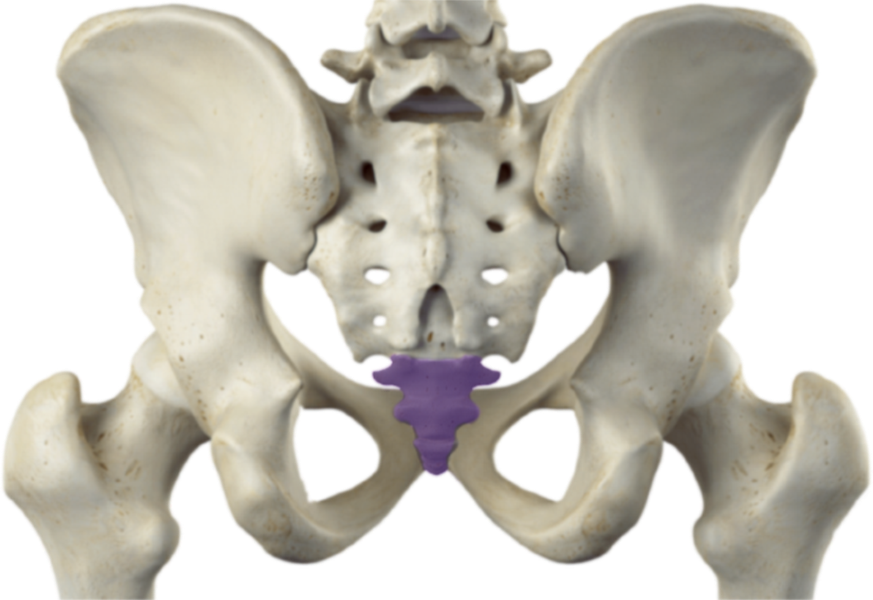
9:46 So this is where you see, if you see this skeleton, there's this hole, that's the birth canal where the baby goes through, and that's filled up by a layer of muscles,

9:54 and that supports the internal organs, and it's essential for functions like Dorien already said, related to sexual intercourse and to toilet visits.

10:03 Things like incontinence or hard time to urinate, and the same goes for the number two, defecation can be a pelvic floor issue.

10:10 It's always a bit contracted, and it's giving stability and preventing an unvoluntarily emptying of the bladder and bowel, and therefore, also you have to relax when you go to the toilet and release the opening because it's closed because of the muscles,

10:24 and also for the tailbone, exactly what Dorien already said, the pelvic floor tension is very important because the tailbone attaches there, and it has a direct impact on the functioning of the tailbone,

10:36 because the tailbone moves normally forward and backward, and it's forward movements, which occurs when we sit down, and it prevents the tailbone being compressed by the body weight,

10:45 and that often leads to pain, and this is a function of what I understand, and Dorien, correct me if I'm wrong, the pelvic floor, which pulls it forward,

10:54 and if the pelvic floor is not functioning correctly, this motion can be at least disturbed and lead to problems, at least to functioning pain.

11:01 Is that correct?

Dorien van Mulligen

11:04 It's correct that the pelvic floor will influence the motion of the coccyx, and it can be a big problem when you sit and you still contract the pelvic floor,

11:14 but it can also be a very big problem if you stand, so you don't have the pressure of the body weight while you sit, but standing, and still have a lot of tension in the pelvic floor.

11:26 So it can cause a lot of pain as well, because you contract it quite hard.

11:32 So what you said is correct about the pelvic floor.

11:35 It has a function in sexual intercourse, also urination, defecation, pregnancy and childbirth, but this really sounds like a female.

11:46 But men also have a pelvic floor, or children also have a pelvic floor.

11:50 So everyone can have problems with the pelvic floor.

11:55 The hardest part of the pelvic floor is, it's a muscle which is inside.

12:01 So it's not easy to find it, to have the right function if you don't know where the muscle is.

12:08 So especially with tailbone pain, when you fell down on your tailbone and you have pain, you contract everything because it's painful.

12:16 It's a normal reaction to pain.

12:19 It will affect the pelvic floor, which will cause a kind of contraction, which can cause urination, defecation or sexual intercourse problems.

12:30 So that's why as a pelvic physiotherapist, it's necessary for all those tailbone pain patients to know how the pelvic floor works, where it is, where you can find it,

12:42 how you contract it, but especially how you can relax it.

12:46 Because contracting the pelvic floor will contract the tailbone as well.

12:51 So you need relaxation and you also need a relaxation when you go to the toilet for pooping.

12:56 You need to relax the pelvic floor so the the tailbone pain can move as well.

Roel Wilbers

13:01 They're very intertwined, right?

13:03 Yeah, and especially with problems.

13:05 I think this is a nice French term, which is often referred to like défense musculaire.

Dorien van Mulligen

13:10 Yeah.

Roel Wilbers

13:10 You have pain somewhere, like the muscles around it contract to protect it, like a protective spasm.

13:16 I think this is what you're talking about, right?

13:18 If there's tailbone pain, the pelvic floor contracts.

13:21 Then you can come in this vicious circle that there's more pulling towards the tailbone.

13:25 Is that correct?

Dorien van Mulligen

13:26 Yeah, definitely, definitely.

13:28 And when tailbone pain exists longer, then it will affect more of those pelvic floor problems.

13:36 We want to see the tailbone pain patients early on.

Roel Wilbers

13:40 Yeah, this fully makes sense.

13:41 As a listener, you can compare this if you have a knee problem and you're limping, then at first you have a knee problem.

13:46 But the longer you limp, you're also going to get a hip problem or an ankle problem or a back problem, right?

13:51 So I think this is what you're saying, right?

13:53 Dorien, you don't want to make the area bigger and see the tailbone as soon as possible, so it doesn't grow and spread.

Dorien van Mulligen

14:00 Yeah, and it's a sad thing that most of my patients, they have tailbone pain for a long time because they're looking for the right therapist or the right experts to treat the tailbone pain.

14:13 But a lot of people don't know where the coccyx is or how to treat it or what to do about it.

14:19 So I see a lot of patients having tailbone pain for a long period of time.

14:24 So the most patients I see have bigger problems than only a simple tailbone pain.

Roel Wilbers

14:30 Yeah, I recognize that fully.

14:34 How do they find you?

14:36 Are you often the first health professional that actually treats their tailbone problem or knows that?

14:41 Or did they already visit a lot of doctors and then finally find you?

Dorien van Mulligen

14:47 Well, we are a specialized pelvic institute or center.

14:52 So most of the time we see the tailbone pain patients as a second opinion.

Roel Wilbers

14:58 Second opinion of another physiotherapist or a doctor?

Dorien van Mulligen

15:01 Most of the time of other physiotherapists or of doctors as well.

15:06 I also had patients who wanted to remove their coccyx and I said, that's a big step.

15:11 So first pelvic floor, first tailbone treatment by a specialized pelvic physiotherapist and they ended up still with a tailbone and without complaints.

15:22 So you can treat the tailbone without surgery.

Roel Wilbers

15:25 I think there's also consensus that the operation is last resort.

Dorien van Mulligen

15:29 Yeah, definitely.

Roel Wilbers

15:30 The rest is often skipped and we go to the last resort quite quickly.

Dorien van Mulligen

15:35 Yeah, but we see patients, what I said, for a second opinion, I think it's a good take-home message, right?

Roel Wilbers

15:41 So that even if the doctors won't tell you that there's an option, I also see them a lot of times that they're already on the waiting list for the operation,

15:49 right?

15:50 So that's already planned and then they go googling or ChatGPT and they find one of us and say like, hey, is there something you can do?

15:56 Because my doctor never mentioned you guys or girls.

16:00 Yeah, so it is good to know that the physios and specialized pelvic physios are out there.

16:04 So you can consult them and see if they can maybe do something extra because another patient of mine said, I don't want to do the operation yet because when it's out,

16:12 it's out, it's not really reversible, right?

16:14 And there's so much to do.

Dorien van Mulligen

16:16 Yeah.

16:16 And if you remove the coccyx, you still, the pelvic floor is surrounded.

16:22 So sometimes we see patients with tailbone pain, but they remove their tailbone.

16:29 So it was not from the tailbone, but it was because of the pelvic floor who was contracting so much.

16:35 So you had the feeling of tailbone pain, but it was the contraction of the pelvic floor, which is a muscle you're not aware of because it's internally.

16:44 So that's why it's really useful to know the pelvic floor first before anything else.

Roel Wilbers

16:50 I fully agree on that the pelvic floor is not really known.

16:54 Actually, in my fissure training, I cannot remember learning anything about the pelvic floor, the same as about the tailbone.

17:01 Do you have maybe a technique for the listeners to make them aware of the pelvic floor?

17:06 How can they know where and what the pelvic floor is?

17:09 Do you have kind of like a tip or exercise or a technique?

Dorien van Mulligen

17:12 Of course.

17:13 Well, if you are listening to the podcast and you're sitting somewhere, find the two sit bones, and in between the sit bones, there is the pelvic floor.

17:24 So it's from the symphysis, so the front of the pelvis to the side, the sit bones to the tailbone, and everything in between is the pelvic floor.

17:35 So when you're sitting somewhere, you are sitting on your pelvic floor.

17:40 So how to contract the pelvic floor is squeeze a little bit inside the anus if you're holding the air.

17:47 So you don't want to fart.

Roel Wilbers

17:53 That's actually loosing the air or I do miss interpret it.

Dorien van Mulligen

17:58 Yeah, like you want to hold a fart.

Roel Wilbers

18:01 Pull in your anus a little bit.

Dorien van Mulligen

18:04 Yeah.

18:04 So there is evidence about contraction of the pelvic floor, and everyone is contracting the pelvic floor by holding the fart.

18:15 So if you contract a little bit the anus to hold a fart, then you will contract your pelvic floor.

18:21 So not the buttocks, but only the anus.

18:26 And you're sitting on it.

Roel Wilbers

18:27 So I think it's sitting bones like you described, that's the bones when you sit on your hands, and the two bumps you feel inside of your buttocks,

18:35 and then the front side of the pelvis, and it's a triangle, I guess.

18:40 Is that correct?

Dorien van Mulligen

18:41 I think more an oval form, and it's three layers of almost like 12 muscles.

18:48 So it's a kind of small, but also a big muscle.

18:53 The movement of the muscle is not as big as your leg, but it still has movement.

18:59 So you can contract the anus or let go the anus, and so as well contract the tailbone inside, or you let go of the pelvic floor, and you will relax the coccyx as well.

Roel Wilbers

19:12 Yeah, I think it's very clear to just understand, and you could feel what happens if you just pull in the anus a little bit, or the genitals,

19:19 I guess, tuck in a little bit, and the pelvic floor has to contract, and then you let go, then that's the relaxation.

19:25 Is that correct?

Dorien van Mulligen

19:27 Yes, I think maybe a good exercise is really to sit on your hand.

19:32 If you sit on your hand, then you will have the full pelvic floor inside your hand.

19:36 If you contract the anus to hold a fart, then you can feel the contraction of the pelvic floor, and you can feel it's going inside.

19:44 You can also feel the difference between the gluteal muscles instead of the pelvic floor.

Roel Wilbers

19:50 There's a difference, right?

19:51 It's much more subtle than just squeezing everything that you're sitting on.

19:54 It's really the deeper layers, right?

Dorien van Mulligen

19:57 Yeah, it's like squeezing inside.

Roel Wilbers

19:59 Hey, with this pelvic floor, it can be either too tight or too loose or relaxed.

20:06 Is that correct?

20:07 That's what I understand, at least the two versions where people get into trouble.

20:11 There's even too much tension or not enough tension.

Dorien van Mulligen

20:14 Yeah.

20:15 If you have a lot of tension, you can imagine that when everything is so tight, it will be super painful.

20:24 But also, when a muscle is too loose, gravity will take everything.

20:29 So gravity will also pull down the tailbone.

20:32 So that's why it can also be painful.

20:35 So there are two options.

Roel Wilbers

20:37 It's the internal organs which push down, I guess, with gravity, is that correct?

20:41 And then there's going to be pressure on the tailbone.

Dorien van Mulligen

20:43 Do I understand correctly?

20:44 Exactly.

20:45 The pressure is painful.

20:47 But most of the time, I see more contraction of the pelvic floor.

Roel Wilbers

20:52 So it's too tight?

Dorien van Mulligen

20:54 Too tight.

20:55 So most of the time, I see a pelvic floor which is too tight.

20:59 And that's why a lot of people have tailbone pain.

Roel Wilbers

21:02 And that's interesting.

21:03 So to connect it to tailbone pain, the pelvic floor is mostly too tight and not too loose.

21:09 Because this is what you often also online hear, that with tailbone pain, you have to train and work your pelvic floor muscles to strengthen them.

21:16 But is it true that it's actually maybe the opposite?

Dorien van Mulligen

21:20 Yeah, it's really sad that the information online is most of the time not the correct information.

21:27 If I have a tailbone pain patient, I will always do the right diagnostics to see what kind of pelvic floor function there is, which has influence on the tailbone.

21:41 And most of the time, there's more contraction.

21:43 So that's why it's more painful.

21:47 You cannot train the pelvic floor in contraction, but you can train the pelvic floor in relaxation.

21:52 So you need to do more relaxation exercises before you can train the pelvic floor.

21:59 But if you relax the pelvic floor more, the tailbone will be less painful.

22:05 So it's not training in strength or gaining more muscles.

22:09 It's more relaxation.

Roel Wilbers

22:12 Yeah, this is a misconception.

Dorien van Mulligen

22:14 It's a really misconception, yeah.

Roel Wilbers

22:16 Because if you have back pain, you need to train your core and strengthen it.

22:20 But here it's not like you have a lack of strength in the pelvic floor, but there's too much tension where you just have to learn to relax it.

22:28 Yeah.

22:28 I think this is a very valuable tip at least to consider.

22:32 Also, I guess if you do the strengthening of the pelvic floor or try to strengthen it, it can lead to more pain and that should be an indication that you're moving in a wrong direction,

22:42 I guess.

Dorien van Mulligen

22:42 Yeah.

22:43 So don't try to do it at home.

22:45 Try to find a right specialized pelvic physiotherapist to see what kind of therapy you need.

22:52 Is it more contraction or more relaxation?

22:55 But always start with relaxation, not with contraction.

22:59 Because when you have pain, it's a normal reaction of the body to contract or to protect by contracting or moving the muscles away from the pain.

23:10 So when you have pain, do the opposite.

23:13 So relax, belly breathing, stretch the pelvic floor, or find other things to relax while you're on the waiting list for a specialized pelvic therapist.

23:25 And then they can see what you need more.

23:29 You cannot be like over relaxed, but there can be too much tension, and that's why you have extra pain.

23:38 So maybe you can start with relaxation to reduce it a little bit while you're on the waiting list.

Roel Wilbers

23:44 I think that's a very valuable tip.

23:47 I myself, I'm coming more from the manual physiotherapy, the musculoskeletal physiotherapy, and that's more focused on joints and moving joints.

23:57 I work with a little bit what I learned, but I don't do too much from the pelvic floor.

24:01 I really go for the joint function, and I want to go into that a little bit more with you in a minute.

24:07 But do you see that you solve tailbone pain often by just focusing on the pelvic floor, and you don't even need to touch the tailbone, or is it mostly a combination of both?

24:19 How do you experience that?

Dorien van Mulligen

24:21 Good question.

24:24 Most of the time, it's a combination.

24:27 It always starts with the right diagnostics.

24:31 When I have a patient with tailbone pain, I not only do the examination of the tailbone, but also the ligaments, also the muscles around it, or the fascia.

24:43 Everything is included.

24:45 And after my examination, I will see what's the most important for the tailbone pain.

24:52 Sometimes I see it's only the pelvic floor.

24:56 So it depends on what a patient says, it also depends on what the muscles are saying, or what the tailbone is saying.

25:05 It can be a mix, it can be only the pelvic floor, it can only be the tailbone.

25:09 But most of the time, it's a little mix of everything, because it's such a small place, and everything is directly connected.

Roel Wilbers

25:19 Yeah, it's very intertwined.

25:21 I don't know if that's correct, but I don't think there's a tailbone patient out there with pain there, without also having more tension in the pelvic floor.

25:30 And then you have to see, how do I approach it?

Dorien van Mulligen

25:33 Yeah, if you want to have a patient without coming back, let's say, you need to do the examination of everything.

25:39 And if you do the examination of everything, then you will see that everything is connected.

25:44 So it is the pelvic floor, but also the tailbone and also the muscles.

25:48 So everything is included.

Roel Wilbers

25:52 About this mobility of the tailbone, because also this is what we are trained in, right?

25:59 And this is a specialized training, which we're not trained in our basic trainings, at least as a physio.

26:05 There's two approaches there.

26:06 So which is done from in the old days, in the early writings, like going like a thousand years back, there was an internal treatment, right?

26:15 So that's like the internal, you like, like I said, very subtly, grab the tailbone, but do it very, very subtly.

26:23 But there's also an external technique and the actual technique that actually means that you're not entering the body and you're doing it from the outside the same as you treat a knee or a neck or a shoulder.

26:34 So there's both approaches and you do both.

26:38 I'm limited to one, only the external approach.

26:42 If you mobilize the tailbone, do you mainly do that from externally or internally?

26:47 It's interesting because both of the founders of the courses in the Netherlands, where Cecile is the guest in episode 2, and also Sitzke Loewof, who created the NEMOC method.

26:58 Both of them are trained in as well the internal as in the external mobilization technique.

27:04 But I heard both of them say that they almost exclusively use the external technique and not the internal technique anymore.

27:12 Cecile said it should be something just for pelvic physiotherapist because it's so specialized.

27:18 And Cecile mentioned that she does mostly externally because it's just as effective and much less invasive for the patient.

27:24 So how do you approach that?

Dorien van Mulligen

27:27 I use both and I think what Cecile said is external mobilization is less invasive for the patient.

27:35 So I use both of the techniques and I use external mobilization techniques quite often.

27:43 But when there is a bigger problem with the pelvic floor, I use the internal mobilization technique as well, because I really want the patient to learn about the pelvic floor and to learn the influence of the pelvic floor muscle in their tailbone pain.

27:59 But most of the time it's because it's a bigger problem, so that's why the pelvic floor is more involved in the tailbone pain.

28:07 So I use both of the techniques.

28:10 I start most of the time with the external mobilization, but I also use the internal mobilization techniques to really get the full effect.

Roel Wilbers

28:20 What I think you nicely state here is that there's a benefit from the internal over the external that you can explain better to the patient the connection between the pelvic floor and the tailbone.

28:30 And that's less easy from the external approach, I guess.

28:34 Is that correct?

28:35 And are there more benefits from internal over external, you think?

Dorien van Mulligen

28:39 As a specialized pelvic physiotherapist, we also use external techniques to learn about the pelvic floor.

28:47 So we also use it if patients don't want to be treated internally.

28:53 We have different options, which is also effective.

28:57 And I think it's really beneficial to have internal examination because you can really learn the patients where the pelvic floor is and what the influence is of the pelvic floor.

29:08 Because sometimes you don't feel the full relaxation of a muscle.

29:12 So I can guide you to the full relaxation and how it works while sitting or standing or going on the bike.

29:21 And I think it's really necessary and helpful to know it.

29:25 Because sometimes you can feel you're relaxed.

29:29 But if we do the internal examination, you can still feel a lot of tension.

29:34 And when you make people aware of all those tension, because the muscle is inside, so we don't know it and we cannot feel it that good.

29:42 So it's super effective to have the feedback.

29:46 It's super effective to be aware of the tension inside the pelvic floor.

29:52 And if you are aware of it, then you can use it while sitting, while standing or going on the bike.

Roel Wilbers

29:59 So it's a muscle you cannot touch?

Dorien van Mulligen

30:00 Yeah, it's a muscle you can touch, but internally.

Roel Wilbers

30:04 Yeah, true.

Dorien van Mulligen

30:05 Or you can see it from the outside with the mirror, but it's also intimate.

30:10 So people don't do it, but it is really helpful to do it to get more control of this muscle, because you use it every day, multiple times,

30:20 because you go to the toilet or, yeah.

Roel Wilbers

30:23 Yeah, I think you're definitely very valuable if you have also this tactile, this feeling feedback instead of having to more imagine.

30:31 So I can definitely imagine the benefit.

30:34 What I personally run into with the techniques I use is that with the external techniques, you can move the tailbone inward and sidewards, but backwards, that's something that is hard to do from externally.

30:49 And I think with the internal technique, like stretching the tailbone backwards, that's definitely a benefit from the internal technique, I guess.

30:58 Or do you also do that from externally?

Dorien van Mulligen

31:01 I don't do the external mobilization for moving the tailbone backwards.

31:07 We use it internally.

31:09 Of course, it's moving the tailbone, but it's also stretching the pelvic floor muscle.

31:14 So by stretching the pelvic floor muscle, the tailbone will move more to normal position instead of fully contracted inwards.

31:23 And if it's going backwards, which is a normal position, it will release the pain.

31:29 So it's not really moving it backwards, but it's moving it to a normal position.

31:34 And when you do the external mobilization techniques, I think my opinion about the technique is by doing the external technique, you will influence also all the surroundings around the coccyx.

31:48 So the coccyx has more space to move.

31:51 And when the coccyx is moving right, then it will reduce pain.

31:56 So even externally by moving all the surroundings and internally about stretching and being aware of the contraction of the pelvic floor.

32:06 So when the tailbone will move normally, then it will reduce pain and you don't have...

Roel Wilbers

32:12 Yeah, I think I fully agree.

32:14 In the end, you're trying to increase the freedom of movement for the tailbone, I guess, and which can be restricted by the pelvic floor.

32:21 And then again, everything is so intertwined that if you mobilize one or give freedom to one that will lead to freedom to another as well.

32:29 And also if you...

32:30 what I think I encounter if I sideward move a tailbone, that also the front to back movements benefits from that.

32:39 But if you re-specifically feel this tailbone is tucked in, and it can be through pelvic floor tension or probably is, by the way, then sometimes this internal to grab...

32:49 I say it again, I don't mean it.

32:54 I can imagine that gives you a little bit of an extra method or input.

Dorien van Mulligen

32:58 Yeah.

32:59 And I think it's also still a big question about moving the tailbone from left to right, because you see a lot of people with different bodies, but also a different between left and right.

33:12 So that's why I think when you see a lot of people, I think you can also see a lot of different positions of the coccyx.

33:20 It will not directly lead to pain, but it will definitely lead to different kind of positions of the coccyx.

33:30 The research we know about it, it's only, or like the most research, it's seen about forward and backward positions.

33:39 But when I do my examination, I can also feel like left or right a little bit.

33:45 So I think we need more research about the left and the right position of the tailbone.

33:50 But I also think that not always the position of the tailbone pain will directly lead to pain.

33:58 I think it's more about the movement.

34:00 So still the position can be a little bit to the left, but it's still moving normally.

34:05 Then I can imagine that there's no tailbone pain.

34:08 But I really would love to have more research about it, because what we do with the external mobilization technique is really working.

34:16 But we also want to know what the mechanism of the technique is.

Roel Wilbers

34:21 I fully agree on that one.

34:23 In the old days, like the first research was done in the 80s, and they really looked at the position of the tailbone, and they really looked, is it more tucked in,

34:31 forward or backward?

34:32 And this external technique, what we do is just for the listeners, instead of that you, there you go again, grab the tailbone, you kind of fix the tailbone,

34:41 the patient is sitting on the hand, the tailbone is in between the fingers, and then you move the trunk, so the pelvis over the tailbone, instead of the tailbone to the sacrum.

34:51 And the movement is in sideward direction, there's a rotation component in it.

34:56 And there's a video on my website that shows this technique.

35:00 And there's more emphasis on the lateral movement, which is in literature almost absent.

35:05 And this is something I personally always look for, and I also give back as a feedback, or I comment back to the patient, like I feel kind of like a deviation to one side.

35:17 But I always add, which kind of very well connects to your story.

35:21 I'm not really interested in the position.

35:23 So if the position is perfectly in the middle, and the tailbone pain is still there, we didn't gain 1%, right?

35:31 And but often, I think I see that the tailbone position and the reduction of pain goes hand in hand.

35:39 But it's definitely for sure, or not our aim to get the tailbone in the middle, the aim is to get rid of the problems.

35:45 And this is just one of the factors.

35:47 Is that how you see it as well?

Dorien van Mulligen

35:49 Yeah, this technique is really helping.

35:52 And as a care professional, you want to help your patients with reducing pain.

35:58 So this technique is really helping reducing pain.

36:01 So it's really useful to do it, because you see there's less pain in a short period of time.

Roel Wilbers

36:08 That's often quick.

Dorien van Mulligen

36:09 Yeah, it's a quick release of pain.

36:11 And sometimes I see when I do the external mobilization technique, the reduce of pain is directly.

36:18 But then I want to see what is the pelvic floor doing.

36:21 So I would like to have all the aspects of reducing pain.

36:26 Yeah.

Roel Wilbers

36:27 This is interesting, because do you sometimes test the pelvic floor, mobilize the tailbone, and then directly afterwards test the pelvic floor again?

36:36 Is that what you?

Dorien van Mulligen

36:37 Yeah, it's a good question.

36:39 Most of the time I do it, but it's not internally.

36:42 So it's externally doing the technique, then asking to contract and relax the pelvic floor, and then do the technique as well.

36:51 So yes, you can see difference.

36:54 And the difference is someone can contract and relax the pelvic floor more.

36:59 It's more easy to do it, more easy to feel it.

37:03 So it has like a one-on-one effect on it.

Roel Wilbers

37:07 Great.

37:07 So if you influence the mobility of the tailbone, it has an effect on the tension in the pelvic floor and the other way around.

37:15 Kind of often the chicken and egg, how they kind of keep influencing each other.

Dorien van Mulligen

37:18 Yeah.

37:19 Yeah.

Roel Wilbers

37:20 I think a question which is kind of on the minds of listeners is how painful or unpleasant are these treatments, the internal and the external technique for the tailbone.

37:31 There's a book written by Dr. Foy about tailbone pain, and he's going to be hopefully one of the guests in a future episode.

37:38 And he mentioned that patients often experience this as very unpleasant, and mainly he was talking about the internal treatment.

37:48 How do you see that and what do you hear from patients?

Dorien van Mulligen

37:51 It's a good question, because I can imagine it's not something you really are looking forward to have, like an internal examination or mobilization technique, but it's not painful,

38:04 because you're learning the patient how to relax the pelvic floor.

38:08 And if the pelvic floor is relaxed, then you can move the coccyx also, and it's not painful.

38:15 And when you relax the pelvic floor more, it also reduces the pain, so it is not painful to do it.

38:23 But to have the first internal examination, it can be a big step to do.

38:29 So that can create an extra tension.

38:33 So I need to make the patients aware of their tension, aware of their relaxation.

38:41 And when they're more aware of their relaxation and attention, then the mobilization technique is not painful at all.

38:49 But sometimes it takes like multiple treatments to really relax the pelvic floor or really to help it.

38:57 We are a specialized institute, so we also have different other techniques to help relax the pelvic floor more.

39:04 So it can be done with like one finger, but also externally we create more relaxation, so it's less painful.

Roel Wilbers

39:15 I think what is the take home message here is, and I just noticed for the external technique where it's kind of the same, is that the treatment is very mild.

39:23 And it's not that you like bent and flexed the tailbone in a 90 degree angle or more, right?

39:28 It's subtle, it's small.

39:30 And often, I had once this patient, I did just the external technique.

39:35 So that's a 20 second technique, and that's all the time I had after the intake.

39:38 And she came back the second time and I said, how did it go?

39:41 She said, yeah, well, the pain is gone for like 80 percent.

39:46 But Roel, just to be honest, it wasn't really impressive what you did.

39:52 This was literally what she said.

39:53 She said, that's true.

39:55 You want impressive or you want results.

39:57 I loved the comment that she gave.

39:58 She said she was surprised how subtle and small it actually is.

40:02 And often compare it to a pinky finger, right?

40:05 You don't need to have a lot of force to move that, right?

40:08 It's just need some subtle movements and help the tailbone move again instead of like force it into a direction or push it.

Dorien van Mulligen

40:15 Exactly.

40:16 And it's more helpful to have fully control of the pelvic floor instead of moving the tailbone.

40:24 Because I can push the pelvic floor fully to relaxation, but it's painful because you're contracting a lot.

40:32 So I need a patient to learn how to relax it and to guide it to relaxation.

40:38 So it can be with really baby steps, but that's not painful.

40:42 It's really guiding to the relaxation.

Roel Wilbers

40:46 This is important that people understand that it doesn't have to be and often isn't painful, because it's such a painful area.

40:53 People with tailbone problems, often they don't want it to be touched even, right?

40:57 And it's definitely a very sensitive area, but the treatment doesn't have to be that.

41:02 So it maybe takes away a little bit of an anxiety or fear for being treated.

41:06 This explanation that it's subtle.

41:08 And yeah, yeah, yeah, good.

Dorien van Mulligen

41:11 When I use the external mobilization technique as first, then the pain will reduce already.

41:19 So when I go to the pelvic floor, then there's already less tension, so it's less painful.

41:25 It's always a mild technique, because I don't want to trigger the pain.

41:30 I only want to trigger the relaxation, so it reduces the pain.

Roel Wilbers

41:36 I was talking to this osteopath about it, and she's going to be a guest on this podcast as well.

41:41 She works a lot with tailbone pain as well, and she stated it really nicely that she says, I don't want to put the body in a stress situation.

Dorien van Mulligen

41:48 Exactly.

Roel Wilbers

41:49 Stress is the opposite of healing.

41:51 Osteopaths often use very subtle techniques.

41:53 I want to get you into the parasympathetic part of the nervous system.

41:57 And this is where the recovery takes place, not into the stress.

42:00 I thought she put that really nicely.

Dorien van Mulligen

42:02 Yeah, yeah.

42:03 It's exactly what we do as well.

42:05 Only like the osteopath is more with the fascia.

42:08 And we work also with the fascia, but also with the muscles.

42:11 And it's always about not getting the body in a stress situation.

Roel Wilbers

42:19 So back to the treatment of the tailbone.

42:21 Do you have an idea of the results of the treatment trajectories that you provide?

42:26 Do you have any idea about the numbers or percentages of people that end up problem-free, or people that you cannot fully help?

Dorien van Mulligen

42:33 Most of the people don't have pain anymore.

42:36 I think it's the biggest part of our patients.

42:39 And there is also a small group of patients with very complex problems.

42:45 So in that case, I write a reference to a medical doctor for an injection or an extra treatment.

42:53 And it's something that I did everything, but yeah, we couldn't fix it.

42:57 But it's a very small group of people with tailbone pain.

43:01 Most of the people don't have pain anymore.

Roel Wilbers

43:04 This is also that the techniques are pretty effective.

43:06 What I see normally in a database, which I kept that 80% is fully problem-free and like five to 10%, I cannot help.

43:14 And the rest I can help, but not to fully problem-free.

43:16 Is that what you kind of recognize from your own practice as well?

Dorien van Mulligen

43:18 I really recognize it, yeah.

43:20 So I think it's like 90% without the pain, because they really know everything about the tailbone, everything about the pelvic floor, everything which is connected to tailbone pain.

43:33 And they also know what to do when it's coming back.

43:38 So most of the people don't have tailbone pain anymore.

43:41 But what you said, there's a small group of not fully recovered, and there's a very small group of extra medical help of guidance.

Roel Wilbers

43:51 And do you have any idea of the, and this is what for research purposes is kind of important, that I'm just starting to look into.

43:59 How lasting and permanent are the effects of the treatment?

Dorien van Mulligen

44:03 I don't see patients coming back with tailbone pain.

44:08 Or when I see patients back with tailbone pain, they fell, or yeah, we call it a little trauma.

44:15 So they fell on their tailbone, or they went skiing, or a child was pulling the chair away.

44:21 So that's why they fell down on the tailbone.

44:24 But it's also a new situation.

44:26 So most of the time, I don't see my patients coming back because they don't have tailbone pain anymore.

44:31 And they know what to do when there's more tension in the area.

44:34 But when I see them back, it's because of a new situation.

44:39 And of course, they know everything about pelvic floor, about relaxation, about the tailbone.

44:45 But sometimes you need a technique by a specialized therapist to reduce the pain or to have an extra help.

44:52 So they know where we are.

44:54 So that's why they're calling us.

44:55 But it's a new situation.

44:57 Yeah.

Roel Wilbers

44:58 I think it is giving definitely an indication that people don't return, because it's not that you can return to any physio around there, right?

45:06 It's really specialized.

45:08 And so there's not a lot of options to go to if you have a reoccurrence of your problem.

45:12 So mostly they consult the therapist that fixed it in the first place.

45:15 Right.

45:16 So that fully makes sense.

45:18 And also this reoccurrence, also the people I see that come back for a second time, they often had some injury or something that triggered it again, which could have triggered it like for the first time.

45:28 Right.

45:29 So I also recognize that.

45:30 Yeah.

45:31 I think the reoccurrence is pretty low.

Dorien van Mulligen

45:34 Yeah.

45:35 So the internal technique and also the external technique is really effective and it's something you can do and it will really reduce it.

45:43 So it's a very good step to use those techniques for reducing the tailbone pain for a longer period of time.

45:51 So, yeah.

Roel Wilbers

45:53 How often do you normally see people in a trajectory?

45:55 How much time is there in between treatments and in the end, how much treatments do you normally need on average, right?

46:01 Because every patient is different.

Dorien van Mulligen

46:03 Yeah, that's true.

46:05 I think I see people for only the tailbone for four to six times.

46:10 But because the pelvic floor is included, I see the patients more.

46:15 Because the pelvic floor is a kind of difficult muscle because it's internally.

46:19 So for knowing the muscle, what the function is of the muscle, that will take more time.

46:25 But only for helping the coccyx, it's a short period of time.

46:30 I don't use a lot of treatments.

46:32 Yeah.

Roel Wilbers

46:33 Yeah, that's the exact same thing that I see.

46:35 In my database, the average is four and a half treatments for the people that get fully problem free.

46:40 So that's exactly kind of what you're indicating.

46:42 And what I like actually, what you also say is that you really give people self-management techniques.

46:47 What you say, I learn them everything they need to know about their problems.

46:50 So when it reoccurs, they have their toolkit of fixing it themselves.

46:56 And in the case that they actually need some extra help, which we can of course provide, then they return.

47:02 But I think that's really nice that you give them a lot of self-management techniques as well.

47:06 I have that a little bit as well, but it's, I think, a little bit more to Roel, what you do, especially with this pelvic floor.

Dorien van Mulligen

47:11 Exactly.

47:11 Because what we said before, the pelvic floor is also about urinating, defecation, sexual intercourse, pregnancies, childbirth.

47:20 So we need more time to get the bigger picture, but also to control the pelvic floor more in every subgroup.

47:30 If you can help someone with tailbone pain, they really want to know how to get rid of it for the rest of their life.

47:36 So they are really interested in the pelvic floor as well, because everything is so connected.

47:41 So they want everything in their toolkit, so they don't have the tailbone pain.

Roel Wilbers

47:48 Returning.

47:50 I think also the people you see and the people I see, you also have this more general approach to the pelvic problem as well, right?

47:57 So I'm really more as a specialist on the tailbone part, but you also see people that come in for the pelvic floor part, and maybe sometimes end up,

48:06 I don't know if that's true, having a tailbone dysfunction as well.

48:08 And I can imagine that the aim is also much more on the pelvic floor because that's your specialization.

48:12 That's also what people come to you about, right?

Dorien van Mulligen

48:15 Yeah, exactly.

48:16 Most of the time I see it the other way around.

48:18 So when there's a tailbone pain, there's more than only a tailbone pain.

48:22 I see a lot of people with pelvic floor problems, and there is the tailbone, but the pelvic floor problems, they exist longer.

48:32 So the tailbone pain is also a big problem, but the incontinence or the way how they had their intercourse or childbirth, it's also already affected.

Roel Wilbers

48:44 I test this with people, I actually have in my questionnaire a few questions about the pelvic floor functioning.

Dorien van Mulligen

48:50 Ten questions.

Roel Wilbers

48:52 Yes, I reduced them to six, but I made my own version of it.

48:57 Of course, my questionnaire is pretty elaborate for all the patients.

49:00 The one I was listening to is, you know, I have to suffer going through my questionnaire before the first treatment.

49:05 But yeah, I can imagine that you see a slightly different type of patient as well.

49:11 Do you have an indication about how many percent of people you see actually come in for tailbone problems?

49:16 Because in the Netherlands, although we have this external technique pretty out there, a lot of still don't know it, but it's more out there, I guess, in the Netherlands,

49:26 because the technique actually was kind of invented by a Dutch manual therapist, where the both educations come from the same origin.

49:34 How many percent of people you see are actually tailbone problems, because still there's only a few here in Holland that actually work with the tailbones or specialize in it.

Dorien van Mulligen

49:43 I don't know what the exact number is, but with only tailbone pain, what I see, it's not only a tailbone pain, it's always connected with the pelvic floor.

Roel Wilbers

49:57 Maybe let me rephrase it.

49:58 How many percent of patients ish that you see presents tailbone pain?

Dorien van Mulligen

50:04 I think maybe it's 60 percent.

Roel Wilbers

50:07 It's even more than half.

Dorien van Mulligen

50:09 Yeah.

Roel Wilbers

50:11 Yeah, that's a lot.

50:13 Is there research being done to this treatments?

50:16 What do you know from the research that is done to the mobilizations for tailbone pain, but also for the pelvic floor work?

Dorien van Mulligen

50:26 There is research about pelvic floor.

50:28 There's also a lot of research about treating the pelvic floor, the treating the pelvic floor and having tailbone pain.

50:35 Research is saying that the mobilization technique inwards by mobilization and also stretching is helpful.

50:44 So that's why we learned it on our masters.

50:48 There is no research about the external mobilization techniques.

50:53 And we really need it because it's an effective technique, but it's not in literature.

51:00 So we need to have more research about it.

51:02 What are we doing?

51:04 Why is it so effective?

51:05 How is the technique working?

51:08 And I think if there's more research about it, we can help more people with tailbone pain.

51:14 As a caregiver, we want to help people.

51:16 So if there's more research about the external mobilization as well, we can help more people.

51:23 So we need to do it.

Roel Wilbers

51:25 Yeah, I recognize this.

51:27 So this is also why I started myself scientific research, because you're not really considered as a serious therapy if you don't have this nowadays golden standard of have scientific backup,

51:38 although it's like proven for centuries already described for centuries.

51:42 Let's not say proven yet.

51:44 In the literature, that is really effective.

51:46 But as long as there's no research done, and it's hard as physiotherapists to do research.

51:52 Most physiotherapists that treat tailbone problems are not in an institution or a clinic or an hospital.

51:57 We have this institution backing you up, right, with funds and resources.

52:02 But the positive signals are out there.

52:03 But to really let this grow further or really be recognized or known also among doctors, definitely the research is unfortunately still lacking.

Dorien van Mulligen

52:11 Yeah, and we really need it because like our motivation is to help people with tailbone pain.

52:17 So if we can help also people outside Holland, that would be great because the research will help us with it.

Roel Wilbers

52:25 True.

52:26 When you treat tailbone problems either with the internal or external techniques or to the pelvic floor, are there any inclusion or exclusion criteria for your treatments?

52:36 Are there any contraindications where you say in those cases, I don't want to or I will not go to treat the tailbone?

52:43 Is there anything there?

Dorien van Mulligen

52:45 Before you start your treatment, you always ask the red flags.

52:50 So there is no fracture because you cannot use the external mobilization techniques.

52:56 You also want to ask about cancer or fever or all those red flags.

53:03 And before you start your therapy or the internal or the external mobilization techniques, you will always ask, because it's a quite intimate place about any negative or bad experience with anything in this region or someone who has an

53:21 history of abuse, because it's an intimate part of your body.

53:26 And what we said before, I don't want to get the body in a stressful situation.

53:32 So I need the acceptance of a patient of working in the coccyx area, because it's quite intimate.

53:42 So, yeah, there are some criteria to ask before doing the treatment.

53:47 And yeah, you really need to ask those questions.

Roel Wilbers

53:51 And also think as a patient, when you have someone that's treating your tailbone, and this is why you actually recognize a professional, a well-trained professional.

54:00 If they don't ask these questions, if they don't scan for potential fractures of bones, potential presence of cancer, or especially in the tailbone area, that they don't check you if you're okay to be touched in that area.

54:15 I think this is very important that you can expect from any doctor or any physiotherapist or any therapist in general, to have that addressed.

Dorien van Mulligen

54:24 Yeah, you don't have more pain in those areas.

54:27 So if someone is treating you without consent, you can have more pain and that's not what we want to do.

54:36 So it's really helpful and needed to ask those questions.

Roel Wilbers

54:41 For sure.

54:42 Is there anything you advise your patient about what they can do themselves to manage their problems better?

54:47 Because you always said you're definitely also from the self-management.

54:50 Also, if the problem might return what they can do.

54:53 Are there any exercises, tips, do's or don'ts that you give them or that you help people with?

Dorien van Mulligen

54:58 Yeah.

54:59 The first is always relaxation.

55:02 So relax the pelvic floor so you can also relax the tailbone.

55:07 There are different ways to relax it.

55:10 If you don't know where the pelvic floor is, you can release the tension of the pelvic floor by doing belly breathing.

55:17 Breathing exercises can help relax the pelvic floor more, especially the tailbone.

55:22 So that's always something that I say to my patients.

55:26 There is also one big advice that if it's painful while sitting, just stand up, because pain can be a very useful signal.

55:37 So when there's pain, just stand up because the body is saying it to you.

55:43 If you don't listen to the pain, then you contract the pelvic floor more.

55:48 There's also an advice that I give to my patients that if you still have tailbone pain or there's still a little bit of tailbone pain, don't push yourself to sit longer or to do a longer exercise,

56:02 so you don't want to increase the pain.

56:06 Just relax, belly breathing, stand up, do something else.

56:11 That will help instead of being very stubborn and just sit.

56:16 Just stand up and do something else or go to the toilet or get some tea, but release the tailbone and release the pelvic floor, release the belly.

Roel Wilbers

56:26 Mostly people ask me, this is a general question, what should I do or not do for a patient with any form of problem?

56:33 And I mostly say, listen to the body.

56:35 Your body is always right.

56:36 Your body warns you when something is wrong.

56:39 If you do something and it doesn't hurt during or after the activity, it's probably fine.

56:44 But anything that increases pain, there's a signal of the body trying to warn you that there can be damage or there's something being overdone.

56:52 Yeah.

56:52 That's a very important thing to state.

Dorien van Mulligen

56:55 Yeah.

56:55 Pain is a very useful signal.

56:59 It says stand up, not sitting or move the body in a different way to release the pain.

57:05 Yeah.

57:05 It's a nice signal.

57:07 We should listen to it.

Roel Wilbers

57:08 And we're so disconnected from this.

57:11 I mean, what we do with pain normally, we see it as unpleasant and we want to get rid of it as soon as possible.

57:16 Often by taking a pain medication or whatever, right?

57:19 But that's actually like numbing the alarm system of your body.

57:23 It doesn't solve anything of the actual problem.

57:26 And so I often compare this with a burglar alarm that at night the burglar alarm goes off and you just switch off the button and you go to sleep again without checking what is actually wrong.

57:36 This is what you're doing often with pain medication.

57:38 And it can actually make it worse because then you don't feel the signals of the body anymore.

57:42 And you can actually overdo it without being aware of it.

57:45 So it's so important.

Dorien van Mulligen

57:47 Yeah.

57:47 Sometimes it can also be helpful to have a little bit of pain medication because it can also help you to release the tension because it's less painful,

57:58 but then still listen to the body.

58:01 It can be a plus plus.

58:03 So you can help yourself with releasing the pain a little bit because you don't feel the pain as high as you had before, but then still listen to the signals because you still feel it.

58:13 I think the body is a great system and we really should, what you said before, we should listen to it.

58:20 Because if you listen to your body, what it's saying, then you can be a very good team with the mind and the body, and with the pain and the body or without the pain.

Roel Wilbers

58:31 Yeah, I fully agree.

58:32 I think if you use like a painkiller to sleep better, or if you do something that you know is not harmful for you, like walking mostly, if the time is for tailbone problems,

58:41 and it helps you fully agree on that one.

58:44 For sure, you don't want to get in the battle of the head towards the body, right?

58:48 At the end, there's one that's going to win always.

58:51 In the end, always be at the strongest educations here.

58:56 So, what you say also really nice, that it's one big, really sophisticated system, the body.

59:01 And I myself like to have an holistic approach to help problems.

59:05 So next to the physical, also the psycho-emotional part, and the influence as well of the energetical parts, as it's also used and of course viewed from the Eastern philosophy in healthcare.

59:17 So things that are not standardly being thought in our Western educations.

59:21 And I know you also have a wider view on that, especially on the pelvis area.

59:26 How do you see the influence of the non-physical, the non-mechanical aspect with tailbone pain?

59:31 And is it something you work with during your treatments?

Dorien van Mulligen

59:34 Always.

59:35 The mind and the body are really connected.

59:38 And I see the patients with tailbone pain, where there is still tailbone pain.

59:44 It's a small group, but the tailbone pain is because of what they experienced before.

59:50 So sometimes you have triggers in your life.

59:53 So the tension, muscle tension, will come up.

59:55 And that's why it will affect the tailbone pain.

59:58 So as a pelvic physiotherapist, we always work holistic because it's really connected, especially for the tailbone, especially for the pelvic floor.

1:00:07 We want to reduce the pain.

1:00:09 Of course, we want that there's no tailbone pain.

1:00:12 But sometimes it's more than only a tailbone pain.

1:00:15 It's more what people experienced before.

1:00:18 And the tailbone pain can be a signal of all those experience.

1:00:23 That there's something else going on in their life, and the tailbone pain is a signal of overworking or doing too much.

1:00:31 So it's more a signal to listen to it, instead of being afraid of having it again.

1:00:37 It's your signal of your body, who says slow down a little bit.

1:00:43 And if you listen to it, then it reduces as well.

1:00:46 And those patients still have tailbone pain, but it's not as high as they had before.

1:00:52 And it's in balance.

1:00:54 They not always have the tailbone pain, but when they have it, they know what to do.

1:01:00 And they know that it's something else going on in their life.

1:01:04 And I think it's also beautiful to have it, because you learn what your body is saying, you learn to listen about it.

1:01:10 And if you know what to do and how you can reduce it, everyone has their own tool kit, but it can be really helpful to have in a certain way,

1:01:20 like tailbone pain, just for the body to have a signal mechanism.

Roel Wilbers

1:01:26 Yeah, I fully agree on that.

1:01:27 Sometimes just the indicator on what is wrong, like the barometer of your stress, for instance.

1:01:33 You'll have it in the neck and shoulders, other than the back.

1:01:36 And sometimes your tailbone wants to tell you something.

1:01:39 Also to get out of your head, for instance.

Dorien van Mulligen

1:01:41 Exactly.

Roel Wilbers

1:01:42 You're drunk the part of furthest away from the head, like coming back down into your body, feel your body again.

Dorien van Mulligen

1:01:48 In the Eastern philosophy, they say like the pelvic or the pelvic floor region is also the emotional part.

1:01:57 So when you have or when you experience emotional things and you weren't able to deal with those things or you dealt with those things, but there are triggers in life,

1:02:08 then it can affect the pelvic or the pelvic floor region in any way, urination or tailbone pain.

1:02:14 So from the front to the back.

1:02:17 So that's why I really like the pelvic and the pelvic floor.

1:02:21 It's because of this also, it's also psychological and mental and it's all connected.

Roel Wilbers

1:02:29 Yeah, it's a very interesting and very deep area.

1:02:32 It's like the safety or basis, the gut feeling, it's not nothing that it's like in that area.

1:02:39 There's a lot of layers there, which make it very interesting.

1:02:42 Yeah, it's a shame if you just keep it to the mechanical, right?

1:02:46 Exactly.

1:02:48 I think this is already great.

1:02:50 I think we had a lot of great insights.

1:02:53 Maybe it is nice for people to have kind of like an exercise or something that you maybe can guide them in shortly to relax the pelvic floor,

1:03:02 because you talked about the importance of it.

1:03:05 Do you have an actual technique or little exercise which people can do at home or actually experience right now how to relax the pelvic floor?

Dorien van Mulligen

1:03:13 It's a good question.

1:03:15 What I said before, there is belly breathing.

1:03:18 And what you can do is when you're sitting on two sit bones and you are having one hand on the lower belly and you breathe in to your hand and into your belly,

1:03:29 you can feel like your belly expanding.

1:03:33 So, if you breathe in, the belly will expand and if you breathe out, the belly will become smaller.

1:03:42 The pelvic floor is doing the same.

1:03:45 So, if you sit on your sit bones and you do a belly breathing, then you can feel like the pelvic floor is also expanding a little bit.

1:03:54 It's expanding downwards to the chair you're sitting on.

1:03:59 And when you breathe out, it will contract a little bit.

1:04:03 So, if you are doing a belly breathing, try to find if you feel the movement of the pelvic floor by breathing to the belly.

1:04:13 Or you can sit on your hand and then you can feel it more.

1:04:17 So, if you're sitting on your hand, so the fingertips were pointing towards the tailbone.

1:04:25 You can feel if you breathe in that the pelvic floor is moving to your hand.

1:04:30 And if you breathe out, it will move a little bit inwards.

1:04:35 If you want to relax the pelvic floor more, you can breathe inside the belly, inside the pelvic floor, so it will move to your hand.

1:04:45 Just repeat it multiple times.

1:04:48 And if your hand is hurting a little bit because you're sitting on it, you can also use something warm.

1:04:56 So use like a warm cushion and you can sit on it.

1:05:00 Because if something is warm, you can relax it more.

1:05:05 So it's also helping to relax the pelvic floor a little bit.

1:05:10 It's just a small exercise and you can do it everywhere.

1:05:14 Standing, laying, sitting.

1:05:17 You can always put your hand to the pelvic floor inside the legs.

Roel Wilbers

1:05:22 Front to back.

Dorien van Mulligen

1:05:23 Exactly.

Roel Wilbers

1:05:24 Yeah.

1:05:25 And for tailbone patients that have a hard time sitting down, you can sit a little bit forward or like Dorien mentioned, like lying down or standing.

1:05:33 It's...

1:05:33 Yeah.

1:05:34 That's really nice.

1:05:35 I'm a breath coach and I also use breathing a lot for relaxation and also to breathe towards that.

1:05:41 That can be really effective.

Dorien van Mulligen

1:05:43 Yeah.

1:05:43 Breathing exercise is the first exercise we use as the exercise to relax the pelvic floor.

1:05:50 And of course, you can sit on your hand.

1:05:51 And if you sit on your hand, your tailbone is a little bit up.

1:05:55 So most of the time, you don't have to pressure fully on the tailbone.

1:06:00 Yeah.

Roel Wilbers

1:06:00 Nice.

1:06:01 Perfect.

1:06:02 Very nice.

1:06:02 And I think for the listeners as well, they have something to actually experience.

1:06:05 So that's pretty cool.

1:06:07 For people, if you're interested, I have on my website a few audios, where I guide you through the whole process of the breathing towards.

1:06:14 So it's an audio of like 15 minutes.

1:06:16 I have one of 27 minutes, even five minutes.

1:06:18 So if you want some audio guidance there, what I think this just basic technique is already very helpful, which you can do by yourself.

1:06:25 And then again, whenever you want, right?

1:06:27 So it's really nice.

1:06:28 Thank you.

1:06:29 So to round it up, last two questions.

1:06:32 What is in your opinion necessary for further development regarding tailbone problems to come to better care for the tailbone patient in the future?

Dorien van Mulligen

1:06:41 It's a big question, and I think it's research.

1:06:45 We need more research about the external mobilization techniques, maybe in combination with the internal mobilization technique, because you cannot see them as two different.

1:06:57 But I think it's always in combination with the pelvic floor.

1:07:00 But I think there's more research needed so we can help more people around the world with all those tailbone pains.

Roel Wilbers

1:07:09 Yeah, I fully agree.

1:07:11 There's research being done generally in the tailbone world, but it's always like with small groups.

1:07:17 There's not too much research there, and especially on the mobilization techniques, the research is very little.

1:07:22 So I definitely think we need the backup of what we already see on a daily basis in the practice.

Dorien van Mulligen

1:07:29 Yeah.

Roel Wilbers

1:07:29 It works.

Dorien van Mulligen

1:07:30 We need the research that is really helpful.

1:07:33 It's really working also in combination with the pelvic floor.

1:07:37 We don't see the patients anymore, so it really helps the patients.

Roel Wilbers

1:07:42 Yeah.

1:07:42 Perfect.

Dorien van Mulligen

1:07:42 Great.

Roel Wilbers

1:07:44 And last question, what tip or advice do you have for people with tailbone pain?

1:07:48 Is there anything you want the listeners that have tailbone pain, is there anything you want to advise them or tell them?

1:07:54 That's your message.

Dorien van Mulligen

1:07:56 The message is tailbone pain can be treated and tailbone pain can really be treated on different ways, which is not painful, which is easily fixed.

1:08:08 But please visit us because we can help you.

Roel Wilbers

1:08:14 Yeah, I think it's very true.

Dorien van Mulligen

1:08:16 Yeah.

Roel Wilbers

1:08:17 So even if your doctor or your therapist tells you there's nothing to be done, just look online.

1:08:22 Guests I have here on the podcast, there's definitely help out there.

1:08:26 Unfortunately, we cannot help 100% of the people, but as you heard, like there's a really big percentage, right?

Dorien van Mulligen

1:08:33 We help a lot of people and there's like a small group who still have it, but it's super small.

1:08:39 And still there is more options.

Roel Wilbers

1:08:42 Yeah, it's very well treatable.

1:08:44 I think Dr. Menya, one of the biggest researchers in the tailbone area, and he uses the medical approach.

1:08:51 And he said before tailbone problems, like in the 80s, it was a very unknown problem, which no one knew how to treat.

1:08:58 But now, and he said this, I think, in 2015, it's a condition we can really well treat and really have options to do something about it.

1:09:06 And it's not that unknown anymore.

1:09:08 And this is already 10 years ago, I think, that he said this.

1:09:10 And there's a lot of development since and a lot of development going on.

1:09:14 Don't just accept there's nothing to do.

Dorien van Mulligen

1:09:17 Yeah.

Roel Wilbers

1:09:17 Just do your research and yeah, okay.

Dorien van Mulligen

1:09:19 Exactly.

1:09:20 And when you're listening to this podcast, I think you want to know more about the treatments.

1:09:25 So this is a really helpful and effective treatment.

1:09:29 So, yeah.

Roel Wilbers

1:09:32 I want to massively thank you, Dorien, for your time and your help to make this podcast episode.

1:09:38 I think it was very useful.

1:09:40 It was very interesting.

1:09:41 You really went deeper and explained to us a lot about the pelvic floor and the function of the tailbone.

1:09:45 So thanks a lot.

Dorien van Mulligen

1:09:47 Yeah.

1:09:47 Thank you for inviting me.

1:09:49 It was a pleasure to be here.

1:09:51 So thank you so much.

Roel Wilbers

1:09:53 Great.

1:09:53 You're welcome.

1:09:54 Of course, pleasure is all mine.

1:09:55 So for everybody, thank you for checking in.

1:09:58 I hope this is also for you useful.

1:10:00 And if there's any questions regarding this episode or outside of this, any comments, any feedback, any requests, let me know.

1:10:07 So whatever questions you have, send me a message and I will probably also record a Q&A episode to answer your questions about it.

1:10:17 For this episode, there will be a web page about Dorien and some things that we talked about.

1:10:23 And I hope to see you again or that you hear me again in the next episode of this podcast.

1:10:28 Until then, all the best and have a nice rest of your day.

1:10:35 Thanks for tuning in.

1:10:36 If you are looking for more high-quality info, tips or exercises, you can find me at tailbonetherapist.com