8tracks icon Behance icon Blogger icon CodePen icon Delicious icon DeviantArt icon Dribbble icon Etsy icon Facebook icon Flickr icon Foursquare icon GitHub icon Google+ icon Instagram icon Last.fm icon LinkedIn icon Myspace icon PayPal icon Pinterest icon SoundCloud icon Stack Overflow icon StumbleUpon icon Tumblr icon Twitter icon Vimeo icon YouTube icon Yelp icon
DE STIT THERAPEUT

The Tailbone Podcast: Expert Talks

2. Cecile Röst – Physiotherapist

Cecile Röst is a Dutch physio and manual therapist that is specialised in pelvis and tailbone problems. She treated and still treats a lot of patients with tailbone pain, did research on the subject and teaches courses to physiotherapists about the treatment of tailbone pain through her institute.

Jump to transcript


It started with one technique,
but since then there has been a lot

and ongoing development in tailbone therapy

– Cecile Röst
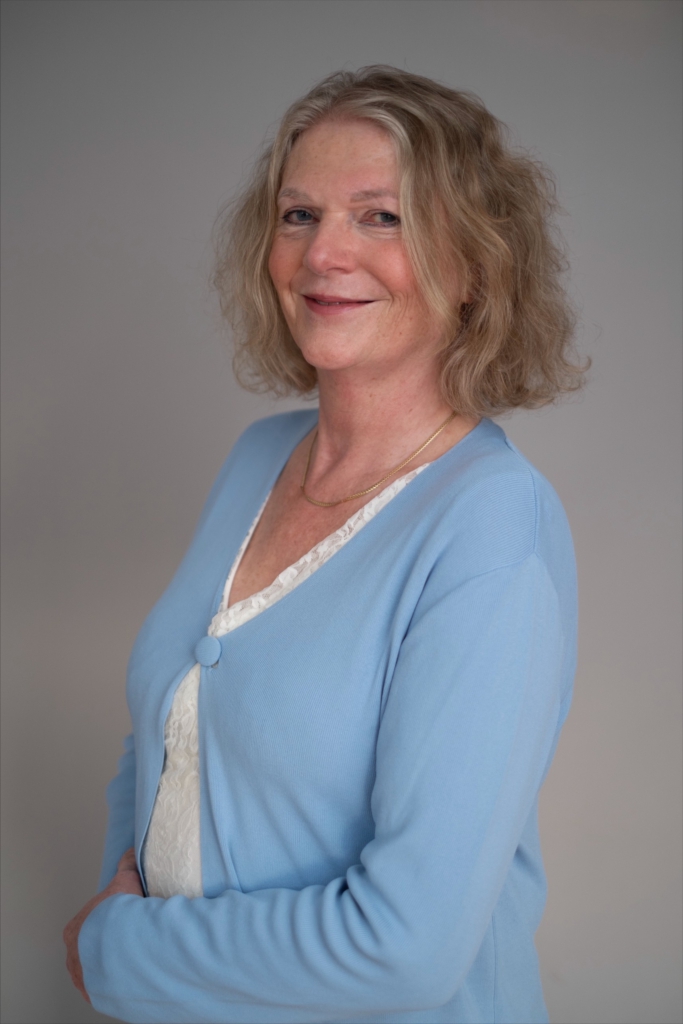
Our guest today is Cecile. She is a physiotherapist, manual (musculoskeletal) therapist, and clinical epidemiologist, specialized in pelvis and tailbone pain. She founded a physiotherapy clinic where she still treats patients herself, and half the patients she sees come for tailbone pain.

She also runs a training institute for physiotherapists focused mainly on pregnancy-related pelvic girdle pain and tailbone problems, under the name Rost Therapy. Here she also teaches several courses for physiotherapists on treating tailbone pain from externally. This is for a big part based on the work of Meine Veldman who developped this technique and with whom she collaborated a lot and participated in research about the effectiveness of this method.

In this episode we will go deeper into how treatment for tailbone pain through manual mobilisations works, what the outcomes are, how there is an ongoing development in tailbone therapy and how she added to that evolution.

You can find the podcast in the menu under Podcast as well as the links to the platforms where it is posted.

Resources

Cecile was so kind to record a video especially for this podcast episode and after the short introduction, you will have a visual of how to sit down and stand up, how to widen and relax your your tailbone area. And of course she demonstrates her Peacock exercise.


More about Cecile

Do you want to know more about Cecile? You can find her at: bekkentherapie.nl


Get in touch

In you have any questions about anything in and outside of this episode, comments or requests, let me know! You can email me through the contact field below or directly at roel@roelwilbers.nl.

Transcript

Roel Wilbers

0:04 Welcome to The Tailbone Podcast.

0:06 My name is Roel, and as your host, I bring you only experts on this for most doctors and therapists unknown problem.

0:12 Let's dive in with today's episode.

0:16 Welcome everybody to my first episode with a guest of my podcast interviewing tailbone experts around the world.

0:23 And as a physio before when I started, and I talked about this in my intro episode, I hardly encountered anybody that presented himself with tailbone problems.

0:33 And then my friend came along, I couldn't help her.

0:36 And then the story got rolling, and I kind of got into the tailbone world.

0:42 And I ended up contacting Mayne Veldman, who treated Ava like I told in the first episode, and he referred me to Cecile.

0:48 And Cecile was my first teacher who introduced me in treating tailbone problems.

0:53 So it was a very logical step for me to invite my first teacher Cecile to join me for the first episode of this series.

1:01 So I was very happy that Cecile said yes to this.

1:04 And welcome Cecile, that you are here tonight and want to be part of this interview.

Cecile Röst

1:10 Well, thank you.

1:11 It's my honor to be asked to be in this podcast.

Roel Wilbers

1:16 As the first guest even, right?

Cecile Röst

1:17 Yes, even as the first guest.

1:19 That's quite nice.

1:20 Thank you.

Roel Wilbers

1:21 Yeah, no worries.

1:22 So my story started with Cecile.

1:24 And in the meanwhile, I even was a guest teacher at one of Cecile's training, which is really cool.

1:30 And I want to start with a little bit of the background about my guest today.

1:34 Cecile is a physiotherapist, just like me, and also a musculoskeletal manual therapist.

1:39 The same what I am, but she's also a clinical epidemiologist.

1:43 And that's very interesting because she's specialized in doing research.

1:48 She founded a physiotherapy clinic where she still treats patients herself.

1:52 And she runs also a trainings institute for physiotherapists focusing on mainly pregnancy-related pelvic girdle pain and tailbone problems.

2:00 And that's under the name of Röst Therapy.

2:03 Röst Therapy or Rost Therapy?

Cecile Röst

2:05 Well, in Dutch it's Röst Therapy, but in English we call it Rost Therapy, because they don't know about the two dots on the O.

Roel Wilbers

2:12 Okay, perfect.

2:14 That's nice that I never knew this.

2:16 So initially she worked as a pediatric physiotherapist, and she specialized in sensory integration therapy.

2:22 But after experiencing pelvic pain during her pregnancies, she developed exercises and changed her posture during daily activities to address this issue herself.

2:33 And after seeing quick results for herself, she taught the instructions also to patients, and they witnessed also positive outcomes.

2:40 And this sparked her interest in this method, but also in doing scientific research about her exercises and postural tips and tricks.

2:48 And this led to international publications and courses for physiotherapists.

2:52 Cecile is an author.

2:53 She wrote books on sensory integration therapy and pelvic girdle pain.

2:58 She has also written and published ordinary courses and practical courses on pelvic girdle pain topics for therapists.

3:05 And in addition to producing course material for peripartum pelvic issues, so during pregnancy, she launched the first course in the Netherlands for physiotherapists on treating tailbone pain.

3:17 And of course, that's where all of this comes together.

3:19 And this is also how I met her.

3:22 So as an introduction, is this complete Cecile or did I forget something?

Cecile Röst

3:26 No, I think this is rather complete.

3:29 Yes.

Roel Wilbers

3:29 Perfect.

3:30 Nice.

3:31 So my first question to you, how did you end up becoming a tailbone specialist?

3:35 Because the pelvic girdle interest, that was already cleared up in the intro, but how did the tailbone come in?

Cecile Röst

3:42 Yeah, that's quite some story, so I'm pleased to tell that.

3:47 Meyne Veldman is a manual therapist, orthopedic manual therapist, and he was in the Association of Orthopedic Manual Therapists, where I was the vice chair a time ago,

4:00 and he was in a committee, and he came to me and he said, Cecile, I want to show you something, and I want to tell you something,

4:08 because you're working with those ladies postpartum, and they sometimes have tailbone pains, coccidinia, and I do treat a lot of coccidinia patients, and I'm very enthusiastic about the treatments,

4:21 because I learned it some day from osteopath, I think he is called Baral, and I did something to the technique.

4:30 I changed the technique, and I was thinking about the orthopedic manual system, where we lock the spine and combine rotation, and side flexion, before we do something else,

4:44 so that we don't do something on the coccyx, meant to be the coccyx, but we are treating somewhere higher up.

4:51 And I combined things, and it worked with the first patient, it worked with the second patient, and now I've seen so many patients, he told me, I won't show it.

5:02 So I said, that's okay, because I sometimes do treat tailbone pain, but not often, because sometimes women do have tailbone pain postpartum.

5:12 And I was being trained in internal manipulation of the coccyx a long time ago.

5:20 So I could do that, but I didn't like it, because I'm not a pelvic floor physio, I don't want to do it, so I'd rather send people to a pelvic floor physio who can do that,

5:29 and then take over the treatment later on, then do it myself.

5:32 So I disliked the internal manipulation myself.

5:37 So I was pleased to hear that he was doing something externally, which felt pleasant for patients, not painful at all, and I was interested.

5:46 So he came to my place, and we had another coworker who was being brought at the same time, and she was trained in doing the technique of Maine on my coccyx.

5:59 I didn't notice, and she was doing her care, and she was doing things like she was telling, but it took time because it was the first time,

6:06 and was still in a sort of a training session.

6:09 So I was just a volunteer.

6:11 But then, a few days later, I developed tailbone pain.

6:16 And I thought, oh, I know this pain.

6:21 It's this tailbone pain.

6:22 I didn't recognize it when many was talking about it, but I immediately recognized it as something very familiar for me from a period when I had pelvic girdle pain,

6:32 postpartum, anyway.

6:34 So after a nasty delivery, I couldn't sit at all.

6:38 And all of a sudden, I remembered that pain and I totally forgot about it.

6:42 It was a long time after that delivery.

6:45 And later on, I also realized that I did have symptoms of tailbone pain, but that came later on when a patient of mine was telling me about a fall that was similar to a fall that I had done when I was about 10 or 11.

7:00 And I fell down from a long way up.

7:03 I was climbing and I fell down.

7:05 I just let go of the bars and I fell down on my coccyx.

7:10 I know that I was feeling embarrassed and I saw all those stars and I saw black.

7:16 But then the teacher came and he put his arm around me and said, how are you doing?

7:19 I said, oh, fine, fine, fine.

7:21 So I got up and I don't remember what was after that.

7:24 So I just went home and probably stayed home for a couple of days.

7:27 I don't remember, I was too young.

7:29 But I know that every time I was sitting on something hard like wooden benches, I was seeing those stars again and it was very painful.

7:38 And I thought that everyone had that sensation.

7:42 I was just a kid.

7:43 So I didn't realize that was something I need to tell my parents or whatever.

7:48 I just thought that everybody had that.

7:51 But then it was out of my system or I didn't sit on a hard chair again.

7:56 It could be something like that.

7:57 And I only put it back after I had my delivery at 27.

8:01 So I remembered all of a sudden those incidents and later on that period in my youth.

8:09 But I realized how painful it was for the patients.

8:13 And I ordered Maynard to come back to me and to correct the coccyx again.

8:21 So he came back to me a month later and corrected it in 20 seconds.

8:26 He always says it's 20 seconds correction.

8:28 It was easy, totally pain free, and I could sit again, I could stand up again.

8:34 And I was persuaded by that to put my attention to that and to help Maynard and see what was coming out.

8:42 So that's how it all started.

Roel Wilbers

8:44 Nice.

8:45 Well, I think it's an interesting business model that Maynard has that he first like inflicts pain and then solves it.

8:52 But there's a lot of things I've already learned because we know each other for quite some years, but I didn't know that you actually also were trained in the internal technique.

Cecile Röst

9:01 Yeah.

Roel Wilbers

9:02 And that you actually also had like the other side of this perspective as being a patient in all of this.

Cecile Röst

9:07 Yeah, I didn't know either before.

Roel Wilbers

9:10 Yeah, of course, yeah.

9:11 But I didn't know that you already knew for these last years.

9:14 And just to clarify for everybody, Meine is the person that actually developed the external technique of the coccyx.

9:22 And what I also understood of Meine, he was on this visual course and he saw this kind of technique and he kind of updated it because before it was kind of always an internal technique,

9:32 which is also already described for like many centuries.

9:36 And I always tell my patients, I'm very happy for the patient, but also for me as a therapist, that we don't have to do the internal technique.

Cecile Röst

9:43 Yeah.

Roel Wilbers

9:44 The internal technique means one finger of the anus, right?

9:47 So the internal technique is so much more comfortable for both.

9:51 And yeah, and Meine came actually to you and he asked you, could you maybe teach this or make a course of that?

9:57 Because you already had your training institute, right?

Cecile Röst

10:00 Yeah, that was later on that he was asking that.

10:02 Because first we were finding out what was helpful for patients and what was not.

10:07 So we had a trainee.

10:11 He was studying from orthopaedic manual therapist as well, Roel Stupers.

10:16 And he wanted to do his master thesis on coccidinia.

10:20 So he was asking to volunteer in his studies.

10:24 So Meine and I, we stepped in and we did take part in his thesis study.

10:31 And that was quite all right, because what we did was we made a study protocol, or Roel did that, and we supervised it, and we sort of worked together with the university to get the thesis OK.

10:46 And then we took part as helping researchers.

10:49 So I did the assessments, blinded, and Meine did the treatment, blinded.

10:55 Roel was taking in the patients, just randomized by asking GPs, hospitals, et cetera, for patients.

11:04 And we had a small period of time because it was a thesis or a master's.

11:09 We had a time schedule of three months in total to follow the patients, which is quite all right if you compare it to other studies.

11:16 And Roel did all the research work, and we were just the helpers.

11:21 In the end, we saw the results, and 15 patients were in the study still in there, and were excluded when they had signs of as I joined dysfunction or lower back dysfunction or something else.

11:33 So they typically had just coccidinia, tailbone pain.

11:38 So we had 15 inclusion patients, and they had mean three years duration of complaints, which is quite high, and they were divided in cause.

11:49 So it was a nice group to study, actually.

11:52 They were in a lot of pain.

11:54 All of them had therapies before, so they were being treated by other people, and it hadn't worked out well.

12:02 So they were still in a lot of pain, and that was our inclusion situation.

12:07 They were studied very closely.

12:08 I do have the article.

12:09 I just read the article because it was quite well-built.

12:14 And...

Roel Wilbers

12:14 This was 2015, right?

Cecile Röst

12:17 Yeah, I don't know.

12:18 But look at that.

12:20 Yes, it could be.

12:22 50% of the patients did have significant pain relief and also more function back, like longer periods of sitting, better standing up.

12:31 So 50% had stayed about the same in three months, but the others.

12:35 So there was no declining.

12:37 There was nothing going down.

12:39 And it was the protocol we had worked out.

12:41 So it was two times of adjusting the coccyx in the way that Mayne did.

12:46 So Mayne did it himself.

12:47 It was combined with exercises to broaden the pelvic floor and to breathe in towards the pelvic floor, so to the coccyx.

12:55 And it was combined with stabilization exercises for the pelvic girdle, so the as I joints.

13:03 And that was a housework program.

Roel Wilbers

13:05 So that was the back treatment and homework for exercises.

Cecile Röst

13:09 Yeah, it was quite nice.

13:10 And then we were pleased by the results, because 50% of people who were just desparate of coming.

Roel Wilbers

13:15 It's good.

Cecile Röst

13:16 It's good.

13:17 That was quite okay.

13:18 And it's actually higher than mostly from surgery or from internal manipulation studies.

13:25 So we were pleased.

13:26 But then, well, I'm critical myself.

13:28 So I'm thinking about the other 50%.

13:31 How can we reach higher?

13:33 Yeah.

13:34 I'm not pleased by 50% is still as pain.

13:38 So then it's my job, I feel.

13:41 It's my inner drive to get that 50% to 5% or something.

13:46 So I want to make it less, less, less.

13:49 And it's sort of my goal to keep the health care cheaper, to have less sessions, to have less periods of pain for patients, and to make life simpler for all of us.

14:02 So that's my internal drive anyway.

14:05 And in Coxsardinia, we did a good job.

14:08 I mean, we are reaching goals very high at the moment.

14:12 And we still don't do a lot of research on top of that.

14:17 It's time consuming when you need to do a research like I was telling you, and that's only just a thesis research.

14:25 So if we want to compare groups, we also should take care that we compare groups with the same pattern, like acute pain from trauma.

14:33 But where do you find it, and how do you treat the therapists to do similar things that take so much time in preparation?

14:41 That's not doable in a normal clinical practice.

Roel Wilbers

14:45 It's very recognizable.

14:47 I'm doing now a scientific research myself, and like it's hard to get that done, especially like there's hardly any funding in those kind of things for physiotherapy.

14:56 And just to make sure, like to explain for the listeners, you heard the name Roel come by, my name is Roel as well, and I can imagine that international people never heard of this name,

15:04 so we're talking about two different Roels.

15:07 And 15 people is also not a lot for a study group, but if you look into the science around tailbone pain, well, a lot of studies are small,

15:16 like small groups.

15:17 There are not a lot of studies with like hundreds of people, so it's a nice start.

15:22 At least it gives an indication, right?

15:24 But this is how your course also started.

15:26 It was before that already, before you did the research with Main and Roel, or you already taught the course on coccidinia on tailbone pain, or was it afterwards?

Cecile Röst

15:35 No, I did afterwards.

15:37 No, we did do a presentation in Montreal at the World Conference of Lower Back and Tauphic Girdle Pain.

15:43 That was in 2012, I think.

15:46 So we went together to Montreal and we did our presentation there, and there was a lot of interest.

15:51 So that helped because we knew then that more physios and more doctors in general were interested in this coccidinia material because they knew the patients, but they didn't know what to do exactly with them.

16:05 So we realized that what we were doing was important to spread out.

16:10 And for that, we needed to do the research.

16:13 So then we had Roel coming in, he did the research, and then afterwards we prepared the coccidinia course.

16:22 And we're still working on the material to make the therapy better.

16:26 And it helps if you train viseos that know that they're building on something.

16:32 So in the beginning, it was a bit different than what we're doing now.

16:36 So we did rehearse the clinicals testing that Roel had used to also follow the as I joined and rule out them, et cetera, et cetera.

16:46 And now we're more focusing on the coccyx itself at the moment, because we know more.

16:52 I did change the exercises on the way.

16:54 And especially in the last two years, I did do a lot on those pelvic floor exercises for the coccydynia.

17:00 And I developed sort of a new protocol.

17:04 We call it a peacock in Dutch, as a...

Roel Wilbers

17:07 Peacock exercise, yeah.

Cecile Röst

17:08 Yeah, so the peacock.

17:10 Well, we did make an e-book or that, so I think it's available in English soon.

17:14 So we're using that peacock now in the clinic.

17:17 And if you combine it with the treatment of myne, and we also found some other people, like Professor Hush in America has the technique that's very helpful.

17:27 If Feldman's technique is not working, I find out that most coccyx pain, tailbone pain is from a flexed, so inward bent coccyx.

17:36 And I changed the technique in more lying down instead of in the sitting posture still upright.

Roel Wilbers

17:43 What you described very well is that there's a lot of development, like in this area.

Cecile Röst

17:48 And there's also a subgroup influence, who needs this treatment, who needs the hash more, who needs the Dalton technique more, or who needs an internal assessment.

17:59 But so we can divide people, or who needs more control over emotions, or pelvic floor stuff.

Roel Wilbers

18:08 But it's funny, we got started with this one technique, the 22nd technique of meinen, which is kind of still the core of what I do.

18:14 But then in your course, you have a lot of extra techniques for that, right?

18:19 So you started with coquedinia 1, right?

18:22 And now you have a 2 even, and now you have a master class day.

18:25 So it kind of really expanded, right?

18:27 After this one first technique of meinen, it didn't stay there.

Cecile Röst

18:31 No, I think meinen's technique is awesome because it can do a lot for a large group.

18:36 And now we've got all those minor subgroups.

18:38 If you're an exception in your pain syndrome somewhere, then you still want to be treated.

18:43 So we do need therapists, doctors, who are interested in exceptions.

18:49 And that's where the masters comes in and master classes.

18:52 It's not that every therapist who has been to the basic course also wants to do a follow-up course.

18:57 But the people who come there, they're interested and they're mostly manual therapists or pelvic floor physios or some exercise therapists.

19:06 And they know each other and want to work together.

19:09 So it's quite a nice system to develop things.

19:15 And in the end, we want to go to the 100% who's better.

19:17 But I don't know if we can reach that one.

Roel Wilbers

19:22 Utopia, but I understand.

19:24 So it started with Meijner and he threw in this technique.

19:27 And the funny thing is I'm also in pretty nice contact with Meijner, we mail every now and then.

19:32 And he came over to Amsterdam actually to exchange techniques a few months ago with me.

19:37 And he was very enthusiastic about the work that we do, what we both do.

19:42 And he said to me, and I didn't really realize that.

19:44 He said like, for me, the Coxy Technique is something I developed and put out there.

19:48 And I went on with my work.

19:50 Instead of that, I thought it was his life work, but he just developed it and then let it go again.

19:55 And then we kind of like took up the work and proceeded with it.

19:58 And he's really enthusiastic to see what happened with it.

20:01 And he also went this other way because he now does mainly what I understand, what I saw of him actually a few months ago, that he starts treating the pelvis first,

20:09 and then he zooms in to the tailbone if it's still necessary, where it's not the tailbone essential, like the local technique where you even start with, which we myself do.

20:19 I don't know how you approach it.

Cecile Röst

20:21 Now and then, it's the main and we talk over things.

20:25 In the meantime, we do our things and we find out whatever we are thinking that's needed.

20:32 So I tried out dry needling in that area and it helped so much.

20:38 And it's so easy to do if you know what to do and...

Roel Wilbers

20:41 You're talking about internal dry needling?

Cecile Röst

20:43 No, I'm talking about external.

Roel Wilbers

20:46 Okay, but not in the pelvic floor.

Cecile Röst

20:48 Yeah, I never talk about internal.

20:50 So if you position a patient in a certain way, then you are able to find with a small needle and not very deep needle, the layer of muscles that is exactly where the pain point is,

21:03 the trigger point in the coccyx.

21:06 And if you can find that and you just point in it and take it out, then the amazing thing happens that people have less pain.

21:14 And I know it's hard to believe, but I have seen it so many times.

21:17 And even if I don't say it, patients come back next time and they say that needle, that really hurts so much.

21:24 I'm surprised.

Roel Wilbers

21:26 Nice, there's new information for me as well.

21:28 Just to understand, just for the listeners first, dry needling is like using an acupuncture needle.

21:34 And in dry needling, it's done into a muscle, and then the muscle gives of it a little twitch, it's into a trigger point, and then the muscle relaxes,

21:42 which is a very strong and powerful technique to relax muscles.

21:46 But if I understand, and I know there's dry needling for, of course, the gluteus muscles around the buttock area, but I also understand there's dry needling internally,

21:55 like into the pelvic floor, like in the vagina.

21:58 But you are talking about dry needling to not on the muscle, but on the bone itself, on the coccyx itself.

22:05 Did I understand that correctly?

Cecile Röst

22:06 No, I think it's the muscle.

22:08 And it's where the muscle comes into the attachment, so in the ligament.

Roel Wilbers

22:13 Okay.

Cecile Röst

22:14 So I still think it's in the muscle, but it's in the trigger point where the pain is.

22:19 So these patients, they can exactly tell where the pain is.

22:23 It's a point.

Roel Wilbers

22:25 Very locally.

Cecile Röst

22:26 And I can touch that point.

22:28 And Meiner was working together with the pain poly, we call it.

22:32 It's where the anesthesia has its place in the hospitals in Holland.

22:37 And so it's sort of a pain clinic to just help people with chronic pain that's unbearable.

22:43 And Meiner was cooperating with those anesthesians and was doing actually exactly the same, but then with a larger needle and with medication to numb the pain.

22:56 Well, I was just doing the same, so we come to the same idea, but just, well, you just pointed it.

23:03 You can also do it without a needle and then do it with a pen or something, making the vibrations, you know.

23:10 So doing some vibrations on there.

23:12 So I'm doing it with a needle because I'm capable of doing that and I'm very precise.

23:17 I did have many, many trainings in all that stuff.

23:21 But if you don't have it and you do it with vibration, I think it will also help.

23:25 Don't do it hard.

23:26 It's gentle.

23:27 It's all very gentle and short.

23:29 It's not something that you need to do for a long time.

Roel Wilbers

23:33 I hear two things which are actually also with minor technique, which is not known of the physiomanual therapy treatment of the tailbone problems.

23:40 It's subtle.

23:41 I mean, in my experience, hardly ever painful.

23:43 And it's also short.

23:44 It doesn't need like hours of therapy, right?

23:47 So this is what you actually are studying now as well, right?

Cecile Röst

23:50 Yeah.

23:50 And it's also easy to teach to other physios.

23:53 And I know that in Holland, only pelvic floor physios can touch somewhere, but the coccyx is behind the anus.

24:01 I mean, it's not in the pelvic floor.

24:03 It's at the deep end of the back, you know?

24:05 And I always ask the patients what they felt about it later on, what they liked and what they disliked.

24:10 And they don't mind that you're touching the painful area they wanted because they know that's their pain.

24:18 And if they sit on top of your hand, that's what you're doing in that position, it feels like you're doing something for them, what's troubling them all this time.

24:29 I always do the technique of minor with clothes on the patients.

24:32 So they just sit in their jeans on top of my hand because I feel the pressure on my finger, the pressure of their full body weight.

24:41 And by that, I can sense where the coccyx is.

24:46 And immediately, when I find the coccyx, I can ask, is this your pain?

24:50 Is this where it is?

24:51 Is this your coccyx?

24:52 People just can't answer you.

24:54 And if you've done it quite a number of times, then you feel where it is and you can put it in the middle.

24:59 And then from there, the technique starts and it's only 20 seconds.

25:02 That's true.

25:03 And then I re-use it from the other side until the pain is out and the patient can sit and relax and go backwards.

25:11 So that's testing.

25:13 That was what they couldn't do.

25:15 And if they can do it afterwards, so after that session, then I won't treat any further.

25:21 And then next time, two weeks later, when I come in, I'll see whatever is needed again.

25:27 Mostly not the same technique, but something else or some exercises or whatever.

25:32 And some people are just harder to treat because there's something along the line of a lot of other disorders or whatever is hindering.

Roel Wilbers

25:42 Again, for the listeners, what we do is with the sitting technique, the patient actually sits on the hand of the therapist, where the fingers of the therapist are around there where the tailbone is.

25:52 And then we make a movement with the trunk.

25:54 So instead of taking the tailbone within our fingers and moving the tailbone towards the rest of the pelvis, we actually do that the other way around.

26:02 So the tailbone is kind of fixed between the fingers and with the body weight sitting on the hand, it stays there and we move the trunk.

26:10 And then we can influence the mobility or the joints that the tailbone has to the sacrum, or maybe even the highest tailbone joint itself.

26:18 And then we influence the joints there.

26:21 And it's sometimes called a correction or a repositioning.

26:24 I personally like to call it mobilization, where you actually kind of loosen up the area where the function can return.

26:31 And the functioning of the tailbone is that the tailbone can move inward and outward, doing different postures and activities.

26:37 And often that is enough to resolve the problem.

26:41 Did I explain that correctly, Cecile?

Cecile Röst

26:43 Yes, and I myself have a small minor joint on my toe, which luxates now and then.

26:52 I have that since I was young.

26:54 When it's luxated, I'm screaming, I'm yelling out of pain.

26:58 I want to go to the hospital.

27:00 It's a desperate feeling, you know?

27:03 But then I'm a therapist, so I can do it myself.

27:05 So I put it back in the joint.

27:07 It takes me 10 minutes or something.

27:08 And then all of a sudden, pop, pain is out.

27:11 And I forget about it.

27:12 And that's about the same in the coccyx pain when it's luxated.

27:17 So it's not a major luxation like a shoulder going out.

27:21 It's a tiny joint and it's just not in its proper position.

27:25 So the bones in that joints do not connect the way they should.

27:29 They're a bit twisted or a bit backward or a bit forward or flex.

27:33 It doesn't matter.

27:34 But it has to be in its normal position to just feel as normal.

27:38 And the moment that it feels normal, the pain is out.

27:43 And then what you should do, and with a toe, it's easier because you just put your shoe on.

27:48 But in the coccyx, you should leave it there.

27:50 So not make it in the wrong position again.

27:53 So that means you need some additional information like exercises, awareness, some advices.

Roel Wilbers

27:59 And what do you do there typically?

28:01 Because it's kind of a reset.

28:03 And what do you do afterwards around that for patients?

28:06 What do you advise them?

Cecile Röst

28:07 I advise them to sit with their sitting bones on their hands.

28:11 So one left, one right.

Roel Wilbers

28:14 We can all do this if you're listening to this, like you can sit on your hands.

Cecile Röst

28:19 Sit on your hands, so put them underneath, sit up right and just sit relaxed.

28:25 And then take away the right arm.

28:28 Put your hand on your leg.

28:31 Then take away the left hand and put the hand on the leg, like on the front side.

28:38 That position is broader for your pelvic floor, so the sitting bones, taking them apart.

28:45 That releases the pelvic floor tension, and then you can breathe in towards the painful coccyx, or wherever it was painful.

28:55 And then relax again.

28:57 Gives you a sort of a rocking motion.

Roel Wilbers

29:00 And you move forward and back, which is a trauma.

Cecile Röst

29:03 Yeah, that's what you should do.

29:04 And then sit still.

29:06 Yeah, so you will just breathe in, move back again, breathing out.

29:15 If you have a sitting job, then it's best to buy yourself a seat that brings you in this position.

29:23 Why not?

29:23 We've got the back job, but I don't know if it's available everywhere.

29:27 It's a seat that you put on your chair, which helps in sitting upright.

29:32 And that helps because then you don't need to think about sitting in this position all the time.

29:37 You can just sit on that seat.

29:38 Okay, so you do that for a period of time until you just forgot about it because you don't experience pain anymore, and that's okay.

29:46 But you need to do that for some time to have the coccyx in its neutral position again under the sacral bone, and not to have too much tension around it,

29:56 because too much tension would give a recurrence of pain.

Roel Wilbers

29:59 Just to recap, also for the listeners, if you sit on your hands on both sides, you feel this bone underneath your hands.

30:06 That's the sitting bone what Cecile was talking about.

30:08 And if you have that position and just sitting on the hands often is already very relaxing.

30:13 And then you take one out to the outside and then slowly the other one as well, so your buttocks kind of widen.

30:20 And this is what Cecile really nicely said, like it was ever broader sitting on your pelvis.

30:26 And this is relaxing your pelvic floor.

30:28 And the pelvic floor is so important because it directly attaches to your tailbone.

30:32 And so if your pelvic floor is tense, it gives a direct pull to your tailbone.

30:36 So you want to have the tension in the pelvic floor.

30:38 I mean, it shouldn't be zero because otherwise you lose everything you have in your bowels.

30:43 So but you should have a basic tension, but not too high.

30:46 And then Cecile described a very nice motion that in this sitting position where you're relaxed and broad, you rock a little bit forward and backwards.

30:55 And just also that's a very relaxing, on a low pace, right Cecile?

30:59 And it's a relaxing thing also for the pelvic floor.

31:01 And that's important to give the optimal situation for recovery of the tailbone kind of like sprain, which you already resetted with the technique.

31:09 Is that correct Cecile?

Cecile Röst

31:11 Yes, and it also has to do something with emotions.

31:14 So if you're in pain, you build up tension.

31:17 If you are afraid of the pain when you're sitting and you think, oh no, I'll have to get up and that's so painful.

31:24 You sort of make it worse because at the moment that you have so much fear, anxiety of doing that, then you tend to pelvic floor and you make it worse because it sort of pulls the coccyx more inward.

31:38 And if you can release that tension and anxiety, break it down by sitting okay, by breathing in and out, making yourself rock and feeling more proud and more self-confident again.

31:51 If you stand up down and you put just one foot backward, so you sit still sitting, and you put one foot backward, so you stand under the seat at foot,

32:00 and you just go up, not in the position as if you have backache and you want to hang forward, you have to get up with breastbone high.

32:09 So your breast should not be carried forward, but high up.

32:13 In that way, you don't feel the coccyx or less.

32:18 That's the first advice that I would give after treatment with the Meiner Technik, or any way to stay up high, put one foot behind, stand on the other foot,

32:28 so they're still pretty close together, and get up to the ceiling and not forward.

32:33 So skip that forward bending, because that makes it really worse.

32:38 And in this way, that peacock costumes and exercises were made up.

32:43 Because if you're sitting in that position and you have your bones out and your upper legs rotated inwards, like you're doing with sitting bones apart, that feels like a peacock.

32:54 Peacock that holds his feathers out and just show them to the other world.

32:58 Then you can stand up and you create that position.

33:02 But it's hard to explain on a podcast, but I did make films and we did make a small booklet about it, an e-book.

Roel Wilbers

33:08 Yeah.

33:09 You explained me in the early stages, this peacock.

33:12 You said, now, Roel, I want to talk to you because I developed something.

33:15 Could you like work with me and like see how it is?

33:18 I thought it was a very good exercise.

33:20 And the peacock is just like a proud pose, right?

33:23 So your shoulders go back, your ribcage comes forward and also to the ceiling.

33:27 When you do this and you have a tailbone problem, you will probably already feel the relief in your tailbone area.

33:32 And also, if you like, then widen kind of your sitting bones, like spread them a little bit, which technically might be a little bit more difficult.

33:39 But even if you as a listener are having tailbone problems, try this, you will probably feel the relief of the pressure on the tailbone area.

Cecile Röst

33:47 Yeah.

Roel Wilbers

33:47 So and I think that's creating at least the circumstances for healing as well.

Cecile Röst

33:52 That picture of the peacock is important because it's easy.

33:56 You just picture it on your screen of your computer when you're in a relaxed position.

34:01 So when you take a break, you should see a peacock and then you think, oh wow, I should move as a peacock, I should stand up as a peacock.

34:08 And it will give you some pride because you're different and you feel that you get control over your pain or over the pain that you had before.

34:17 So I like the idea of the peacock.

34:19 We did put it in a booklet for Harry Parton pain, but I think maybe we could cooperate and just make a smaller booklet or whatever for poxilinium.

Roel Wilbers

34:31 Is it something that the listeners can actually find the video of the peacock?

34:36 Is that something online or is it in your trainings or in your books or can you find it online?

Cecile Röst

34:42 Yeah, you can find it online in Holland, Bekkertier P.

34:45 Pentanel, and we are working on the Canadian translation, so in English.

34:50 And Susanne Brittner is doing that, so that's my colleague in Vancouver.

34:55 So I hope we have finished that part soon and that we can also present it in English.

35:01 But I think it would be wise to have just a smaller area presented for coccidinia patients.

35:06 So if there's need for that, just let us know and we'll do it.

Roel Wilbers

35:10 You actually advise that for people around the temple.

35:13 Is there any advice, those are those tricks or tips that you advise patients with coccidinia, with tailbone problems?

Cecile Röst

35:21 Yes, yes, and we've got different types of patients because we have that group that has traumatic in school, for instance, so they fell down like a bit on the floor,

35:30 or they fell down in skiing or whatever.

35:33 So there's that mechanical trauma.

35:36 But you also have the traumas after childbirth, which is more difficult because that's also hindering bond with your baby because you can't stand up, you can't do things.

35:46 So there we have to go very quickly to the patient and treat the tailbone and start the recovery process.

35:53 Then we also have those patients who get pain because they have too much tension in the pelvic floor, and that can be from any cause, like any type of abuse,

36:03 being kicked, being abused sexually.

36:06 So we also need to take care that we don't forget that part, that trauma was there.

36:11 We need other therapists in there.

36:13 We need other doctors in there probably to help us.

36:16 So that's where the teamwork comes in, when there's more than just pain.

36:22 It's a deep pain, it's a deep anxiety, it's a deep fear, there can be trauma.

36:27 So we need psychologists to do EMDR, for instance.

36:31 So that's where more people come in.

36:33 But there's also a group that has trauma from sports, just an injury over there, and then we need to do sports physio afterwards, just to prevent it.

36:43 Yeah, there are some subgroups.

36:45 And I think that when the pelvic floor is involved, we always need a multidisciplinary setting.

Roel Wilbers

36:53 With a pelvic physiotherapist, you mean?

Cecile Röst

36:55 Yeah, we need other therapists, we need psychologists around us, we need to have a team work something, at least that you know someone who is specialized in that type of issue.

37:08 So we need to know each other in the medical field.

37:12 And sometimes we need a surgeon, but I'm happy, but I never considered it a surgeon.

Roel Wilbers

37:20 For your patients, do you have a client patient to go to a surgeon?

Cecile Röst

37:23 Yeah, I didn't.

37:25 No, I didn't.

37:26 So I did consult a pain clinic, for instance, sometimes, but that's only a few.

37:32 I did send over to pelvic floor physios, which is more often.

37:37 Then I did send over to the exercise therapist, because there needed to be more exercise for general, for musculoskeletal, and what else?

37:48 Cooperation?

37:49 Psychologists?

37:50 Well, that's mostly when something else has been there, like a trauma, which definitely also involves the coccydynia.

38:00 Well, I'm a manual therapist myself, so I'm used to treat lumbar dysfunctions, sacroiliac dysfunctions, the mosaical stuff, and that's also what mine is doing, and me too.

38:12 But if you're not in that position, you should definitely work together.

38:16 You can do the orthopedic manual stuff.

38:18 And it's a very realistic view, so we need more people mostly around that same patient, but not when it's a trauma, because when you just fell down on your coccyx,

38:29 and your coccyx is being put into place again, that's different from having coccydynia for 20 years and not being able to sit without pain, that's different.

38:39 I think we all can understand that.

38:41 Yeah.

Roel Wilbers

38:42 What you address really nicely here is that it's not just a mechanical problem, there's so much around it.

38:47 And I like to approach this area very holistic as well, right?

38:51 I mean, your pelvis area is a very sensitive area.

38:55 It's security, it's grounding, it's being in connection with yourself, your most sensitive organs are there, right?

39:01 So there's a lot going on in the area.

Cecile Röst

39:03 Yes.

39:04 And as I noticed when what I was telling in the beginning, when my coccyx was being put into the wrong position, instead of having it left there.

Roel Wilbers

39:13 The main instrument, yeah.

39:14 Yeah.

Cecile Röst

39:14 I didn't experience pain all of a sudden.

39:18 It just took some time, and in a couple of days, it got worse and worse and worse.

39:22 And that's because your pelvic floor will keep it there and doesn't recognize what's going on.

39:28 So your pain gets worse.

39:31 And if you stay in that position longer period of time and no one is correcting it or giving you the right exercises or whatever, then that pain can build up a larger circle.

39:42 So the circle can get you into a pain, but it can also be the opposite.

39:47 So just having your coccyx out of position, no one knows what to do.

39:51 I mean, doctors can say things like, I can't do anything, but then they don't say, I can't do anything.

39:57 They say, we can't do anything.

39:59 And the patients, they just think, I'm a hopeless person, I can never be treated.

40:05 And then they wait for years to find somebody else.

Roel Wilbers

40:08 If they find something else.

Cecile Röst

40:10 One advice to all the medical fields and paramedical field, whatever, don't say we, say I.

40:18 I can do anything for you and I can help you finding someone else perhaps, but I'm just me.

Roel Wilbers

40:25 Yeah.

40:26 But I think that's very strong.

40:27 Like this is what I hear so many patients tell me.

40:30 No one knows what to do.

40:32 They say there's nothing to be done.

40:34 You should live with it.

40:35 Or what I hear a lot is that people are told, this lasts a long time.

40:39 Often the patient is tossed around and often they're seen by many individuals.

40:43 But if they come together and combine their knowledge, that's where it becomes strong.

40:48 Right.

40:48 And this is, I think, what you're referring to.

Cecile Röst

40:50 Yes.

40:51 And I also feel that in academies for physiotherapy, for instance, or universities, where you're being trained in physiotherapy, that part of the tailbone, it's just not there,

41:00 because I can see that the students coming in, they are professional workers in many fields.

41:06 And even the pelvic floor physios, when somebody is lying prone, so with the belly on the bed, then they start palpating, touching the spine and go down in the sacral bone.

41:20 And then they think that they can find the coccyx like that, but the coccyx is where you're sitting on.

41:25 So you have to take the corner and then coming from below, higher than that, and then you can find the coccyx.

41:32 But many people don't palpate that well.

41:34 They are not being trained.

41:35 It's sort of a scary area for people, which it's not, because it's really the end of the spine.

Roel Wilbers

41:42 And the funny thing is, up till your course, Cecile, I never palpated a tailbone.

41:46 And I was like a manual terabuse for 15 years.

41:48 I was a physio for 20 years back then, I think.

41:52 It was the first time I actually palpated a tailbone.

41:55 Tailbone was not addressed in my physiotherapy training for four years, in my manual therapy training for four years.

42:02 I mean, it was not addressed at all.

42:03 I mean, it's there, and let's move on.

42:05 Next subject.

42:06 So let's stand that we actually palpated it.

42:10 And how, if you never palpated it, how, like, touched it, like examined it as a physio.

42:14 How can you treat it that, right?

42:16 So it's really a blank spot still.

Cecile Röst

42:19 Yeah.

42:20 And there's a tendency that people say, or therapy say, all people just need to move.

42:25 That's it.

42:25 That's the problem solving for everything.

42:27 I can tell you it's not.

Roel Wilbers

42:29 No.

Cecile Röst

42:29 Not in my case, not in many cases.

42:32 Sometimes you need to get some help before you can move.

Roel Wilbers

42:36 Yeah.

Cecile Röst

42:37 And I think it's more than sometimes.

Roel Wilbers

42:39 Yeah.

Cecile Röst

42:40 You need just a little bit of help.

42:42 It's not that much, but you need help to be able to move.

42:46 If that small toe of me, which is a nice example, is out of its place, I can't walk.

42:52 If I feel that click, I can walk again.

42:56 And if I do it myself or somebody else does it, it doesn't matter, but mostly you can't do it yourself because it's that painful to put something right again.

43:06 Because when we see a skater having a shoulder luxated on the floor and lying there, you see that even that skater who knows the body so well,

43:16 has to go to the hospital, to have to be taken in, put the shoulder right back, train again, get some help, get some training, and then you're able to move again.

43:24 You have to understand that this type of pain is severe and sudden.

43:30 And it's so much that you're not able to control it yourself.

43:33 But if somebody else helps you, you can.

43:36 And then you can get to recovery again.

43:40 But first, you need that small need of help or advice or interest so that you have the guts to do it.

Roel Wilbers

43:49 I think the comparison with a dislocated shoulder, which you make, is a very good one.

43:53 As long as the shoulder is not put in back into position, which unfortunately the body cannot do itself, you can exercise, you can do whatever you want,

44:00 but there has to be this first step.

Cecile Röst

44:03 And with a full luxation, it's easy to see that that's needed, but also with subluxation, that needs to be done either by training or whatever, but a professional should take a look at it and get position back where you're used to feel connection and to have the ligaments

44:21 around it in a neutral position.

44:24 And well, it's very important.

44:26 And I think you have to be sort of a patient in things to just understand what I'm saying.

Roel Wilbers

44:32 I think it's also where we approach it a lot differently than doctors, right?

44:36 Like if you look at the medical professions, they mostly for tailbone pain, they're focused on the symptom of pain or inflammation, right?

44:45 And often that's treated with medication.

44:48 And then as the last resort, there's operation and then they just like take out the tailbone, right?

44:53 That's kind of the flavors they have.

44:56 And you cannot blame them because they're not trained in this, right?

44:58 This is not the way they approach problems.

45:00 They are trained in a whole different way than therapists.

45:03 But I think this is also where we as therapists have something to add to the field of tailbone problems.

45:09 This is kind of overlooked and also not addressed mostly by a lot of doctors, which I fully understand if you're not trained and your focus is not there.

45:18 But that's why also the collaboration there is so important, I guess.

Cecile Röst

45:23 Yes, and I think it's often lacking because it's very difficult to work together.

45:28 Because if you're working in the hospital and you have a full time running patient's schedule, or you need to write all your reports or whatever, we have the same thing on the other side,

45:38 you know.

45:39 It's hard to get in touch and it's hard to put something in the same wording in the report.

45:45 So most of the time we don't understand each other report well.

45:50 So if we take a look at an x-ray, for instance, we see different things than the radio diagnostic people are seeing.

45:59 That's because they're looking for something different.

46:02 They're looking for abnormalities like tumors or fractures or arthrosis or whatever they are looking for.

46:10 While we, we look, is the position changed or is it different from the other side?

46:15 And even if it's very small, it can have an effect on the perceptive information in your body.

46:22 It can have an effect on the tension that you get in some muscles and others are not.

46:27 But to understand that, you need those full training areas, and that takes many years and it's not easy.

46:35 There's a sort of not understanding each other's language, or knowing what to look for or what the other one is looking at.

Roel Wilbers

46:42 You recognize this, that people come in and they say like, okay, they check my tailbone on the x-ray and there was nothing to be seen.

46:49 And nowadays, I ask people to bring their MRIs or their x-rays, and I think like, how can't you have seen this, right?

46:56 So there's no clearly a disposition, right?

47:00 But also, I guess, radiologists, they don't have training in how to interpret a tailbone and what is a normal tailbone.

47:06 And sometimes the tailbone is not even on the picture, which is, and there was nothing wrong, but it's like it was not even on there.

47:13 But we are looking definitely for different things.

47:16 So you recognize it yourself as well then, yeah?

Cecile Röst

47:18 Yes, and then we often do not need x-rays because we used to do our work without x-rays and without kinds of imaging.

47:28 We're not the doctors that are doing surgery or injections guided by images.

47:33 That's a different area.

47:35 It's a different field.

47:37 And we are not doing that, but we are very sensitive in our hands and also in our ideas.

47:41 And we did have training in many, many things.

47:47 So we are guided by tests, by test results, by intakes, by knowing a lot of things, and also by what we're feeling.

47:57 And if I'm treating a doctor, which I'm often doing, because I'm in a setting where there are several hospitals around me.

48:04 So I see a lot of doctors actually, all types of specialists, etc.

48:10 But they are surprised how we can find out things that they need imaging for.

48:17 And also how we can treat it actually in a very easy way if we do our job well.

Roel Wilbers

48:23 Which is the origin of their profession as well, because imagery is like not that old, right?

48:27 It's the profession of a medical doctor is a lot older.

Cecile Röst

48:31 But imaging is very important for other typical things.

48:34 Yes.

Roel Wilbers

48:35 Do you sometimes refer people for imaging, like with tailbone problems?

Cecile Röst

48:39 Not often.

48:42 No, not very often.

48:43 So I do see imaging because people made images before I saw them, before they were being sent to me.

48:51 So then I do see the x-rays or MRIs, which I prefer later on.

48:56 I want to see them myself because in the reports is not, as I was saying, is not what I would like to see.

49:04 I'm looking for a rotation, I'm looking for a deviation, I'm looking for something else.

49:09 And it may be small, but if I combine it with the site where the tension is, that gives me information.

49:16 But I don't really need it.

49:18 So it's nice if I can show the patient or I can talk it over with the patient and the patient understands its complaints or why I should work on exercises or sit differently or whatever.

49:30 When I can understand it and they can understand me and they know why those exercises may or may not help them, that sort of bonus for me,

49:39 so that helps.

49:41 But I wouldn't advise them to get an MRI for that or actually no.

Roel Wilbers

49:47 How do people find you normally?

49:49 I mean, how do they get in touch for tailbone therapy?

49:52 Because it is not often referred by doctors, like because most doctors don't actually know, right?

49:58 How do people...

Cecile Röst

49:59 Yeah, by patients.

50:00 It's by patients who had had similar things, but it's mostly by physios or pelvic floor physios or other in the not medical fields, but in the therapeutic area,

50:12 where they've seen results.

50:14 So when the patient is difficult and the therapist hasn't had enough experience with this typical deformity or whatever it was, derangement or disposition, then they send over.

50:24 Mostly being referred by physios, manual therapists, by chiropractors, by osteopaths, you know, by people who did something but didn't get the feeling of it, and they say,

50:34 okay, go there.

50:35 That's an expertise clinic.

Roel Wilbers

50:37 So but it's not the regular medical way that we have in Holland, at least, where you have a referral?

Cecile Röst

50:42 No, there are doctors who refer their patients to me, but they have been treated themselves as patients.

Roel Wilbers

50:48 Yeah.

Cecile Röst

50:49 Otherwise, they won't do.

50:50 And actually, I don't put it on my website.

50:53 It's enough to work the way that we are doing it, because this via-via stuff, we call it in Holland.

51:00 Well, that's a lot of work.

51:01 And even if we see patients only a couple of times, it's still a lot of work and still a lot of intakes.

51:07 So we have to cope with whatever we have in capacity.

Roel Wilbers

51:12 You, as a clinical epidemiologist, that's a nice tongue-breaker, are, of course, trained in research.

51:20 How is your view also with the training institute you have on the research on the treatment of tailbone problems, and maybe especially on the part that we actually do as a physiotherapist?

Cecile Röst

51:31 It's a lot of subgroups that have been studied.

51:34 So small groups, well, to compare interventions, it's quite difficult.

51:40 If you need to have both groups with exactly the same things, there have to be a number of things exactly the same, and that's hard to find.

51:47 So it makes research difficult to perform it in the best manner.

51:55 So as an epidemiologist, you know that there's different levels of research, and the highest level has big numbers, good comparison, and a nice intervention that you can really set apart,

52:07 and so like a medication or not, big, large things.

52:11 But in the therapy field, we have a lot of bias in all those patients, all the different areas.

52:19 So the fall on the ski is easy.

52:21 I mean, you can find people who fell down and have coccydynia from ski.

52:26 But on the whole, it's all different.

52:29 I mean, here in Holland, we have patients who didn't fall on their coccyx, but they were being taken by a car that got them from their bike on top of the car.

52:38 Well, that's typical for Holland, but not somewhere else.

52:42 So it's very hard to compare the different situations and the different angles that the coccyx is in.

52:47 But in general, you can compare.

52:49 And I think it's very nice to also have a look and also validation, and making it worthwhile to do qualitative research.

52:59 We do that in our clinical practices quite often, the way that qualitative research is done, by just asking patients open questions, having them help you in finding solutions,

53:11 in finding what works, what's not working.

53:14 I think that's very valuable.

Roel Wilbers

53:16 But it's just not published.

Cecile Röst

53:18 Yeah, you can't publish it.

53:20 But if you do a qualitative research, and you just have five patients, for instance, it can easily be 100 pages to read.

53:27 So it's a lot of work to be doing, and there's no guarantee that more than 10 people will read it.

53:35 So there's a problem in that.

53:37 And if you do quantitative research, well, that's being read easily, because you don't have the columns.

53:42 But it's hard to compare someone who has gone for surgery with someone who didn't go to surgery and got another treatment, like the treatment we're talking about,

53:53 because you don't know if those were the same person, same pain.

53:57 It's difficult.

53:59 Yeah.

Roel Wilbers

54:00 So the general research on tailbone problems is already not a lot of high quality, which you already...

Cecile Röst

54:06 Well, yeah.

54:07 So we need more high quality research to be able to...

Roel Wilbers

54:11 In general, but also for our topic.

Cecile Röst

54:13 Yeah.

54:14 In general, that's true.

54:15 And in tailbone pain, it's certainly true.

Roel Wilbers

54:18 But also inside of the tailbone pain, I think I did a deep dive into the research as well.

54:24 And there I found around 200 articles, which is not a lot.

54:28 And the quality is low, I guess.

54:30 But also about the topic, which we actually do on the physiotherapy treatments, there's, I don't know what your experience is there, but I was just out there.

Cecile Röst

54:41 Same.

54:41 So I think it's very hard for us to get money for research.

54:46 That's one point.

54:48 Then it takes a lot of time to set up decent research.

54:53 We need to get funding before we can do that.

54:55 So it takes a lot of time.

54:56 It's always voluntary work.

54:59 It's apart from our work in the clinic, it's apart from our work with our children at home.

55:05 There's family life.

55:06 We don't have the time to do it proper.

55:09 And nowadays, there are more clinical epidemiologists who are doing work, but it's not often that they're being paid well by things just to compare therapeutics.

55:21 Well, if you compare it to things like where people are very afraid of cancerous things, there's a lot of money that's being put in research on life-saving interventions or life-changing interventions,

55:33 big stuff.

55:34 Also, the psychologists are very high in their research topics and doing a lot of things.

55:40 But in the medical field, there's more money to spend because of a lot of reasons.

55:44 And in therapeutic, we're just...

55:47 Well, actually, we're sort of cheap in our work.

55:52 And it's not important enough.

55:53 We can't get too much money out of our work.

Roel Wilbers

55:58 So we're still not life-threatening.

55:59 We don't have a hospital or a clinic behind us backing us up because we work solo or in small practices.

56:06 There's not a lot of money in health care anyway.

56:08 There's no pharmaceutical gain for tailbone problems.

56:11 And it's a niche market, right?

Cecile Röst

56:13 Yeah, it's a niche market.

56:14 That's the main thing.

56:16 It's a patient.

56:17 And if the patient is sent in for surgery, the surgeon will just do the surgery.

56:22 And comparison with therapy is very hard.

56:26 Well, there is a certain way that you can do therapy first.

56:30 If the therapist can do a proper job, can send in to a more expertise therapist, for instance.

56:36 If that doesn't help, you can send in for the pain clinic.

56:39 If that doesn't help, you can send for surgery.

56:43 So, in that way, you at least try to have the cheaper area first working, and then the more expensive hospital.

56:53 So, that is a way.

56:54 And the other way around is not possible.

56:56 So, if you had your surgery and something went wrong, or something didn't went wrong, or didn't help, then the rest comes on top of a very expensive.

Roel Wilbers

57:07 Yeah, I understand.

57:08 So, outside of the research, like what is known there, what do you see in a practical sense?

57:13 Like, how quick are the results?

57:15 What are the results?

57:16 How many patients do you actually are able to get problem free?

57:20 Do you have any idea on that one, or like can share something on that one?

Cecile Röst

57:24 Well, yeah, I do have an idea.

57:26 In this clinic, it's a very small clinic.

57:28 We just work with four, sometimes five physios, and we have a different background.

57:34 The sports physio, I'm a manual, there's another manual, and manual means musculoskeletal therapist.

Roel Wilbers

57:40 Hands-on therapy.

Cecile Röst

57:41 Hands-on therapy, but also being physio as well.

57:46 So being able to give exercises and to give postural advices.

57:51 We're working together, and then just normal physios.

57:54 And we have our sort of clinic that you can come to me, and then I send you in for the sports physio, teach you to do sports again or whatever,

58:04 and can also be the other way around.

58:06 But in total, we see every week, my agenda is filled with new patients with coccidinia, so at least six for my agenda only.

58:15 So in this clinic, this small clinic, we see many, many patients every year.

58:20 And from that group, we only see a couple a longer period of time.

58:26 So all the others, we do take follow up situations, and we do follow them.

58:31 People are being sent in by people who were being treated well.

58:34 So we do know a lot about how it's working.

58:38 And if it's not working, we do have our brands about.

58:42 But what we also have, people who refer to us, they're mostly in a group of physios who are dealing with coccidinia or who have been trained by us and they send in when they want advice or whatever.

58:55 So we do have contact.

58:57 And what we feel is that most people can get out of their coccidinia.

59:03 So they can recover.

59:05 Many, many.

Roel Wilbers

59:07 And that's what the listener is interested in.

59:09 And it's like, what is what is success?

59:11 What's the percentage?

59:12 You have kind of an idea like how many?

Cecile Röst

59:14 Yeah, I do have.

59:15 I think it's over 80 percent and maybe 90 percent in the meantime, but it's high.

Roel Wilbers

59:22 That is problem free or is like better?

Cecile Röst

59:25 At the moment that we are stopping the treatments, then they must say it's much better.

59:32 And then in the end, they will do themselves.

59:34 And if it's not working, they will give us a sign or they come back.

59:38 And we don't need too many sessions in general, but that is depending on the background and how it's all been caused, by what and when and so on.

59:49 So it's depending on what was the cause.

Roel Wilbers

59:53 And how many treatments are we talking about?

59:55 Like you say, not many treatments, just to get an idea?

Cecile Röst

59:59 The part that we are doing, so the part that we are doing to get the coccyx in line and to get the patients standing up without pain,

1:00:08 that's just a part of recovery sometimes.

1:00:10 So if you reckon that part, then it's common for us to see patients three or four times.

1:00:19 And some patients we see more often.

Roel Wilbers

1:00:22 And then kind of the work is done to start the healing process, or maybe already the healing process itself.

Cecile Röst

1:00:28 The other therapy room to continue in another field.

1:00:32 So it is about the coccyx.

Roel Wilbers

1:00:35 Yeah.

1:00:36 80-90% is a lot higher than like the medical sessions, like actually what they can provide, right?

1:00:44 So it's quite high.

1:00:46 There's a lot to be done with physiotherapy, with specialized physiotherapy at least.

Cecile Röst

1:00:50 Yeah, and it's also higher than that 50% of success from the mainest technique from the beginning.

1:00:56 We gained a lot by adding different types of exercises instead of spreading the legs, for instance, like in a butterfly.

1:01:03 We're now opening up as a peacock.

1:01:05 It's the opposite.

Roel Wilbers

1:01:06 Yeah, yeah, yeah.

Cecile Röst

1:01:07 So, well, we just learn from each other.

Roel Wilbers

1:01:10 Yeah.

Cecile Röst

1:01:11 And that we're sort of in a group talking to each other, that really helps.

1:01:18 I can also see that physios who have never seen x-rays before are not trained in that or MRIs.

1:01:25 They don't make up what's really being seen in there.

1:01:29 So that's a specialization if you can do that.

1:01:34 So not everyone can reach the same level.

1:01:37 So people should cooperate, find each other.

1:01:40 I think that's a modern way of working.

1:01:42 And knowing where your boundary is and also where the other people have their expertise.

1:01:48 And that's not just in the cox linear field.

1:01:51 It's everywhere.

Roel Wilbers

1:01:52 Yeah.

Cecile Röst

1:01:53 And knowing what people are doing, other people are doing.

Roel Wilbers

1:01:56 So, yeah.

1:01:57 What I think that you're saying is like to just summarize this, is that there's a lot of development.

1:02:02 We're learning from each other.

1:02:03 And what you said before, also from our patients, of course.

1:02:07 And together with the common therapy knowledge that we have nowadays in coccidinia, in tailbone problems, which is still kind of specialized, we can come as far that 80 to 90 percent of the people can really be helped with their problems.

Cecile Röst

1:02:23 Yeah.

1:02:23 And there's one thing about coccidinia patients which I'm really, what I'm really like for myself, is that anyone can get tailbone pain.

1:02:33 It's not a specific group.

1:02:35 I mean, there are a lot of women in there because they stumble more often, and have the hormonal instability somewhere, but that's it.

1:02:42 But I've also seen a lot of men.

1:02:45 I've also seen young people.

1:02:47 I've seen old people.

1:02:49 I've seen many sports people.

1:02:51 I've also seen very obese people who had surgery to lose weight.

1:02:58 And then when they lost a lot of weight, they all of a sudden sat down on top of a very hard coccyx and had a lot of pain.

1:03:07 That's a far different way of getting pain than if you just fell down as an athlete during a game.

1:03:14 I mean, that's different.

1:03:16 Or being in a car accident is different.

Roel Wilbers

1:03:19 What you're saying is it's very...

1:03:20 Also, the therapy is not one size fits all.

1:03:23 We really have to see what's the case.

1:03:26 Yeah.

1:03:27 And there's also like we are having so much more knowledge there that we can actually also...

1:03:32 It's not just...

1:03:33 It started with Meyne with one technique.

1:03:35 And from there on, there's a lot more diversity, so we can help people more in their specific, which is a good development.

Cecile Röst

1:03:41 And I think what Meyne did well, he just kept himself to that very small technique.

1:03:47 And then he sent in for the pelvic floor physio to continue the rest.

1:03:52 And I think that's very neat and good, because by doing that, he could become the specialist in that technique.

1:04:00 And he knew a lot about that, and was very enthusiastic about that small technique that already gave so much improvement.

1:04:08 So that's nice and good.

Roel Wilbers

1:04:12 And then you topped it with 30-40% extra.

Cecile Röst

1:04:15 Both did.

1:04:16 Yes, I think we both did.

1:04:18 And not only we did it all together, but by combining things.

1:04:24 And I'm very fond of the fascia techniques to join in, but also the sport techniques that are coming in.

Roel Wilbers

1:04:32 Dry-needling, like you already mentioned?

Cecile Röst

1:04:34 Dry-needling.

1:04:35 I mean, there's a lot that we sort of gain by just going to different types of courses, etc.

Roel Wilbers

1:04:43 And for this therapy, is there any exclusion criteria, some contraindications to apply?

Cecile Röst

1:04:50 I think, yes, I think what Smeyne is doing now is checking the SI joint before the coccyx, for instance.

1:04:56 I think you should always do that.

1:04:58 If some other joints are in the way of normal motion, then you should cover that too.

1:05:06 So if you just look at the coccyx and only the coccyx, then you may not find that somewhere else is a problem as well.

1:05:14 So there's a tumor, for instance, which you shouldn't treat, it should be sent into the doctors.

1:05:21 There's a fracture that could be left alone if it's needed.

1:05:24 There could be something very different which you don't understand, and then you should stop.

1:05:30 If you don't recognize the coccyx itself, you should stop and find out what's going on.

1:05:36 Perhaps send it to the GP again, or send it to the hospital, or send it for whatever, somewhere else.

1:05:43 So there are some contraindications, yes.

Roel Wilbers

1:05:47 But that's mostly into fractures, tumors, and those kind of things, and we know kind of from literature, they're very rare, right?

Cecile Röst

1:05:55 They're very rare, but it's there.

1:05:57 So you should know about it.

Roel Wilbers

1:05:59 Yeah.

1:06:00 And I think compared to often the medical treatments, like with medication or operation, for instance, pregnancy is contraindicated.

1:06:08 They have more exclusion criteria, what I understand from the doctors, than I think our therapy has, because it's also very mild.

Cecile Röst

1:06:16 True, because we can do this in pregnancy.

1:06:19 We do that quite often, actually.

1:06:21 And it's very helpful, and it's also very good timing, because the belly is growing from the inside, so the pressure will be outward, and it will correct the coccyx dysfunction.

1:06:34 So if we do it in the beginning, when they still have pain from somewhere else, or whatever, and they're afraid of the pregnancy continuing, we can start immediately and correcting.

1:06:45 And that's really helpful.

1:06:46 So we just see the patients two times, three times, and they're very happy.

1:06:51 Yeah.

Roel Wilbers

1:06:53 Do you have any idea about the long-term effects of these treatments?

1:06:56 I mean, do you follow up after a long time?

1:06:59 And do you actually, do you see people with recurrence of the problem as well?

Cecile Röst

1:07:03 Also.

1:07:04 And the ones that I see with recurrence, I know a lady that's also has been coming to you and another one.

1:07:11 So I know that she's in a lot of pain when her tailbone is in the wrong position, and I can get it out there.

1:07:17 So she's coming a long way because she knows I can do that.

1:07:22 And I've just seen her a couple of times over the years, but very specific.

1:07:28 In the beginning, she was very afraid because it was already duration of two years.

1:07:32 I think that she was in a lot of pain.

1:07:36 But then it was okay after treatment, so two times, three times, four times, and then no treatment.

1:07:42 It was okay.

1:07:42 And then she just went from a glide in the swimming pool on top of a coccyx again.

1:07:49 And another time from a sliding area in a playground with the children on top of her bum, that type of accident.

1:07:58 And then she just comes in, and it's just being treated at, and that's it.

1:08:03 And then she tells me, I know it's silly to do things like that, but it's so nice to be able to play with my children.

1:08:10 And I say, that's okay.

1:08:12 We could just put it back.

1:08:14 Because otherwise your life would be smaller, and you should have fun, you should play, you should move.

1:08:21 And that's our job, just to correct things when they're out of order.

Roel Wilbers

1:08:26 And normally, in general, I think what the listener might be interested in is, if it's corrected and the therapy trajectory is done, is there a lasting effect?

1:08:36 Or does it like what we often see with kind of an injection, that we have to repeat this over time mostly, or that there's a lot of recurrences?

1:08:45 How do you see that?

Cecile Röst

1:08:47 Well, I could see myself.

1:08:49 I had a lot of recurrences every time when I sat in the church, when I was young, for the pain.

1:08:55 So I was away until I was sitting on the hard bench again.

1:08:59 So that was a recurrence every time, but I didn't know it was coccidinia.

1:09:02 So that's the thing.

1:09:04 But then I didn't have pain for a number of years until I had my delivery.

1:09:09 That's a recurrence again.

1:09:10 Then I didn't have pain for a number of years until the therapist accidentally was strained and did it wrong in the fingers.

1:09:19 You know, so she just didn't do it well.

1:09:22 So she wasn't trained well at the moment that I was the object.

1:09:27 Okay.

1:09:27 But then Meiner corrected it.

1:09:29 And now I only have pain in my coccyx.

1:09:34 When I'm demonstrating to patients or for a group of therapists what you shouldn't do, and that's holding your tailbone in.

1:09:43 So when I'm doing that, I think, oh, no, no, no, no, no, don't do that.

1:09:48 It will get stuck.

1:09:51 Don't.

1:09:51 So release, do the peacock, out.

1:09:56 So that's about how it should go.

1:09:57 So you can have a recurrence, but that has a cause.

1:10:01 You did something in a manner to get it back, or you fell on top of it.

1:10:05 But falling is something you can do in your life.

Roel Wilbers

1:10:10 You can just have a new trauma, of course, as well.

Cecile Röst

1:10:12 So it's like, yeah, something else and just have a bump.

Roel Wilbers

1:10:16 But this is also kind of what you see.

1:10:18 And this is actually a little bit what I'm looking for.

1:10:20 Like, can I guess that the listener is curious about like, okay, if I do this specific treatment, will it have lasting input?

1:10:28 Does it mean I have to do it every time again?

1:10:30 And how often do you see that people come back?

Cecile Röst

1:10:33 As I said, it's depending on two things.

1:10:36 Either having a trauma again, bumping into something, falling down, something like that, or you tend to have a lot of tension somewhere in your hamstrings,

1:10:49 in your pelvic floor, in your lower back.

1:10:52 So you don't use your system, your muscular system well enough.

1:10:57 So then you should work on that, either with sports or with yoga or whatever.

Roel Wilbers

1:11:04 What I mostly see, I'm actually looking, I think I'm looking for something else, Cecile.

1:11:08 What I often see is that if I treated a patient that, and also I do a follow up for up to three years now, that people say my problem didn't come back,

1:11:16 and it's actually the change after the kind of reset was, it's not like we need to redo this every three months.

1:11:26 I see 3% of my patients have a recurring problem.

1:11:29 That's what I see.

1:11:31 I don't know if that's the same experience with you or that you see.

1:11:33 I see people on a regular basis coming back.

Cecile Röst

1:11:36 Yes, and I see people who are being sent by therapists who could do the proper treatments, so I'm seeing the exceptions.

1:11:43 And even in the exceptions, we have a higher rate of success.

Roel Wilbers

1:11:47 Yeah, that's the same as well as well.

Cecile Röst

1:11:50 Yeah, that's something.

1:11:53 I'm 64 now, so I think I'm ending my career somehow in the next few years.

1:11:58 And then I hope that there will be enough expertise left in the field, like you are doing, and I hope everywhere will be a person somewhere to be there when other people are not trained well enough,

1:12:12 are not far enough to find out what exactly is going on, how to be able to treat this with fine tuning.

Roel Wilbers

1:12:21 That would be nice.

Cecile Röst

1:12:22 That would be nice.

1:12:23 I think I do have hopes.

Roel Wilbers

1:12:27 Are you confident that when you stop working and leave the field, that there's enough specialized people which you also actually trained yourself to fill the gap?

Cecile Röst

1:12:37 I hope so.

1:12:38 I hope so.

1:12:39 And I hope that the things we're doing now, like making the e-books and then perhaps making a different book for the people exercise, will also take away patients from the patient field by just doing those exercises and making it more publicly findable.

Roel Wilbers

1:12:55 Nice.

Cecile Röst

1:12:56 Yeah.

1:12:56 So I think if we put our shoulders together, all of us, and we're making podcasts like this, people will find their way.

1:13:06 I think that's the best thing.

1:13:07 So it can't be that in any village is a specialist in coccidinia because there won't be so many patients to treat in that.

1:13:15 But there can be someone in every region, and people should know and find each other.

1:13:22 And I think the internet is helping us by doing that.

Roel Wilbers

1:13:26 And most people find me through internet, actually, so...

Cecile Röst

1:13:28 Yes, it's not local, contacts are very easily done.

Roel Wilbers

1:13:33 So I think we covered a lot today, Cecile.

1:13:36 What is in your opinion necessary for the further development regarding the tailbone problems and how to come to better care for the tailbone patient in the future?

1:13:44 I mean, you have a lot of experience, you're working in this field for a long time now.

1:13:48 What would be your advice as an expert?

1:13:51 What's the next step?

1:13:52 What should be important for that?

Cecile Röst

1:13:55 Well, if you type in AI at the moment, which is very new for us and popular, if you type in something like question, what's the latest research on coccidinia?

1:14:07 Then, well, there are some different sites, one that's just putting all the internet stuff together, one that's putting the evidence out of the medical system, out of the science system.

1:14:17 I think if you're a researcher or your therapist or doctor, do try out different types, because then you may find something.

1:14:26 We do have the tendency, I'm going to be a epidemiologist, so I only need to find out what's really high up in stake of the research.

1:14:34 I think you should also be aware that there are different levels of writing something, of finding out things, of not being published yet, of not being researched upon yet,

1:14:47 which is still interesting.

1:14:49 So be broad.

1:14:50 And I think if we do that, then perhaps research will find a new research question and we will work it out.

1:14:58 And then we will come somewhere.

1:15:00 So don't close your eyes for what we expect as lower evidence or whatever.

1:15:08 Be open.

1:15:10 Have a mind that's open.

1:15:12 Look out of the box, you know.

1:15:14 Don't be too narrow in thinking.

Roel Wilbers

1:15:17 Well, this is what Meine did and this is what brought us to where we are, able to help so many patients.

1:15:24 And I think your advice is for researchers and doctors and therapists, but I guess also for patients, I don't settle for the first answer you get.

1:15:34 Just do your research yourself and try different parts because they're actually there.

Cecile Röst

1:15:39 Yes, and talk and chat and try to be broader.

1:15:43 And I think that will bring us further.

1:15:45 So people can find the best person to help them easier and quicker, and then the research can come in later on.

Roel Wilbers

1:15:53 Yeah, perfect.

1:15:55 And this is what I like to do with this podcast as well.

1:15:58 I want to give it stage to different therapists, different doctors who treat this condition so patients can also learn from that and see what is out there and how can I be helped and what would be the best way for me,

1:16:10 where do I want to start?

1:16:12 And hopefully in this way we can come together and there's a condition which can be very well treated because it wasn't up till not too long ago.

1:16:20 It was kind of mysterious, but there's so much more known and out there.

Cecile Röst

1:16:24 Yes, well, we all want to become old and also healthy and be able to move and to sit and to work and to stand up without pain.

Roel Wilbers

1:16:35 Because especially tailbone pain, it can be really, really disabling for life.

Cecile Röst

1:16:39 Well, from the last sentence, I would say that a number of my patients say when I ask, if you count your pain from 0 to 10, which is 0 is nothing and 10 is the worst pain thinkable,

1:16:52 then the number of patients, they say 11.

1:16:56 And that's something.

Roel Wilbers

1:16:58 And then not be able to sit, right?

1:17:00 I mean, that's in our model.

Cecile Röst

1:17:02 Depending on the years.

Roel Wilbers

1:17:04 Yeah.

1:17:05 Yeah.

Cecile Röst

1:17:05 So if you think about that, then only 1 is too much.

Roel Wilbers

1:17:10 Well, I personally thank you for teaching me, and I think a lot of patients will also be very thankful for how you helped them with the 11.

1:17:19 And I want to really thank you for the time you gave us today by explaining this as a true expert and someone who is really, really experienced in this field.

1:17:29 So is there anything we didn't address that you want to add?

Cecile Röst

1:17:32 No, but I'm looking forward to the next podcast with the other specialists.

1:17:38 I'm very thankful for you that you're starting this up.

Roel Wilbers

1:17:41 Awesome.

1:17:41 You're more than welcome.

1:17:43 Okay.

1:17:43 Thank you very much, Cecile.

Cecile Röst

1:17:44 Yes.

Roel Wilbers

1:17:45 Bye bye.

1:17:47 Thank you for tuning in, and I hope you enjoyed this episode with Cecile.

1:17:51 There was a lot of info in this episode, and also a lot of background info about the development of the external technique and what manual mobilizations can do for tailbone problems.

1:18:02 In future episodes, there will be more experts like doctors, pelvic physiotherapists, and other therapists that regularly treat people with tailbone pain.

1:18:11 And I also going to bring you experts like the patients themselves or researchers.

1:18:16 With each episode, there will be a special web page with the information about the person that I interviewed.

1:18:22 Where you can find more about this person and what this person does.

1:18:26 And on the web page of this episode, there's also a video with the exercises that we talked about with Cecile.

1:18:33 So you also have a visual about them.

1:18:35 If there's any questions about this episode or outside this episode about tailbone problems, please let me know.

1:18:41 You can do that by sending me an email through my website, which I will post in the show notes of this episode, along with a link to the web page belonging to the episode.

1:18:50 Or at roel at roelwilbers.nl and I will put that in the show notes as well.

1:18:56 Any questions or comments you have, I will read and maybe use for my future episodes.

1:19:01 And maybe there will be even a Q&A episode where I go into specific questions and try to answer them as best as possible.

1:19:08 For now, thanks a lot for listening to this episode and hopefully you will come back for future episodes again.

1:19:15 Thanks for tuning in.

1:19:16 If you are looking for more high quality info, tips or exercises, you can find me at tailbonetherapist.com